Author: Lee M.

  • The binding of Isaac and the binding of God

    I’m reading a wonderful book by Duke Divinity School professor Ellen F. Davis called Getting Involved with God: Rediscovering the Old Testament. It’s a series of loosely connected essays and meditations on various OT books and stories, what she calls an “unsystematic introduction.” Davis’s purpose, she says, is to provide an alternative to the way Christians usually approach the OT. Conservative Christians may read it primarily as a moral rulebook or a set of prophecies of the birth, death, and resurrection of Jesus, while liberal Christians, if they read it at all, tend to view the OT as morally and spiritually primitive, fully superseded by the New Testament. In contrast to either of these approaches, Davis commends a “spiritually engaged” reading of the OT, focusing on “what the Old Testament tells us about intimate life with God” (p. 2).

    As her title suggests, a common theme running throughout the book is that the God of the Bible is unique among ancient deities in that he is deeply concerned and involved with the plight of humanity. “God’s life is bound up inextricably with ours” (p. 1). As she says a little later, “the fundamental article of biblical religion [is] that God’s life, God’s glory, even God’s well-being, are indissolubly linked with our lives. For Christians, the sublime expression of that indissoluble linkage between God’s glory and frail human life is the incarnation of God in Jesus Christ” (p. 19). God actually takes a risk in entering into a covenant with creation–the success of this covenant depends in part upon the free response of human beings.

    Which brings us to the story of the Binding of Isaac, which Davis rightly calls one of the most terrifying stories in the Bible. She notes that modern “enlightened” Christians are deeply uncomfortable with this story, and she identifies two strategies they use to get around it. One is to simply reject it as an expression of an archaic, sub-Christian conception of God. (Davis says she heard one preacher emphatically declare that “I do not worship the God of Abraham”!) The second strategy is to see the story of the aborted sacrifice of Isaac as a symbolic representation of ancient Israel’s leap beyond the widespread practice of infant sacrifice and its transition to “ethical religion.”

    But, Davis says, neither of these approaches take the Bible and this story with full seriousness. She proposes a closer reading to see what’s really going on here. What this story is about, she argues, is God and God’s plan for blessing to creation. “Genesis is primarily a book about God, and secondarily about human beings encountering God” (p. 58). Davis notes that previously in Genesis we’ve seen God’s plans for humanity go awry time and again: first in the garden of Eden, then in humanity’s descent into violence culminating in the flood, and finally in the Tower of Babel incident. God’s new strategy in the remainder of Genesis (and the whole Bible for that matter) is to bless all of humanity by creating a covenant with a particular people. “At this point, God gives up on trying to work a blessing directly upon all humankind. From now on, God will work through one man, one family, one people, in order to reach all people” (60).

    For this to work, however, God has to find out what kind of man he’s dealing with in Abraham. That’s the purpose of God’s test in asking Abraham to sacrifice his son. After seeing that Abraham is willing to go through with it, “God knows something now that God did not know before. Genesis offers little support for a doctrine of divine omniscience, if by that we mean that God knows everything we are going to do before we do it” (p. 58).

    God’s new strategy is hardly surefire. We should not be surprised if adopting it makes God anxious, for now everything depends on the faithfulness of this one man Abraham. God, having been badly and repeatedly burned by human sin throughout the first chapters of Genesis yet still passionately desirous of working blessing in the world, now chooses to become totally vulnerable on the point of this one man’s faithfulness. It is, to say the least, a counter-intuitive solution to a problem. (p. 60)

    One reason this story appears so early in the Bible, Davis thinks, is that it teaches us something fundamental about Israel’s “complex witness” to God.

    The Binding of Isaac shows us a God who is vulnerable, terribly and terrifyingly so, in the context of covenant relationship. We are more comfortable using the “omni” words–omnipotent, omniscient–to describe God. Yet if we properly understand the dynamics of covenant relationship, then we are confronted with a God who is vulnerable. For, as both Testaments maintain, the covenant with God is fundamentally an unbreakable bond of love (hesed). And ordinary experience teaches that love and vulnerability are inextricably linked; we are most vulnerable to emotional pain when the well-being and the faithfulness of those we love are at stake. And as we have seen, the Bible shows that the faithfulness of even the best of God’s covenant partners is always up for grabs. So it follows that God’s vulnerability in love is an essential element of covenant relationship. (p. 62)

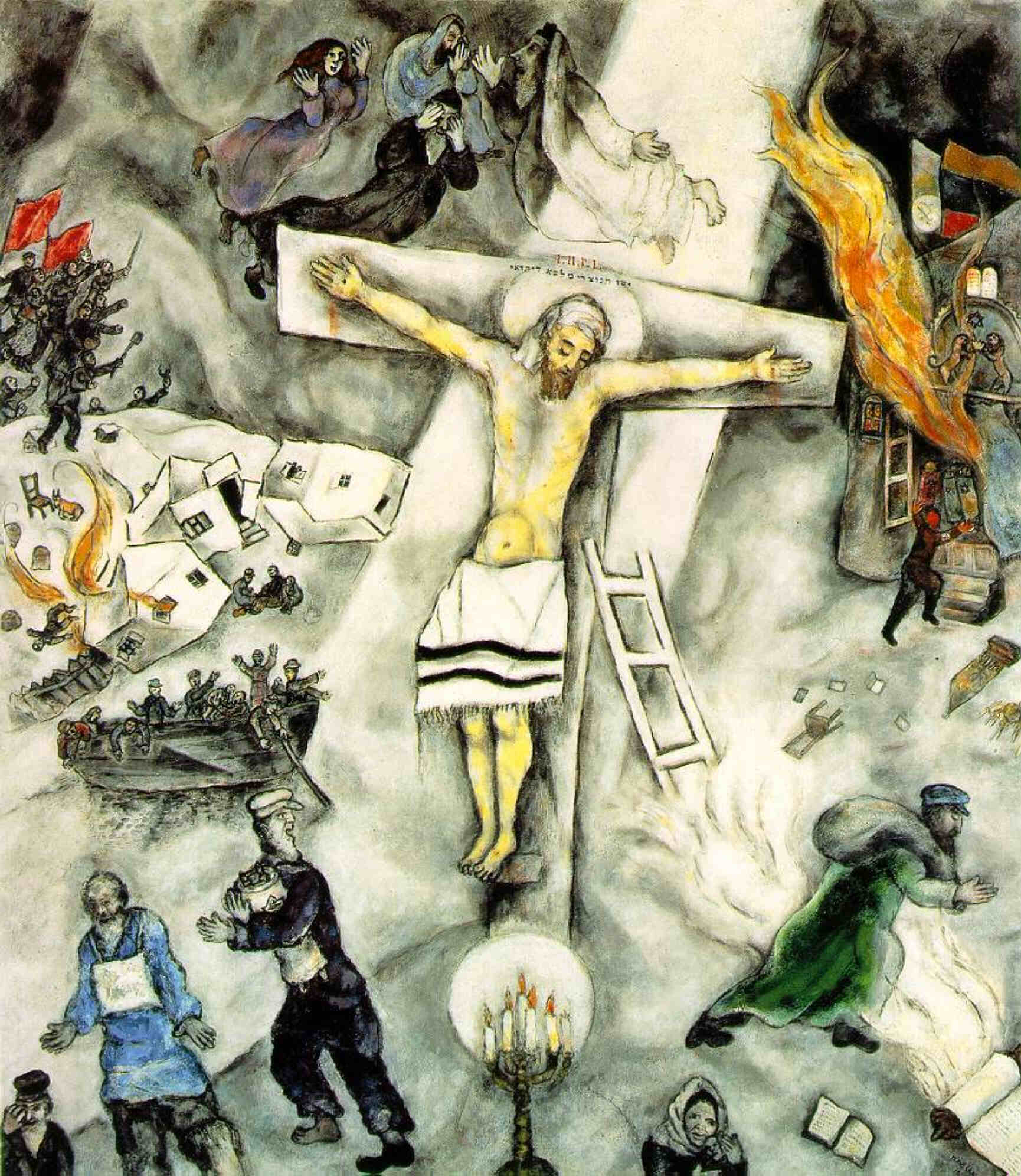
    This is one reason that the Binding of Isaac resonates so strongly with the story of Jesus’ Passion (which brings us to today):

    It is in Christ hanging on the cross that we see, for once in history, the two sides of this story fully joined in one person. In Jesus Christ we see a son of Abraham sparing nothing, totally faithful in covenant relationship with God. At the same time, we see in Jesus God’s total faithfulness, expressed now as excruciating vulnerability, even to death on a cross. These two images–Abraham binding Isaac, Christ nailed on a cross–are the supporting structures for the long convoluted story of sin and salvation. When reason fails, as it does at least one Friday each year, then we must listen to the stories with our hearts. (pp. 63-4)

  • What’s a Christian to do with capitalism?

    This post from Ned Resnikoff highlights some interesting data about Americans’ views on the compatibility of capitalism and “Christian values.” As he notes, the number of people who see them as incompatible goes up when the sample is restricted to self-identified Christians.

    I don’t think Christianity is necessarily anti-capitalist per se. Presumably a Christian should support whatever economic system best promotes human well-being. There’s a case to be made that some form of capitalism is the best candidate for this, at least given the available options.

    But there are also some deep-seated Christian principles that tell against a full-throated embrace of capitalism. I’d put them under two broad headings:

    (1) Christianity is against excessive wealth accumulation.
    (2) Christianity is against the market as the ultimate arbiter of value.

    The first point seems nearly incontrovertible to me based on a close reading of the gospels and a general familiarity with the history of Christian thought on these matters. Certainly the accumulation of wealth has rarely been upheld as a virute for Christians. I think this has partly to do with the idea that Christians should depend on God rather than wealth (you can’t serve two masters) and partly with our obligation to share from our excess with those in need. It’s certainly hard to argue that the disparities in wealth and the excess exhibited at the top of the income scale in contemporary America reflect sound Christian values.

    What I mean by the second point is that Christianity sees all human beings (and indeed all living creatures, I’d argue) as having a certain intrinsic value, which is derived from their creation by God. A consequence of this is that all people are entitled, simply by virtue of exisiting, to the prerequisites of a meaningful life, such as adequate food, shelter, health care, education, etc. A thoroughgoing “market society” in which goods were distributed strictly according to the ability to pay would be flatly inconsistent with this Christian principle.

    If this is right, the practical upshot is that Christians should support an economic system that limits great disparities in wealth and ensures that people’s basic value is respected independent of their “market value.” In my view, the evidence suggest that some kind of regulated capitalism with a generous social safety net and provision of high-quality public services is the best currently available system for doing this. There are multiple models here–North American, European, Asian–but all of them depart in significant ways from the laissez-faire ideal beloved of American right-wingers. (It’s worth noting that conservative Christian support for laissez-faire capitalism in the U.S. is both a historical and geographic anomaly.)

    It’s possible that some as-yet-untried alternative to regulated capitalism would perform better according to these principles. And the search for such an alternative may become more pressing as we continue run up against limits to nonrenewable resources and the environmental consequences of ever-increasing material consumption. These circumstances are likely going to require us to come up with new economic arrangements that might look very different from capitalism as we know it. But if we are entering into an era that requires us to radically alter our patterns of production and consumption, it’s even more important that Christians (and other people of good will) work to ensure that any new economic arrangements respect every person’s God-given value and dignity.

    UPDATE January 15, 2012: If I were writing this post now, I think I would change the first principle I cite to something like “Christianity regards all property and wealth as held in trust.” I think this gets more to the heart of the matter. Everything that is ultimately belongs to God and we only hold it in trust, as stewards. For Christianity there is no such thing as truly “private” property, and our possession of anything is inherently qualified to some extent by the claims of the well-being of others.

    Similarly, while I would still affirm the second principle, it might be better stated positively, e.g. “Christianity regards all people as having intrinsic value as creatures of God.” This clearly implies that the market is not the ultimate arbiter of value, but better expresses why that is.

  • Mission creep watch

    This is shaping up to be quite the splendid little war:

    European nations stepped up efforts Wednesday to aid Libyan rebels, with France pledging to intensify airstrikes against the forces of Moammar Gaddafi, and Italy joining the French and British in announcing plans to help train and organize the rebel fighters.

    […]

    The Obama administration has said it will not send ground forces into Libya, and senior U.S. military officials said they have received no instructions to plan such an effort. But the administration has not ruled out what State Department spokesman Mark Toner described Tuesday as stepped-up “non-lethal assistance.” Toner also said that the possibility of arming the rebels has “not been taken off the table.”

    Remember when this was nothing more than a no-fly zone established to prevent a massacre of civilians?

  • A budget plan that really is brave

    Thought it didn’t receive much coverage, the Congressional Progressive Caucus released its own budget plan last week. According to an analysis by the Economic Policy Institute, the plan would reduce the debt and actually result in a budget surplus in ten years. It would pull this off by, among other things, raising taxes on the rich, lifting the Social Security cap, creating a public health insurance option, allowing the government to negotiate prices for the drugs it pays for through the Medicare drug program (Part D), and significantly reducing “defense” spending by scaling back our military commitments, including our military presence in Iraq and Afghanistan.

    Now, say what you will about this plan, unlike House budget chairman Paul Ryan’s plan, it actually is brave in the sense that it stands up for less powerful members of society and stands up to some of the most powerful ones. Which of course means it has no chance of being enacted. At the very least, though, wouldn’t a serious debate about the budget include something like this as one of the options to be considered?

    ADDED LATER: Economist and author of The End of Poverty Jeffrey Sachs argues, in an article clearly laying out what’s at stake in the budget debate, that the Congressional Caucus proposal is more realistic than either the Ryan or the Obama plan.

  • Friday Links

    —What Makes Life Good? An excerpt from Martha Nussbaum’s new book.

    –Johann Hari makes the case against the British monarchy.

    –How progressive are taxes in the U.S.?

    –Ten teachings on Judaism and the environment.

    –Marilyn of Left At the Altar reviews Laura Hobgood-Oster’s The Friends We Keep: Unleashing Christianity’s Compassion for Animals.

    –A very interesting New Yorker article on the love-hate relationship between fantasy author George R.R. Martin and some of his fans.

    –The fantasy of survivalism.

    –Intellectual disability and theological anthropology.

    –Do we need “Passion/Palm Sunday?” Seems like this comes up every year, and I’m not sure there’s a good solution.

    –Mark Bittman on the cost of “lifestyle” diseases.

    ADDED LATER: On Dutch efforts to ban traditional Jewish and Islamic practices of animal slaughter.

    ADDED EVEN LATER: The spiritual benefits of headbanging, riffing (pun intended) on this Atlantic piece: How Heavy Metal Is Keeping Us Sane. (Thanks, bls!)

    ONE MORE: It sounds like the movie version of Ayn Rand’s Atlas Shrugged is every bit as bad as you’d expect.

  • Making the world safe for CAFOs

    The NewYork Times gives some coverage today of the ongoing efforts in Iowa, Florida, and now Minnesota to make it impossible for activists to reveal animal abuse in factory farms to the public. I continue to be kind of shocked by how brazen the industry’s attempts to shield itself from public scrutiny are. And that legislators are all too happy to go along with it. This about sums it up:

    The legislation has been strongly backed by Republicans but has also won some Democrats. John P. Kibbie, Democrat of Emmetsburg [Iowa] and president of the State Senate, who has been working on an amended bill expected to be released this week, said he supported the legislation to “make producers feel more comfortable.”

    Well, we certainly wouldn’t want them to feel uncomfortable.

  • A leaner, meaner liberalism?

    I’m not qualified to assess the numbers offered in President Obama’s speech on his plan to reduce the federal debt. There’ll be lots of details to come, and lots of commentary on his plan from people far better equipped to crunch the numbers than I am. Plus, whatever we ultimately end up with will no doubt look pretty different from what the president is proposing.

    What’s more interesting to me is that he took this opportunity to defend a distinctive liberal vision of government–something that Obama has previously seemed reluctant to do. He’s often appeared to be more interested in playing the role of the above-the-fray pragmatist who wants “results” instead of “politics.”

    And yet, in this speech we have passages like this:

    From our first days as a nation, we have put our faith in free markets and free enterprise as the engine of America’s wealth and prosperity. More than citizens of any other country, we are rugged individualists, a self-reliant people with a healthy skepticism of too much government.

    But there’s always been another thread running through our history -– a belief that we’re all connected, and that there are some things we can only do together, as a nation. We believe, in the words of our first Republican President, Abraham Lincoln, that through government, we should do together what we cannot do as well for ourselves.

    And this:

    Part of this American belief that we’re all connected also expresses itself in a conviction that each one of us deserves some basic measure of security and dignity. We recognize that no matter how responsibly we live our lives, hard times or bad luck, a crippling illness or a layoff may strike any one of us. “There but for the grace of God go I,” we say to ourselves. And so we contribute to programs like Medicare and Social Security, which guarantee us health care and a measure of basic income after a lifetime of hard work; unemployment insurance, which protects us against unexpected job loss; and Medicaid, which provides care for millions of seniors in nursing homes, poor children, those with disabilities. We’re a better country because of these commitments. I’ll go further. We would not be a great country without those commitments.

    The idea here is that individualism and free markets are certainly good things, but they need to be tempered by a sense of the common good and mutual responsibility. And the solution to our problems isn’t just to get the government out of the way; government has a positive role to play as an instrument of collective purpose.

    Most fundamentally, perhaps, the president is calling the bluff of the House Republicans. They say they care about the debt; he says, okay, but let’s address that without breaking the social compact. It’s an implicit call for them to decide whether they care more about reducing the debt or about catering to rich people by cutting their taxes and hobbling the regulatory state. He’s provided a vision of America that contrasts sharply with the one offered by the GOP (one the president accurately describes as pessimistic).

    But Obama isn’t advocating a return to the tax-and-spend liberalism of old:

    So this is our vision for America -– this is my vision for America — a vision where we live within our means while still investing in our future; where everyone makes sacrifices but no one bears all the burden; where we provide a basic measure of security for our citizens and we provide rising opportunity for our children.

    And:

    Indeed, to those in my own party, I say that if we truly believe in a progressive vision of our society, we have an obligation to prove that we can afford our commitments. If we believe the government can make a difference in people’s lives, we have the obligation to prove that it works -– by making government smarter, and leaner and more effective.

    Whether Obama’s specific proposals can actually pull off this vision of a more fiscally austere liberalism is another question. (Paul Krugman, who’s been pretty critical of Obama, is cautious but fairly impressed.) Hard-core liberals will certainly complain about the concessions being made to the deficit hawks, and conservatives are likely to oppose anything Obama does. But I have to think that this is a vision that will appeal to a lot of people. I don’t think most people, deep down, really want Ayn Rand-style libertarianism. They believe in programs like Social Security and Medicare, but are also alarmed by what seems to be out-of-control spending. And this fear is used as leverage by those who are opposed to a positive role for government. We’re constantly being told that we “can’t afford” a robust safety net, or decent jobs with good benefits for everyone, or environmental protection, or whatnot. Obama is challenging that mindset with a version of liberalism that aims to be both tender-hearted and hard-headed. That may be just what we need.

    (I still hate “win the future” though.)

  • Freedom isn’t free

    I recently came across this article in The Nation arguing that the Left needs to reclaim the language of freedom from the Right. While liberals have espoused values like equality and social justice, since the 70s, the author contends, they have largely ceded the language of liberty to conservatives. The problem with this strategy is that liberty-talk has a unique resonance in the U.S., and liberals are handicapping themselves by tacitly agreeing to the Right’s definition of freedom.

    A left-liberal politics of freedom will emphasize two things: first, that private actors (e.g., business) can infringe on freedom and second, that government can be an instrument of empowerment, actually increasing the scope of freedom:

    We must develop an argument that the market is a source of constraint and government an instrument of freedom. Without a strong government hand in the economy, men and women are at the mercy of their employer, who has the power to determine not only their wages, benefits and hours but also their lives and those of their families, on and off the job.

    We must, in other words, change the argument from the abstractions of the free market to the very real power of the businessman. More than posing an impersonal threat to the deliberations of a democratic polity—as the progressive opposition to the Supreme Court’s Citizens United decision would have it, or as liberals like Paul Krugman and Hendrik Hertzberg have suggested about the unionbusting in Wisconsin—the businessman imposes concrete and personal constraints on the freedom of individual citizens. What conservatives fear above all else—more than higher taxes or lower profits—is any challenge to that power, any inversion of the obligations of deference and command, any extension of freedom that would curtail their own. FDR understood that. In his 1936 acceptance speech at the Democratic National Convention, he was careful to take aim not simply at the rich but at “economic royalists,” lordly men who take “into their own hands an almost complete control over other people’s property, other people’s money, other people’s labor—other people’s lives.”

    The way conservatives and libertarians define freedom, it means largely non-interference from the government. But for many people, the biggest problem in their lives isn’t government interference, but other actors and forces that prevent them from pursuing happiness. A more common-sense definition of freedom is simply being able to do what you want to do, or what some theorists have called “effective freedom.” Government–through its powers to tax and regulate, among other things–can facilitate the effective freedom of its citizens. In fact, you could argue that government action is indispensible to the effective exercise of freedom and that the distinction between “negative” and “positive” liberty is largely an illusion. After all, protecting any freedom requires the exercise of government power and the expenditure of public resources.

    Conceptualizing things this way has the advantage of avoiding the oft-made charge that liberalism is “paternalistic” and wants to create a vast “nanny state” to control every aspect of citizens’ lives. Liberalism isn’t–or at least shouldn’t be–about telling people how to live their lives. It should be about expanding the range of choices available to citizens regardless of their social or economic status.