Author: Lee M.

  • NRCAT statement on the torture memos

    The National Religious Campaign Against Torture is calling for a “commission of inquiry” in light of the Office of Legal Counsel memos released this week by the Obama Justice Department:

    We must, as a nation, address the fact that high-ranking officials in our government authorized torture and that agents representing our country carried out acts of torture in our name.

    Read more here.

  • An essay on atonement and theodicy

    Note: this is a re-worked version of a series of posts I did back in 2004 on the Atonement and the Problem of Evil. There were a lot of broken links among them, and, since I think the material holds up pretty well, I thought it might be worth slightly re-working the series and combining the posts into a single essay.

    If I was re-writing it from scratch I think I would have to deal explicitly with the problem of “natural” evil and how it relates to God’s work of Incarnation and Atonement. And I think I would want to address in more detail how different accounts of the Atonement can be complementary rather than mutually exclusive. Comments and feedback, as always, are welcome!

    Theodicy–justifying the ways of God to man in Milton’s phrase–is an inherently presumptuous endeavor. But it also seems like a necessary one. However much we think we ought not set ourselves up as judges of God, we can’t help but wonder why God permits so much apparently pointless suffering in the world, especially that inflicted by human beings.

    Various philosophical theories have been proposed to deal with this problem, such as those that appeal to the importance of free will, but Christian theology has other resources that than can, and should, be brought to bear on it. I suggest that any answer to the problem of evil, from a Christian perspective at least, will give pride of place to the story about what God has done to defeat evil in the life, death, and resurrection of Jesus. Christians believe that, somehow, God set the world to rights through this redemptive act.

    This is what is asserted by the doctrine of the Atonement. The problem is, although there’s broad agreement among Christians on what the Atonement accomplishes (i.e. the defeat of sin, death, and evil), there’s much less agreement on how it accomplishes it. As C.S. Lewis said, what’s indispensable from Christianity is the fact of the Atonement, not any particular theory about it.

    One way of looking at theories of the Atonement is as complementing each other rather than as mutually exclusive and as corresponding to different human needs (e.g., for forgiveness or liberation). Any language about divine action is necessarily going to be metaphorical and speculative, even if grounded in concrete experience. Each theory could then be seen as describing, or trying to picture, one aspect of what is ultimately a mystery beyond human comprehension. With that in mind, let me suggest that there are (at least) three dimensions to the Atonement that are relevant here, each corresponding roughly to one of the major traditional theories. The Atonement is

    revelatory – it shows us what God is like (this aspect corresponds roughly to Peter Abelard’s “moral exemplar” account of the Atonement);

    reconciling – it effects the forgiveness of sins and the possibility of a new relationship with God (e.g. an Anselmian “satisfaction” theory); and

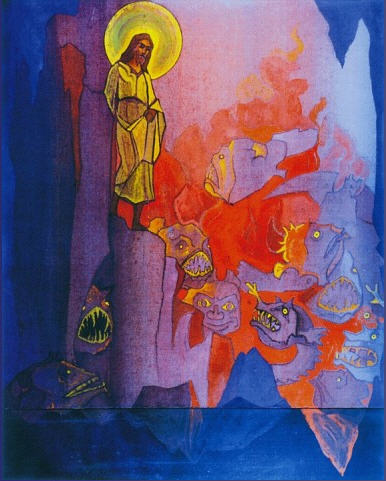
    redemptive – it rescues us from the power of sin and death (“classic,” Christus Victor, or “ransom” theory)

    I’m contending that these aspects of the Atonement are all interrelated – or at least not mutually exclusive — and I separate them here solely for analytical reasons. In addition, the incarnation is an act by which God enters into solidarity with us, showing that human life–despite the world’s evil–is worth living.

    Revelation

    “Jesus answered: ‘Don’t you know me, Philip, even after I have been among you such a long time? Anyone who has seen me has seen the Father. How can you say, “Show us the Father”? Don’t you believe that I am in the Father, and that the Father is in me? The words I say to you are not just my own. Rather, it is the Father, living in me, who is doing his work.’” (John 14:9-10)

    Christians believe that in the life, death, and resurrection of Jesus, God revealed himself to humanity. What does this mean? One way to think of it is to say that Jesus’ life was the very life of God lived out under the conditions of human life. This is affirmed by the doctrine of the Incarnation: Jesus is true man and true God. In everything he said and did, Jesus displayed the character of God.

    What is that character? As biblical scholar Luke Timothy Johnson puts it, Jesus exemplified in his life and teachings a “pattern of obedience and self-giving love.” The God revealed in Jesus is one who gives from the depths of his own being to his creation, and who loves his creatures even when they’ve gone astray. Like the Good Shepherd, God seeks out the lost, the outcast, and the sinner in order to bring them back into the fold. It is a central Christian belief that the nature of God’s love is disclosed most fully in the life of Jesus, and pre-eminently in his submission to death—“even death on a cross.”

    But what does all this have to do with the problem of evil? It shows that the way we would choose to deal with evil is not necessarily the way God chooses to deal with evil. We prefer to eradicate or at least avoid sinners; God prefers to love and embrace them.

    This seems unjust, scandalous even. Why should God let evildoers off the hook? Until we recall that we’re evildoers too. That “all have sinned and fall short of the glory of God.” The God of Christianity, as revealed in Jesus, takes evil upon himself, accepts its brutal effects, and suffers under its weight, instead of retaliating, of returning evil for evil. This is what is revealed on the cross, the “crucified God” as Jurgen Moltmann put it.

    The good news, then, is that God loves sinners (that is, us) and takes the effects of sin upon himself. We, who have done evil, are loved by the creator and sustainer of the entire cosmos. This is the truth about God that Christians believe has been revealed in Jesus.

    But this doesn’t seem quite right. God may love sinners, but has he left them to their own devices, allowed sin’s effects to run rampant in the world? Has the Atonement made any difference in terms of actually putting an end to sin and evil? Yes, because God’s work in Jesus goes beyond a revelation of the divine character to include humanity’s reconciliation with God and redemption from the powers that enslave us.

    Reconciliation

    To deal with evil requires understanding and dealing with the sources of evil. Christians believe that human evil is rooted in a primal turning away from God. In rejecting God, we set the stage for all kinds of evil (cf. Romans 1). For instance, if I no longer find security in my relationship with the divine, I may try to create a sense of security by hoarding possessions. Or, if my sense of self-worth no longer comes from my status as a child of God, I might try to find it in a series of sexual conquests. The idea is that alienation from God is the root sin from which all other sins flow. The entire sordid human history of hatred, envy, domination, resentment, and conflict is simply the outworking of humanity’s rejection of our proper end, which is union with God.

    If this is the case, then the solution to human evil will have to be radical in the etymological sense – it will need to get to the root of the problem. This is precisely what Christians believe God has done in the Incarnation and Atonement (which are really two aspects of a single divine action). In Christ, God has come into the world to heal the broken relationship between God and humanity.

    This is the dimension of the Atonement captured in the famous (and controversial) “satisfaction” theory propounded by Anselm of Canterbury in the 11th century. In a nutshell, according to Anselm, human sin has disrupted the moral order of the universe created by God; by failing to offer God the obedience that is his due, we have alienated ourselves from him. Human beings are unable to make reparation (or satisfaction) for this disruption because we already owe everything we have to God and are therefore unable to offer any kind of supererogatory obedience. Thus, Christ the God-man comes to fill this gap by living a life of perfect obedience to the Father and going to his death on the cross. This heals the breach between God and humanity and makes a new relationship possible.

    Let’s clear away a couple of common misconceptions about this account. First, it is often claimed that it paints an unflattering portrait of God the Father as a petty despot who insists that his honor be satisfied before he will save sinful humanity. Why can’t God simply overlook sin and let us off the hook? Wouldn’t this be the mark of a truly gracious God of the kind we meet in the teachings of Jesus?

    It’s important to remember that for Anselm, “honor” doesn’t mean anything like personal vanity. Living in a feudal society, Anselm would have seen honor as key pillar of a stable social order. Giving one’s lord his due was a key requirement for ensuring that the lord would fulfill his duty to maintain law and order. So, in these terms, God’s honor might better be seen as the justice that God upholds in the cosmos. For God to simply ignore sin would be to fail to treat it with the seriousness it requires. More, it would be to treat us with less than full seriousness. As Dietrich Bonhoeffer put it, “God does not ‘overlook’ sin; that would mean not taking human beings seriously as personal beings in their very culpability.” God does better than overlook sin; he does something about it.

    Another way of thinking about it is to replace the concept of honor with the biblical idea of “holiness.” Since God is completely holy no sin can exist in his presence. This is not simply a matter of God being personally offended, but is due to the very nature of things. In order for us to approach God, we have to be cleansed of our sin. By living a holy life for our sake, Christ makes it possible for us to approach God in a renewed relationship.

    The second mistake to avoid is seeing the crucifixion as something that God the Father inflicts on God the Son. This has given rise to accusations that Atonement theology provides a kind of divine sanction for child abuse. But this concern can be defused by recognizing that there is no division in wills between the Father and the Son. It is God himself, the Second Person of the Blessed Trinity, who becomes incarnate in Jesus and willingly lives out a life of perfect obedience “even unto death on a cross.” The cross is not a punishment inflicted by the Father on the Son, but the inexorable outcome of a perfect human life being lived out under the conditions of sin.

    What God accomplishes in the life and death of Jesus, according to Christianity, is nothing less than a reconstruction of human nature. Human beings have strayed off course; Christ comes and lives human life as it was meant to be lived. And in his Resurrection he offers the definitive blow to the powers of sin and death. In doing so, he opens to us the path of genuine humanity lived in fellowship with God and each other. By uniting ourselves with Christ in faith, we can begin to be healed of our sin and set back on our proper course toward union with God. In the Atonement, God begins the process of pulling out evil by the roots.

    Redemption

    In addition to being a revelation of God’s love and a sacrifice that effects reconciliation between humanity and God, Christians have always seen the Atonement as the act whereby God redeems us from the powers of sin and evil. In ancient times, redemption meant literally to purchase someone’s freedom. According to Christianity, we are enslaved to the powers of sin and death, and on the cross God “purchases” our liberation.

    This is perhaps the point at which Christianity departs most sharply from the view of the Enlightenment. Enlightenment thought sees human beings as fundamentally rational and capable of being good on their own. At most the life of Jesus may provide a kind of supreme moral example, but this is only an accidental, not essential, condition for spurring us on to virtue.

    Christianity, by contrast, sees humanity as deeply enmeshed in sins, both personal and corporate, sins from which we cannot free ourselves. Whatever else we might mean by the “principalities and powers,” the phrase at least refers to social, political, and economic systems of violence and exploitation in which we are all deeply implicated. We often benefit from unjust systems, and the structures of those systems often make it nearly impossible for us to avoid evil. For instance, a CEO may find it nearly irresistible to exploit third-world workers, not from personal greed, but because if he doesn’t take advantage of such an opportunity, his competitors will.

    And within each of us, we find a nearly irresistible pull toward sin – toward taking the easy path, the path of self rather than self-giving. St. Paul himself was no stranger to this struggle:

    I do not understand what I do. For what I want to do I do not do, but what I hate I do. And if I do what I do not want to do, I agree that the law is good. As it is, it is no longer I myself who do it, but it is sin living in me. I know that nothing good lives in me, that is, in my sinful nature. For I have the desire to do what is good, but I cannot carry it out. For what I do is not the good I want to do; no, the evil I do not want to do–this I keep on doing. Now if I do what I do not want to do, it is no longer I who do it, but it is sin living in me that does it. (Romans 7:15-20)

    Sin here is not just making the wrong decision, but something like a sickness, an alien power that infects us and creates a fundamental orientation whereby the self is “curved in on itself” in Luther’s fine phrase. In order to be good, we need a fundamental re-orientation of the self, something that’s outside of our power to secure.

    Added to this is the fact that humanity and creation as a whole suffer from decay and ultimately death. Christian tradition has always seen a connection between sin and death, even though our modern ways of thinking treat death as completely “natural.” Death may be “natural,” but it is not part of God’s original intention for his creation.

    The Incarnation, Cross, and Resurrection are the means by which God enters human history and disables the powers of sin and death, liberating us for lives of genuine freedom, which is orientation of the self toward God.

    How is this accomplished? First of all, Jesus lives a perfect life of self-giving under the conditions of sin. The “powers” are unable to defeat his intention to live in perfect obedience to the Father’s will, even unto death. Rather than lashing back and feeding the cycle of violence, Jesus takes the world’s violence onto himself, ultimately defeating the powers on the cross. The cross is a victory precisely because the powers were not able to coerce Jesus into sinning.

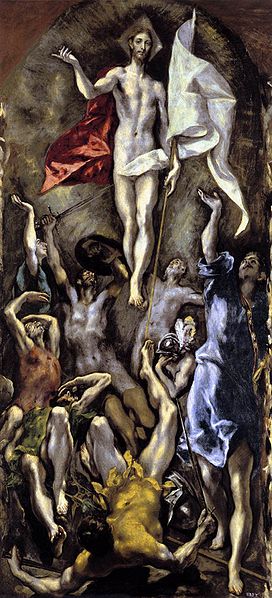
    The Resurrection is the vindication of Jesus’ life and the sign that the period of the powers’ dominion over human life is at an end. It is also, most dramatically, the defeat of death and the demonstration that God’s love is more powerful than the forces of decay and dissolution.

    Jesus’ Resurrection inaugurates a new age; his perfect self-offering elicits the outpouring of the Holy Spirit, which becomes the agent that empowers the new community formed around him to live a life of resistance to the powers of sin and death. The Church becomes the first fruits and sign of the redeemed creation where sin and death no longer hold sway. The consummation of this redemption takes place only at the second coming, but in the “age between the ages” we can be taken up, if only partially, into the life of the Trinity, which is one of eternal blessedness and mutual self-giving love.

    Solidarity

    Judging whether life is or is not worth living amounts toanswering the fundamental question of philosophy. – Albert Camus

    Camus may not have had theodicy in mind when he wrote those words, but it’s not hard to see their application to the problem of evil. At root, the question we face is whether an all-good God is justified in creating a world such as ours with its manifest suffering and evil. Is life as we know it, with its sorrows, disappointments, betrayals, and pain worth living?

    My reason for writing this series of posts has been my hunch that the best answer available to this question lies not in philosophical theories about God’s nature in the abstract (however necessary those might be), but in the concrete, historical narrative of God’s activity in history. Christians believe that God has acted in history to deal with the problem of evil. That human life if worth living is confirmed by the fact that God has gone to such great lengths to redeem it.

    According to Christian belief, God has, in the life, death and resurrection of Jesus Christ, revealed his love for us, provided a means of reconciliation, and won the decisive victory over the powers of sin, evil and death in this world, beginning the process of the redemption of all creation.

    But in addition to this, God, in becoming incarnate in a human being, has entered into our human predicament. He is “Immanuel,” “God with us.” As the creeds teach, he became “fully human.” That means that God shared in human life with all its joys and its trials. Indeed, the life God chose to live was one of suffering at the hands of his enemies, betrayal and desertion by his closest friends, and finally dying the excruciating death of a criminal and blasphemer.

    This means that in all our sufferings, God is with us. He has entered into and identified with us. As philosopher Richard Swinburne argues in his book The Resurrection of God Incarnate, this would be a good thing for God to do even if the world’s evils are ultimately balanced out by its goods. This is because we often can’t see how certain evils will be taken up into or balanced by some greater good, and so we are tempted to despair. But by living a fully human life in solidarity with us, God reassures us that it is somehow worth it. He is like the general who vows never to ask his troops to do anything he wouldn’t be willing to do himself.

    So, whatever else we say about God’s atoning work, we can affirm that he found human life worth living. Obviously, he also found it in need of serious repair; that’s what the work of Incarnation and Atonement is all about. But he continues to affirm the pronouncement made in Genesis that creation is “very good” and that the lost sheep is worth saving. If God himself makes this judgment, can we do any less?
  • The Life You Can Save 1

    I finally got my hands on a copy of Peter Singer’s The Life You Can Save: Acting Now To End World Poverty, courtesy of the DC city library, and have been working my way through it. Like most of what Singer writes, it’s extremely clear and accessible, filled with facts as much as philosophical arguments.

    Chapter 1
    begins with what the late philosopher Robert Nozick would call an intuition-pump: a thought-experiment designed to prompt a certain moral response. Singer asks us to imagine passing by a shallow pond and seeing a drowning child in it. If we can save the child at very little cost to ourselves (muddy shoes, a ruined suit, being late to work say), isn’t that the right thing to do? Moreover, wouldn’t be be guilty of a serious wrong if we didn’t wade in and save the child?

    But this, Singer maintains, is analogous to the situation we (that is, we in the rich parts of the world) are in with respect to people elsewhere in the world who live in extreme poverty. We routinely spend money on things that are, by any reasonable definition, luxuries, especially when you consider the situation of extremely poor people living on the equivalent of $1.25 per day.

    And he’s not just talking about the ultra-rich here. He’s talking about those of us who routinely spend money on bottled water, iTunes downloads, nice vacations, dinners out, and so on. The money we spend on these luxuries could be going to help desperately poor people elsewhere in the world without any significant blow to our well-being. So, aren’t we just as guilty as we would be if we refused to pull the drowning child out of the pond?

    In chapter 2, Singer provides a more formal version of the argument:

    1. Suffering and death from lack of food, shelter, and medical care are bad.

    2. If it is in your power to prevent something bad from happening, without sacrificing anything nearly as important, it is wrong not to do so.

    3. By donating to aid agencies, you can prevent suffering and death from lack of food, shelter, and medical care, without sacrificing anything nearly as important.

    Therefore, if you do not donate to aid agencies, you are doing something wrong. (See pp. 15-16.)

    Singer points out (correctly, I think) that premises 1 and 2 of this argument are pretty difficult to object to. Premise 3 looks like the most controversial, and Singer will spend much of the book defending the notion that giving to aid agencies can make a difference. But, bracketing that issue for the moment, it looks like a pretty solid argument based on fairly uncontroversial premises.

    But this deceptively innocuous argument, Singer says, would have radical implications for how we live our lives. It would require us, at a minimum, to consider giving away much of what we now spend on luxuries (as defined above; we’re not just talking about giving up our private jets and jewel-encrusted Rolexes here) to agencies dedicated to helping people living in extreme poverty.

    Chapter 2 concludes with a review of traditional religious attitudes to giving charity. Traditional Christian, Jewish, and Muslim authorities, Singer says, are united in insisting on the duty of charity. To cite one example, St. Thomas Aquinas maintained that “whatever we have in ‘superabundance’–that is, above and beyond what will reasonably satisfy our own needs and those of our family, for the present and foreseeable future–‘is owed, of natural right, to the poor for their sustenance’” (p. 20).

    In chapter 3, Singer considers some common objections to the argument above. Not all of these are equally compelling (e.g., an appeal to relativism, that there’s no universal moral code for everyone), but he does consider a serious challenge from libertarian philosopher Jan Narveson. Narveson says

    We are certainly responsible for evils we inflict on others, no matter where, and we owe those people compensation … Nevertheless, I have seen no plausible argument that we owe something, as a matter general duty, to those to whom we have done nothing wrong. (quoted on p. 28, ellipses in Singer’s text)

    Singer has a two-part response to this. First, he appeals to the general implausibility of libertarianism as a political philosophy which would require abolishing “all state-supported welfare schemes for those who can’t get a job or are ill or disabled, and all state-funded health care for the aged and for those who are too poor to pay for their own health insurance” (pp. 28-9). Even many libertarians balk at such conclusions and thus, implicitly at least, reject the principle that we owe nothing to those whom we haven’t previously wronged.

    But even if you do accept that principle, Singer says, there is still ample reason to believe that we have obligations to the world’s poor because we have wronged them in various ways. Singer offers the examples of overfishing by Europe, China, and Russia in African coastal waters, which has devastated the livelihood of subsistence fishermen; the extraction of oil and minerals from poor countries, which, at best, enriches a tiny minority and essentially constitutes stealing those nation’s wealth; and the rich nations’ use of our shared atmosphere as a carbon sink, leading to global warming that will disproportionately harm very poor people. Even by the strictest libertarian standards, rich nations have committed aggression in various forms against the world’s poor.

    Singer also debunks some other common myths about aid, including that the U.S. is excessively generous with foreign aid. Interestingly, surveys find that people frequently support cutting foreign aid, but they also drastically overestimate how much the U.S. actually gives in aid. For instance, one survey found that a majority of people think the U.S. gives too much in aid. However, the median respondent estimate of what the U.S. gives was 20% of the federal budget! (The actual figure is about 1%.) Meanwhile, the median preferred amount was 10%, ten times the actual amount!

    Singer considers other objections, but toward the end of the chapter bumps up against what he sees as a crucial issue: it just seems to go against human nature to extend our circle of concern beyond our immediate family and personal relations, community, and perhaps our nation. Singer takes up this question of “human nature” in part 2, which I’ll talk about in the next post.

  • Animals, killing, and veg(etari)anism

    There was a surprisingly pro-vegetarian (even pro-vegan) review (which I’m only getting around to blogging about now) in last Sunday’s Washington Post of two books: Mark Caro’s The Foie Gras Wars (previously mentioned here) and Jeffrey Moussaieff Mason’s The Face on Your Plate.

    The reviewer, Jennifer Howard, is a confessed vegetarian, but is willing to concede some of the points made in Caro’s book:

    As a vegetarian, I was predisposed to find the subject upsetting, but Caro’s descriptions of foie gras production and preparation were less gruesome than I anticipated (though mention of pig’s blood did make me wince.) What that says about the cruelty of foie gras I don’t know, and Caro doesn’t either.

    However:

    [Caro] doesn’t document mass avian distress on the farms he visits (although one is tempted to ask him how he’d like to have a tube shoved down his throat three times a day.) He does see a few “unpleasant sights,” i.e., dead or obviously injured birds. Ducks and geese cannot tell you what gavage feels like. Do they suffer? Is it cruel? After 300-plus pages, Caro still isn’t sure what he thinks. He may chalk it up to objectivity. It feels more like a cop-out.

    Ms. Howard finds herself more in agreement with Mason’s book, though she is put off a bit by his “too heavy a hand with the new-age seasoning.”

    “Humanely”-raised meat is an undoubted improvement over the factory-farmed variety, but there is still the business of the slaughter:

    Masson’s message is, Think before you eat. If you believe that eating free-range or organically raised animals and animal products lets you off the ethical hook, think again. My conscience is not clear just because that milk comes in a glass bottle from a local dairy where the cows get to see sunshine and fresh grass. That’s a happier lot than dark barns and hormone-laced feed, but I doubt the cows have pensions to look forward to.

    Now this gets at a divide among people concerned with the well-being of farmed animals. Some people argue that suffering, not killing, is what matters. It’s okay to kill an animal for food if it has had a pleasant life lived according to its kind.

    Before addressing that issue directly, though, we need to be aware of at least a few things. First, the process leading up to and including the slaughter is rarely, if ever, free of pain and suffering for the animal. Second, it’s far from clear that it would be practicable, at least on a large scale, to institute a truly “humane” process of raising and slaughtering animals.

    But let’s concede, for the sake of argument, that it’s not only possible, but practicable. Is there still something wrong with taking an animal’s life? Or is there at least a prima facie obligation not to kill an animal without good reason? And what counts as a good reason?

    It’s hard to give a satisfying account of the nature of harm that death inflicts on a living being. After all, if there’s no experiencing being there anymore, how can it be worse off after being killed?

    Yet, most of us, I presume, want to say that a human being is harmed by being killed. What does this harm consist in? At a minimum, I’d say it includes the frustration of our desires, preferences, plans, and projects and the foreclosure of future experiences, accomplishments, etc. (Let’s bracket the question of the afterlife for our purposes; in any event, most people who believe in some kind of afterlife also believe–or act as though they believe–that death is a harm.)

    So, can we also say that an animal–even if killed painlessly–is also harmed by death? Well, it’s debatable to what extent animals have projects or long-term goals (it certainly seems true that many don’t). But it seems far more certain that animals have desires, preferences, and possible pleasant future experiences that would be frustrated by being killed.

    Such frustration of all an animal’s desires, preferences, etc. certainly seems like a harm if the (admittedly rough and ready) analysis of the harm of death for humans offered above is at all on the right track. It may be less of a harm, impartially considered, but from the animal’s point of view it surely looks like a great harm. After all, they’re losing the possibility of any future pleasant experience and satisfaction of desires/preferences.

    And this seems to cohere with at least some of our intuitions about killing animals. Surely most of us think that, other things being equal, it’s wrong to kill a dog or cat for no good reason. I remember reading once, for instance, about families who put their pets down before leaving for vacation, rather than boarding them. When they returned, they got new ones. Surely that’s wrong. And the wrong is something done to the animal, not just because killing it may make us more likely to be callous to the lives of humans.

    So, if, other things being equal, death is a harm for an animal, what would count as a good reason for killing one? Or, to address the topic at hand, is the satisfaction of certain pleasures of the palate a good enough reason?

    Let’s assume, for the sake of argument and because for many–if not most–people in the developed world it’s actually the case, that there are plentiful, nutritious, and tasty non-animal-based food alternatives available. Killing an animal is no longer, by stipulation, a matter of survival or even good health. The only thing at stake (you’ll pardon the expression) is my preference for the taste of meat over a comparable plant-based dish.

    Assuming that the death of a non-human animal is at all a serious harm (even if not as serious as the death of a human one), it’s very difficult to see how this harm could be outweighed by whatever pleasure I get from, say, eating a steak, over and above the pleasure of eating some roughly comparable plant-based dish.

    I now find this argument pretty persuasive. However, when I first went vegetarian it had more to do with suffering than death, specifically the suffering inflicted on animals by our system of factory farming. Only later did I start to see the persuasive force of arguments against killing animals for food, however painlessly.

    Which makes me wonder if attending to the suffering of animals tends to open one up to being persuaded that killing animals for food is, in itself, morally questionable. That is, once you get used to seeing animals as subjects with lives of their own that are owed some degree of respect, the justification for killing them, even “humanely,” starts to seem shakier.

    I’m not prepared to mount the moral high horse just yet, though. For one thing, I’m no vegan and thus am at least indirectly responsible for the deaths of many animals, even if I limit myself (as I try to do) to “free range” and “cage free” dairy and eggs. (And I recognize that these alternatives are problematic even with respect to animal suffering alone.)

    I still think that the first priority, one that can unite vegans, vegetarians, and “compassionate omnivores” alike, should be to reform our system of factory farming which, in addition to inflicting untold amounts of suffering on countless animals, contributes to environmental degradation and economic ruin among rural communities. Nevertheless, I think it’s worth considering the fact that, as theologian Karl Barth put it: “If there is a freedom of man to kill animals … [he] obviously cannot do this except under the pressure of necessity” (quoted by Andrew Linzey, Animal Theology, p. 130).

    For an argument similar to the one presented here, see this excerpt from Robert Nozick’s Anarchy, State & Utopia. I’ve also drawn on some ideas from Mark Rowlands’ book Animals Like Us, particularly chapter four.

    For a different, but extremely thoughtful, perspective on all this, see this piece from Sharon Astyk on “Eating Animal Products Ethically.”

  • I’d just as soon sleep in on Sundays, thanks

    Sometimes I like to browse the religion section at major book retailers (Borders, B&N), not because I usually buy anything, but because I like to see what perspectives on Christian faith people are interested in (or at least what publishers think they’re interested in).

    One thing I’ve noticed recently is that there seems to be nearly as much liberal tripe on the shelves as conservative tripe. It used to be that anti-evolution screeds and “purpose-driven” drivel dominated the shelves, but I’ve noticed a distinct uptick in left-of-center tomes.

    The problem isn’t the liberalism, per se; its the dessicated, uninspiring version of Christianity that so many of these books seem to be peddling.

    One book I was flipping through yesterday, written by a confessedly liberal pastor, urged the reader to stop worshiping Jesus and start following him. This is a classical liberal trope, that Christians (or Paul or the Catholic Church or someone) took the “simple” religion of Jesus the mystic/activist/countercultural prophet/shaman/whatever and transformed it into a religion about Jesus.

    In this particular book, following Jesus coincides neatly with a litany of left-liberal causes. But what baffles me about this particular strain of liberal Christianity is why anyone would bother with it.

    I mean, if Jesus is divine, then we really ought to be worshiping him. Sure, worship will entail, among other things, doing his will, as the gospels attest, but presumably it will also involve the religion about Jesus that some liberals are so eager to jettison.

    But if Jesus isn’t divine, but rather is (was?) a mere wise man/prophet/social critic, etc., then why organize your religion around him? In fact, as a moral exemplar, I can think of any number of people who are more immediately appealing than Jesus, not to mention more successful. Plus, if the entire religion about Jesus is a mistake, then he has to be judged one of history’s biggest failures as a teacher, doesn’t he?

    The liberal Christianity of, e.g., the Jesus seminar–the one that wants to jettison Christianity’s entire metaphysics and economy of salvation–simply can’t offer a compelling reason why we should take Jesus–particularly the shadowy and fragmentary Jesus of historical reconstruction–as the model and meaning of our lives. At best he would be one member of a pantheon of prophets and sages whose insights we might or might not find helpful and whose lives we may or may not find inspiring and relevant.

    You certainly don’t need Jesus to be a good liberal. If Jesus is the norm for human life, it’s only because he’s also divine.

  • They will know we are Christians by our love, the continuing series

    I’m in pretty much total agreement with this post by Hilzoy at Obsidian Wings (via Jim Henley). The idea that I, as part of my public Christian witness, ought to be concerned with denouncing my co-workers’ (real or imagined) sins, at work, strikes me as bizarre. Seems to me that my boss would be well justified in telling me to get back to work under such circumstances.

    Moreover, the whole underlying argument against same-sex marriage now seems to boil down to: extending equal rights to gay people will make it harder to…treat them as second-class citizens. Well, yeah.