Tag: Bible

  • Incarnation anyway

    I was struck recently by a passage from Catholic theologian Karen Kilby in the entry on “evil” in the St Andrews Encyclopaedia of Theology. Kilby is discussing how Christian theology envisions God responding to evil, but notes that not that theologies vary in how central a place they give to the response to evil:

    Christian theologies vary not only according to what dimension of evil and of God’s response to evil they take to be primary, but also in another important way. They vary according to how much the system as a whole is oriented around this theme. God’s saving response to evil is never marginal, but while for some it lives at the absolute centre of theological concern – the thing around which all else pivots – for others it takes a subordinate place.

    Martin Luther’s theology, with its focus on the law/gospel dialectic and on the justification of the sinner, is a clear example of the first style of theology. Liberation theology, though very different, is also an example of a theology where the divine response to evil – in this case liberation from oppression – is at the centre. In theological schemes which lay emphasis on the goodness of creation, however, the centre of gravity can be a little different: creation may well be understood to be wounded by sin and so in need of healing, but this is not the only or the primary point of theological interest. Similarly, thinkers who construe salvation as theosis or divinization – as the elevation of the human being to a participation in the divine life – have a place for sin and forgiveness but they do not necessarily put them at the centre of the divine-human relationship.

    Kilby offers “supralapsarian” Christologies as an example of this latter type:

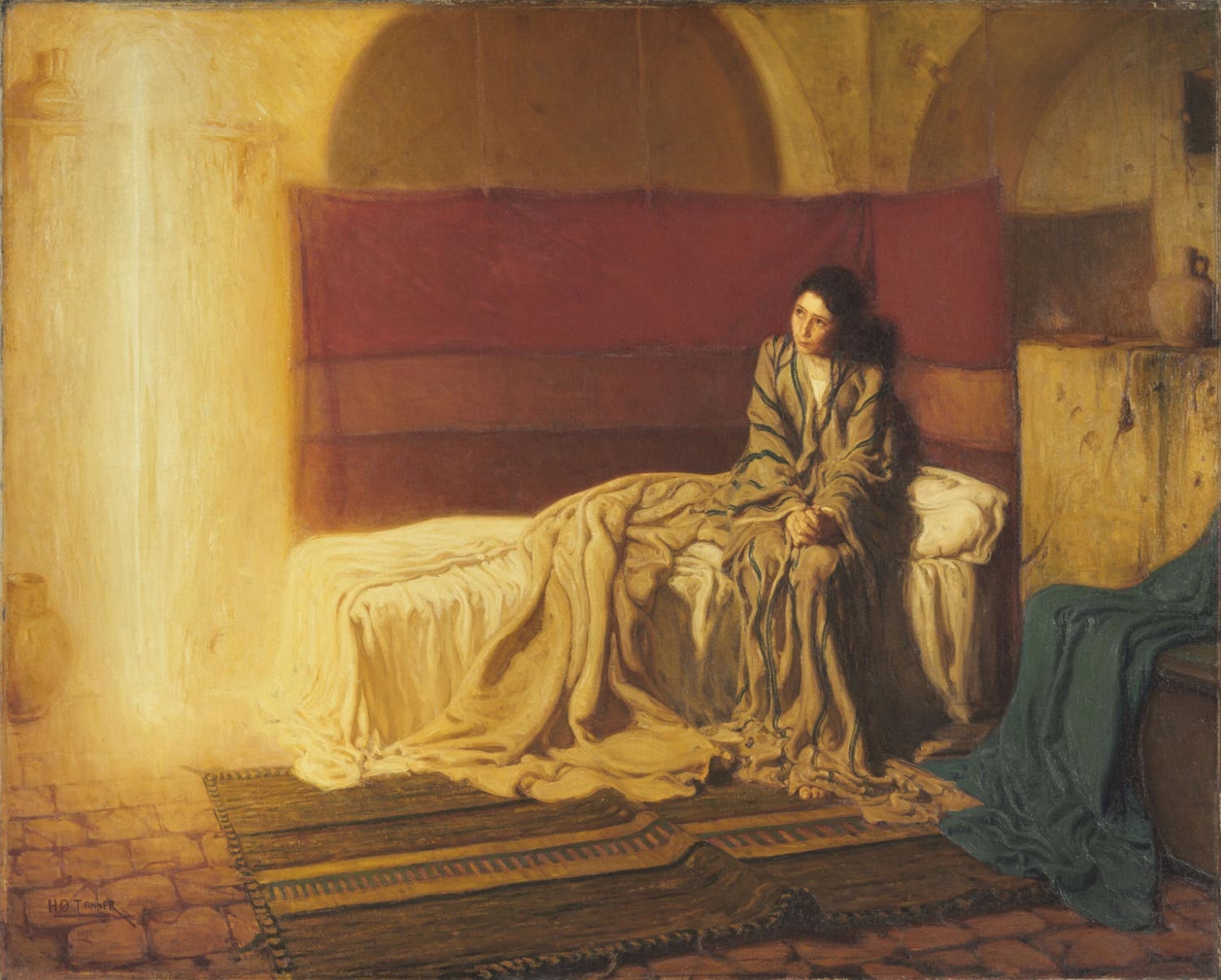
    One can illustrate the different emphases by asking a question: if there had been no fall, nothing wrong with the world, no presence in it of that which should not be, would there have been an Incarnation? Did Jesus come into the world only in response to a problem, or was the uniting of God and world always part of the divine purposes in creation? Theologians divide over this issue, and even over whether it is legitimate to ask such about such a counterfactual possibility. If one allows the question, however, it provides a helpful illustration of the broader issue. Those who hold the ‘Scotist’ view (the view that the Incarnation would have occurred even without the Fall) have an understanding of God’s relation to the world which can indeed include a divine response to evil but which is not centred on it.

    The supralapsarian option — i.e. the idea that the Son would’ve become incarnate even if human beings had not sinned — is a persistent minority report in Christian theology. It suggests that there is a purpose to the Incarnation in addition to redemption for sin, and even that redemption was not the primary purpose.

    I’ve recently been reading a bit in this area. In particular, Sam Wells’ Constructing an Incarnational Theology makes a strong argument for the idea that God’s original purpose in creating the universe was the Incarnation. The Incarnation occurs so that God can dwell with God’s creatures. On Wells’ account, the crucifixion is the ultimate example of how far God will go to be with God’s creatures — God wills to be with us even when we kill him! And the resurrection demonstrates that even this isn’t enough to defeat God’s will to be with us. But the defeat of evil is ultimately subordinate to God’s overarching purpose of dwelling with God’s creatures.

    We might also consider R. Kendall Soulen’s construal of the biblical narrative as a story of mutual blessing oriented toward a final reign of shalom. God’s work as Consummator, in this telling, is logically prior to God’s work as Redeemer. The drama of sin and redemption fits within this framework rather than being itself the overarching narrative.

    That said, any plausible Christian theology has to do justice to the ways in which God acts to redeem the word from evil. This is too prominent in the New Testament for it to be entirely downplayed in favor of a creation-based theology or spirituality. And yet, it does seem to me that there are passages in the New Testament (e.g., in Ephesians, Colossians, John’s gospel) which say that all things were created in and for Christ and that they will be united to Christ at the consummation of all things. This makes it seem like the arc of creation and consummation takes priority to redemption as such. In this light, the drama of fall and redemption can start to look like a subsidiary (albeit very significant!) plotline and not the overarching story.

    Choosing one of these broad approaches over another here probably has a lot to do with what parts of the biblical witness and the tradition one finds most compelling. For instance, Luther was clearly gripped by the drama of sin and redemption, which became the centerpiece of his theology (and much subsequent Protestant theology). Plus, different people at different times in their life may find various parts of the Christian message more relevant. And it’s probably worth noting that there may be “mixed” intermediate types between the two approaches.

    For myself, I do find the “supralapsarian” creation-and-consummation emphasis deeply appealing. This is not only because it seems to provide a telos for the Christian life beyond “getting out of jail (or hell)” but also because it can potentially incorporate the entire created world in the sweep of God’s plan. At the same time, I wouldn’t want to lose the emphasis that God seeks us out precisely when we’ve gone astray to restore us to our place in this plan.
  • Consider the beasts

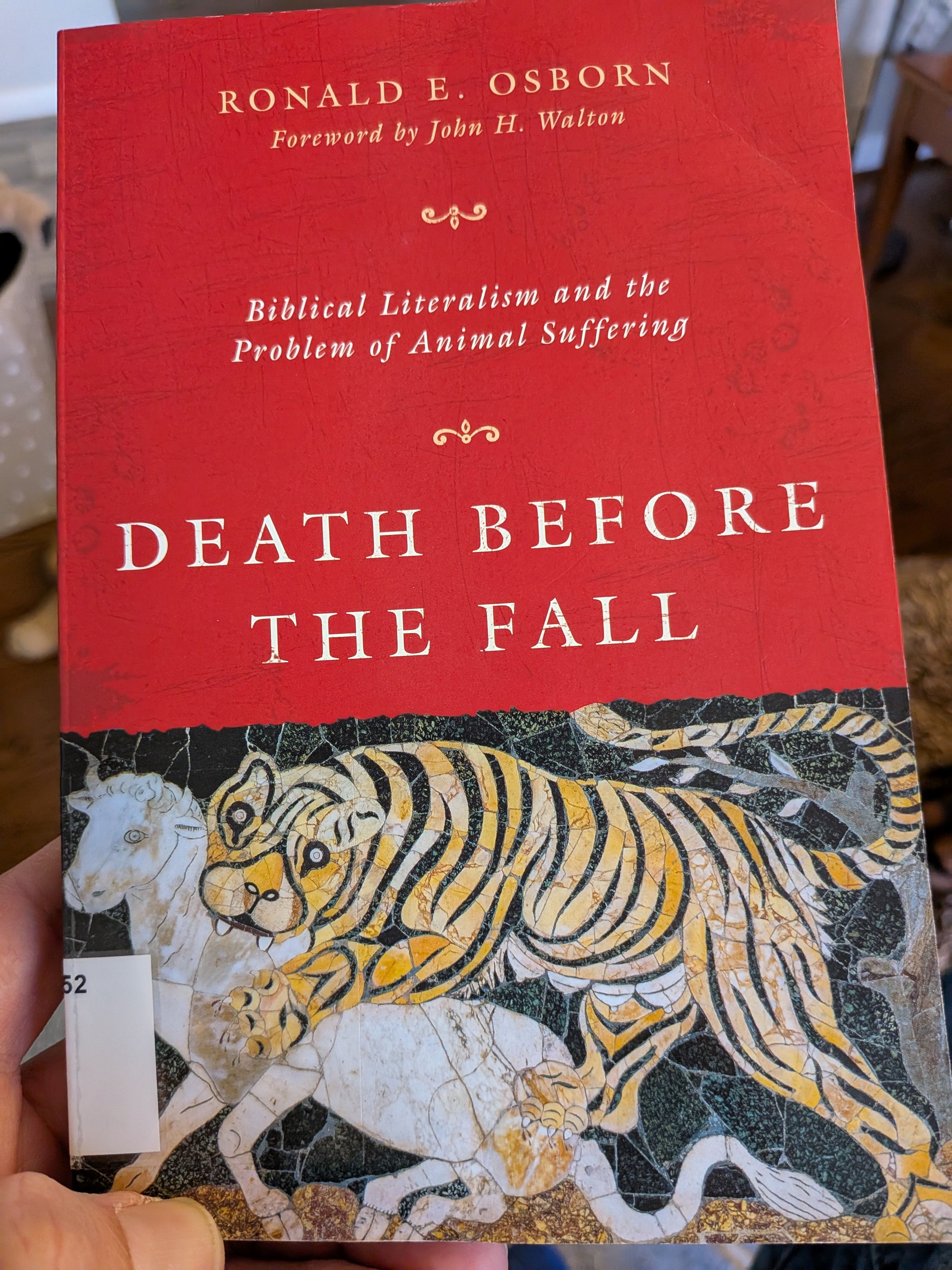
    Death Before the Fall: Biblical Literalism and the Problem of Animal Suffering, Ronald E. Osborn (IVP Academic, 2014)

    Much traditional Christian theology has taught that death and suffering entered the world when Adam and Eve fell into sin. Prior to the fall, many theologians have assumed, the world was free from suffering, sickness and death — and this included the nonhuman world. The prelapsarian world, on this account, was free from predation, parasitism, natural disaster and anything else that causes suffering in the animal kingdom. It was humanity’s sin that, somehow, resulted in all of creation being cursed, leading to the widespread suffering and death that is so evident in nature.

    One advantage of this account is that it, at least ostensibly, exempts God from any moral blame for the suffering of the non-human world. If animal suffering is the result of human sin — either as a penalty or through some more metaphysical connection — then creation as originally made by God did not include these morally troublesome features. God made creation perfect; it was humans who messed it up.

    However, one of the downsides of the traditional view is that it seems to conflict with the well-established findings of modern science. Not only evolutionary biology, but geology, paleontology, and other disciplines, seem to have established beyond a reasonable doubt that death, along with predation, parasitism, natural disasters, and their attendant suffering, long preexisted the appearance of humans on the scene. Accordingly, any theology that wants to make its peace with evolutionary science seems to be presented with a heightened theodicy question: Why would a good God create a world that contains so much animal suffering?

    In Death Before the Fall, Ronald E. Osborn, a scholar and theologian working out of the Seventh-Day Adventist tradition, wrestles with the problem of animal suffering in the context of a rejection of biblical literalism and creationism. This may seem somewhat counterintuitive given the Adventist Church’s affirmation of a literal, six-day creation. But Osborn is one of a number of Adventist scholars who dissent from his church’s official teaching on this point.

    In fact, Osborn spends over half of the book critiquing young-earth creationism and the literalist-fundamentalist readings of the Bible that support it. He argues that creationism ironically adopts an enlightenment-modernist model of knowledge and expects Scripture to conform to the same canons of evidence and factuality as modern science. However, creationism proceeds in a deductive rather than inductive fashion: a literalist reading of the creation story is treated as an unassailable foundation that can’t be questioned. Any facts that seem to contradict it either need to be denied or explained away via increasingly byzantine auxiliary hypotheses.

    This is both bad philosophy and a bad reading of scripture, according to Osborn. For example, he highlights some of the mental gymnastics creationists resort to in order to render the two creation stories in the first chapters of Genesis into one seamless account. These are hardly the result of a “plain” reading of the text!

    Not only does Osborn critique the intellectual supports of creationism, but he also argues that it leads believers into a quasi-gnostic enclave mentality in which any dissent is treated as the first step on the slippery slope to apostasy.

    Osborn has a high view of the inspiration and authority of scripture, but he maintains that this is consistent with reading the creation stories as symbolic-metaphorical narratives (or “saga” to use Karl Barth’s term). He marshals witnesses from history — Augustine, Maimonides, Calvin and Barth — to show that faithful believers have had a range of views on how these stories should be interpreted.

    For me, this was mostly well trod ground since I’ve never been particularly tempted by biblical literalism or been part of a tradition that taught it. But Osborn’s thorough critique allows him to clear the ground for the problem of how, if we reject creationism and a “deathless” prelapsarian world, to reconcile the violence and suffering of nature with the goodness of God the creator.*

    Wisely, in my view, Osborn doesn’t claim to offer an airtight defense or a knock-down solution to the problem of evil. Rather, he points to resources in scripture and tradition that indicate an alternative way of thinking about God’s relationship to creation.

    These resources include the idea of a “cosmic” fall demonic powers as articulated by C.S. Lewis (which is at least in theory consistent with cosmic history as science tells it), the depiction of an untamed creation that is nevertheless loved by God in the book of Job, and the self-emptying life of Jesus as a clue to how God relates to creation. Readers will likely vary in how persuasive they find these responses — but I think the picture that emerges is broadly consistent and appealing. Osborn sees God as creating a “space” where creation can operate according to its own immanent principles, which allow for the possibility that suffering could emerge as a concomitant of these processes. Nevertheless, God works from within creation to draw it toward its fulfillment, and that action is characterize by the “cosuffering humility, nonviolent self-limitation and liberal self-donation” exemplified in Jesus.

    This could be described as a version of the “free process” defense (analogous to the “free will” defense) articulated by John Polkinghorne and others. Essentially, it says that creation has a real, albeit limited, autonomy because God recognizes that it is a great good for created beings to exercise their own causal powers, even if it may lead to consequences God doesn’t’ intend. Many readers will note affinities here with various strains of “open and relational” theology, which is not coincidental, based on some of the references in Osborn’s book. And, cards on the table, my own sympathies are largely with some version of that theology. Certainly, I find it more compelling than the omni-causal deterministic God found in some versions of reformed theology.

    Osborn concludes his book with some reflections on the ethical implications of his vision. One I found particularly interesting was his argument for a recovery of Sabbath-observance as a recognition that human beings are not masters of this world but were made to share in God’s own rest. The Adventist church is one of the few Christian denominations that has maintained observance of the Sabbath, and Osborn suggests that it is importantly distinct from celebrating the Lord’s Day and it could be one way of repenting of Christianity’s long history of anti-Judaism.

    More directly relevant to the topic of the book, he also offers a passionate call for improving our treatment of animals and the rest of God’s non-human creation (it’s worth noting that Adventists are generally expected to practice vegetarianism):

    Herein, it seems to me, lies the most pressing theological dilemma of our age–not the theodicy dilemma of evolutionary biology but the anthropodicy dilemma of late capitalism. Is it still possible to justify the existence of that species that has become a force of such destruction on the planet that it is no longer clear that other species will survive? Does the imago Dei remain, or shall we devour the earth that was left in our care without restraint until it is an utterly scorched desert? Any credible answer to these questions, which grow in urgency every day, must take the form not of the detached theologizing but of concrete and ethical action that brings sabbath peace to our brothers and sisters in the animal kingdom. Their blood may or may not be upon God’s hands. On the third planet of the sun there can be no doubt that it is now upon our own. (p. 175)

    As I perhaps hinted above, I might’ve preferred if Osborn had spent less time critiquing creationism and biblical literalism and more time fleshing out his alternative approach. But that may just be a case of whishing an author wrote a different book than they did. (Readers interested in pursuing some of these ideas further might consult the volume The Work of Love: Creation as Kenosis, edited by John Polkinghorne.) That minor quibble aside, this was a thoroughly stimulating and largely compelling read on a topic that is crucial (and sadly still much neglected) for any credible Christian theology.

    ———————————-

    *It’s worth noting that creationism’s “solution” to the problem of animal suffering isn’t as straightforward as it seems. As Osborn points out, it’s far from clear that it’s just of God to condemn the entire animal creation to untold amounts of suffering as a “punishment” or “curse” resulting from the sin of human beings!