In his book, A Reader’s Guide to Herman Melville, James E. Miller, Jr. convincingly rebuts the oft-made complaint about all the “boring whale stuff” interspersed with the narrative of Moby-Dick.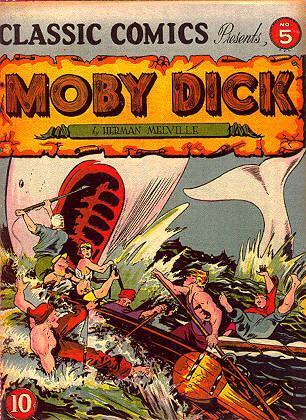 The point of all this material, Miller argues, is to elevate the tale of Ahab and his mad quest for revenge to mythic heights:
The cumulative effect of this bulk of material on the whale–its anatomy, its antiquity, its divinity and more–is to storm the imagination by sheer mass and magnitude. Out of his unlikely and disparate materials, by the ingenious strategy of alternately infiltrating, concentrating, and dispersing, Melville creates a mythic setting for his tale. When we reach the final pages of the novel, and see Moby Dick triumphant in the midst of the general catastrophe, we sense in him a lineage and a nature more than flesh, higher than fish; as we watch all the actors but one disappear beneath the waves, and are told that “the great shroud of the sea rolled on as it rolled five thousand years ago,” we sense a continuity and cosmic significance in the action that only Melville’s massive mythology of the whale could have inspired. (p. 102)
That seems exactly right to me.
 A Thinking Reed
Leave a reply to Rick Ritchie Cancel reply