Category: Theology & Faith

  • Jesus Our Redeemer

    Gerald O’Collins, S.J. is an Australian Jesuit who’s taught at Gregorian University in Rome since the 70s. I greatly enjoyed his book on the Trinity (and blogged a bit about it here), so was pleased to discover that early this year he published Jesus Our Redeemer: A Christian Approach to Salvation in which O’Collins offers a systematic soteriology. He covers the topics of creation, original sin, atonement, the role of the Holy Spirit and the church, the salvation of non-Christians, the final resurrection, and the redemption of creation. I just received the copy that I ordered and am eager to dig in. Expect posts soon.

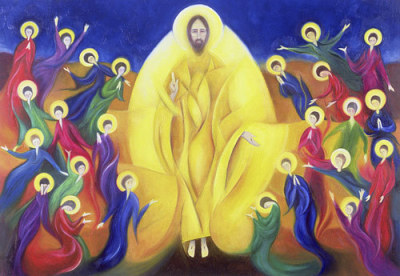
    It also has a really lovely cover image from Sophie Hacker a contemporary religious artist:

    resurrection-icon.jpg

  • Notes on a theocentric ethic of creation, 2

    In addition to theocentricity and what I’ve called a “qualified” anthropocentrism, any Christian ethic of creation needs to address the issue of the “fallenness” of creation. This is a controversial topic since, while most theologians have no problem with the idea of human fallenness (in some sense), the idea that the non-human creation is somehow not what it should be seems to smack of pre-modern mythological thinking. Given what we know about the scientific laws of the universe, do we need to posit some pre-historic cosmic cataclysm to explain the existence of suffering, predation, death, natural disasters and the like? The view sometimes put forth that all these things are somehow the result of human (or maybe angelic) sin seems incredible to many Christians.

    However, I don’t think we can dismiss the idea of a cosmic Fall so easily. If we take nature as it is, how do we reconcile the presence of so much suffering and death with the existence of a Creator of unlimited love and power? Certain modernist theologians have contended that a universe structured the way ours is, with all its attendant pain and suffering, is necessary to bring into existence rational, personal creatures who can respond to and enter into a relationship with the Divine. This line of thought is supported by the oft-noted “anthropic” features of the cosmos that make it appear to be “fine-tuned” for the emergence of life. But this is unsatisfactory for a couple of reasons. First, it seems to relegate the entire non-human creation to a mere ancillary role in God’s plan. Second, as it stands it doesn’t address the moral issue raised by the suffering of so many sentient creatures, who, on this telling, are mere means to the creation of rational beings like ourselves.

    If I can wax Anselmian for a minute, it strikes me as “unfitting” that God would create solely to bring into existence human beings (and perhaps other rational creatures elsewhere) but have no additional purposes for creation. The Bible, for one, seems to envision a redeemed creation, not simply a redeemed humanity.

    Another attempt to have Christian theology without the Fall is found in the “creation spirituality” of Matthew Fox. Fox posits an “original blessing” (as opposed to original sin) and thinks that we should embrace the ethos of nature as unambiguously good and not in need of redemption. Unfortunately, this and similar views border on pantheism and nature worship and overlook the fact that deriving our ethics from the natural world can yield cruelty as much as compassion. Nature is God’s good creation, but it’s also “red in tooth and claw” and can’t set the standard for our ethics or theology in any straightforward way.

    But does this mean that there was some pre-historical state of perfection from which the created world fell, as the result of human or angelic sin? David B. Hart has defended such an idea in his book The Doors of the Sea. But, as I argued previously, I think Hart comes dangerously close to gnosticism in his positing of a perfect eternal creation that somehow “preceded” the world as it exists now. It’s hard, on Hart’s account, to identify the empirical world we see around us with God’s good creation. Just as our doctrince of original sin shouldn’t efface the basic goodness of human nature, any doctrince of cosmic fall and redemption shouldn’t obscure the goodness of the world as we actually experience it.

    The view I lean toward is that creation is good, but incomplete and in need of redemption, or deliverance from evil. God’s world will not ultimately contain the evils of suffering and death, but this is because it will be transformed, not annihilated. This view doesn’t require the existence of a pre-historic cosmic fall, but it does see the story of the Fall as containing the important truth that creation is unfinished and not what it should be. This prevents us from treating death and suffering as “natural” in the deepest sense (and therefore good), but it also avoids Hartian quasi-gnosticism about the natural world.

    This implies, at a minimum, that we not take the “struggle for survival” as the template for our thinking about the natural world, much less mimic it in our relationships with one another. But it should also caution us against utopian attempts to remake nature in a way that is free from the inherent limitations of a fallen creation. Nature is neither perfect as it is, but nor is it “fixable” by us. This side of the eschaton it would be pointless and cruel to try and make the lion lie down with the lamb.

    But what I think it does point to is that we shouldn’t exacerbate the violence of nature with our own violence. Whatever we think about the story of the Fall, it’s clear that we now have the power to “corrupt” nature with our sinfulness in a very straightforward way. Our ability to change natural processes, to pollute, to deforest, and to manipulate the natures of living creatures far outstips anything our ancestors had, and in all likelihood outstrips our wisdom. But another part of our uniqueness as human beings is our ability to look toward, and in some degree anticipate, that redeemed state that we hope for.

    In part three I’ll try to tie some of these threads together…

  • Notes on a theocentric ethic of creation, 1

    As a kind of follow up to yesterday’s post, I’ve been thinking a bit more about what a Christian environmental (or better “creation”) ethic might look like that steers between anthropomorphism and misanthropy.

    I think a key concept here is theocentricity. A theocentric ethic would recognize that human beings, while perhaps the most valuable creature we know of, are not the center of the universe. Many theologians have been de facto anthropocentrists in claiming that all other creatures are essentially here for our use, but this isn’t quite what the Bible says and it’s in conflict with what I regard as some of the best insights of the Christian tradition.

    What a theocentric view of the world would emphasize, I think, is that creation ultimately exists for God’s sake. As philosopher Stephen R.L. Clark puts it:

    Some modernist theologians explain the apparent failings of our present world as God’s chosen way of creating rational individuals. Everything, by their account, exists for us to use. The God of orthodoxy has no need of secondary causes of this sort. Whatever He creates, He creates for its own sake, because He chooses to. Some have held that He created every possible creature; others that He actualizes only some real possibilities; others again that even God the Omniscient cannot inspect all possible, so-far non-existent, beings (because there can be no criteria for their identity beyond what God makes real in creating some `of them’). Whatever the truth of this, we can be confident that He creates exactly what He wants, for its own sake or `for His glory’. Nor does the God of orthodoxy need to make particular creatures co-existent: as far as we can see He may have randomized creation, since His chosen must, in any case, relate to anyone at all who is their neighbour, irrespective of their nature or their merits. Nor does He select for special treatment just those creatures that a finite observer might expect: nothing in the long ago determined Him to raise up mammals, hominids, or Abram. So orthodox theocentrism is far less committed to the notion of a Visible Plan than atheistic critics have supposed.

    Creatures exist first and foremost because God wants them to. They are pronounced by him as “good”; they have value in their own right. And they have lives to live, or forms of existence, that aren’t reducible to how they may be of use to us.

    Arguably one of the main sources of our mistreatment of the natural world and the creatures that dwell therein is the view that all of nature is one vast “resource” for our use. Once our fellow-creatures are reduced to the value they have as resources, it’s virtually impossible for us to see them as existing in their own right and for their own sake. A theocentric perspective would view them as existing for God, as having their own lives to live that aren’t automatically forfeit to human whim or even need.

    Still, the Bible tells us that human beings are created in the image of God, and that they are given “dominion” of the earth. For many environmental thinkers this is the “original sin” of western civilization. This dominion has led ineluctably to the exploitation of nature (and, perhaps, the exploitation of women, children, and non-white races who have all too often been identified with “nature” over against the “male” principle of rationality that has frequently been taken to be the meaning of God’s image in us).

    Recent theologians, however, have questioned whether this is an accurate understanding of what the Bible means by dominion and the imago Dei. In their essay “The Chief End of All Flesh,” Stanley Hauerwas and John Berkman write:

    [T]he only significant theological difference between humans and animals lies in God’s giving humans a unique purpose. Herein lies what it means for God to create humans in God’s image. A part of this unique purpose is God’s charge to humans to tell animals who they are, and humans continue to do this by the very way they relate to other animals. We think there is an analogous relationship here; animals need humans to tell them their story, just as gentiles need Jews to tell them their story.

    This idea of humans telling animals their story seems not unlike the notion sometimes expressed by theologians that human beings are the “priests” of creation. We give voice to the praise of God that is properly given by all creatures.

    Another rethinking of the imago Dei and “dominion” is offered by Andrew Linzey who reconceptualizes the role of humans as the “servant species.” For Linzey this is essentially a Christological clam: Jesus, who came to serve and not to be served, is the true image of God and, as such, this stance of service is normative not only for our relations with each other, but for our relationship with creation. “Dominion” means that we are deputized as it were to rule over creation in accordance with God’s will; but the nature and character of that will is expressed in the life of Jesus, a life of self-giving love.

    Even with these qualifications of traditional ideas of human uniqueness in mind, I think most of us still want to affirm some kind fo qualified anthropocentrism. Human beings, we feel and think, simply are more valuable than other creatures, and it would be morally abhorrent to suggest sacrificing a human life to save the life of an elephant, or a redwood, or what have you. And this hierarchy does seem grounded in the kinds of characteristics that different creatures display: the human capacities for rational judgment, moral action, self-giving love, and spiritual awareness do seem to set us apart from animals, even if the line isn’t quite as bright and distinct as we used to think.

    Another fact that has to be considered is what I would call the particularity of our loves. There’s a tension in ethics between the duties we owe to other people as such and the duties we owe to those who are especially close to us, even though that closeness may seem to be the result of morally irrelevant characteristics such as accident of birth. Nevertheless, rare is the ethicist, much less normal person, who would claim that our duties to all are identical. I have a greater duty to care for my own children or parents than I do for strangers in some distant country. Similarly, we might suggest that we have greater duties to our “kin” who are our conspecifics. I owe more to a fellow human than to a non-human animal not just because she ranks higher in some objective hierarchy of being, but because we are more closely related. If the strength of our duties of care radiates outward from kith and kin to more distant relations, I don’t see why the same might not be said with respect to other species.

    So, it seems to me we have two principles that need to find a place in any satisfying ethic of “creation care.” The first is a theocentrism that puts our claims in perspective. We are one kind of creature among many, and all other creatures don’t exist merely for our sake. The other is a qualified anthropocentrism which recognizes the greater value of human beings, both in an objective sense and as a consequence of our greater solidarity with those to whom we are more closely related.

    More to come…
  • The triumph of anti-Constantinianism

    Over at Faith and Theology there’s a (somewhat tongue-in-cheek) poll on the “worst theological invention.” What’s interesting is not just that only one of the “inventions” is an actual heresy, but that “Christendom” and “just war theory” got enough nominations to make the poll. (Though, in fairness, biblical inerrancy and “the Rapture” are the current leading contenders for worst.)

    I say this is interesting not so much to disagree but to wonder at the fact that, at least in certain theological circles, the radical reformation/free church revisionist account of Christian history has triumphed almost completely and with little opposition. The story is that the early church was radically countercultural and pacifist until the conversion of the Emperor Constantine (who didn’t make Christianity the state religion as is sometimes asserted, but did institute religious toleration and opened the door for eventual establishment). From there the story is one of steep decline wherein the church becomes complicit in war, imperialism, crusades, slavery, genocide, you name it, roughly until, well, now. Just war theory is one manifestation of the Christendom’s attitude of compromise toward worldly powers. Granted there are always dissenters upheld as heirs of the true anti-Constantinian gospel such as anabaptists, but the overall picutre is a pretty bleak one. The prescription that usually follows this re-telling of the history is for the church to return to its countercultural roots in order to provide a radical witness against war, capitalism, consumerism, “radical individualism” and other ills of the modern age.

    In much of the recent academic theology I’ve read (which is admittedly a limited sample) this story seems to be taken almost for granted. The only major theologian I can think of who has really contested this account is Oliver O’Donovan. But I can’t help but wonder why magisterial Protestants, Catholics, and Orthodox Christians (for whom the Emperor Constantine is in fact a saint) haven’t been more ready to look critically at this anti-Constantinian/anti-Christendom narrative. After all, doesn’t it imply that the church went deeply and radically wrong for pretty much most of its history? What does this imply for the doctrine of providence, for instance? And what does it say about the practice of infant baptism, which seems like it fits better with the quasi-state church model as opposed to the practice of believer’s baptism associate with the free churches? And what about the Christologica dogmas formulated in many cases under the watchful eye of the emperor? Can they still be deemed legitimate?

    Again, I’m not saying the revisionist story is out and out false. I’m just not convinced that mainline Christians haven’t been too quick to jump on the anti-Constantinian bandwagon rather than sifting the wheat from the chaff when it comes to the legacy of Christendom.

  • Ethical seriousness without self-absorption

    Hugo has a reflective post on his journey “further up and further in” to the vegan lifestyle and contemplates the importance of gradual change. And here’s an insightful post on how the quest for moral improvement can become ironically self-absorbed.

    The last point is an important one, I think. In our society, obsessed as it is with “self-help,” ethics can easily get confused with self-improvement. Someone who’s so concerned with their own moral purity is, not unlike the Pharisees in the New Testament, missing the point.

    What I’ve always liked about the Reformation doctrine of justification by faith is that it leads, or ought to lead, to a kind of self-forgetfulness. D.M. Baillie identifies the distinctive teaching of Christianity as the “paradox of grace.” This paradox is that we are most free when God’s grace is acting in and through us, and that, though we are responsible beings, we can’t take credit for our good actions. “Not I…but the grace of God in me” is the proper attitude of the Christian. Luther, in his Freedom of a Christian, points out how justification by faith frees us from concern with our own standing before God and frees us for service to our neighbor.

    That’s the key I think. Service to our neighbor (and I would include all of creation there), not self-betterment, is the test for our ethics. There have been movements within Christianity which have been at times morbidly introspective. But it’s hard to think of something more pointless than constantly taking your spiritual and moral temperature. Not that we should avoid self-examination, confession, and repentance, but that we should sit a bit lightly to our quest for “sanctification.”

    For whatever reason, it seems that people sensitive to animal rights face a particular temptation to self-righteousness and self-preoccupation. This may be a result of what is ultimately an illusory quest for a kind of moral purity. If you have made significant changes in your lifestyle such as giving up animal products you may be inclined to look down your nose at others who haven’t. But, as Andrew Linzey, probably the most well-known Christian advocate of animal rights, has pointed out, there is no “pure land” where we can claim to have extricated ourselves from the system of animal exploitation:

    [W]e need to dispel the myth of absolute consistency or ‘pure land’ theology. ‘Western society is so bound up with the use and abuse of animals in so many fields of human endeavour,’ I have argued elsewhere, ‘that it is impossible for anyone to claim that they are not party, directly or indirectly, to this exploitation either through the products they buy, the food they eat, or the taxes they pay.’ Vegans are right to prick the consciences of those who find some recourse to animal by-products inevitable, but they can mislead us if they claim some absolutely pure land which only they inhabit. Self-righteousness can be a killer not only of moral sense but also of moral encouragement.

    Instead, he says

    [w]hat we need is progressive disengagement from injury to animals. The urgent and essential task is to invite, encourage, support and welcome those who want to take some steps along the road to a more peaceful world with the non-human creation. We do not all have to agree upon the most vital steps, or indeed the most practical ones. What is important is that we all move some way on, if only by one step at a time, however falteringly. If someone is prepared to boycott factory-farmed foods, at least they have made a start. If that is all the humanity that person can muster at least some creatures have been saved from suffering. If someone is prepared to give up only red meat, at least some animals will suffer and die less as a consequence. If someone is prepared to abandon just meat and fish, at least some other creatures have a chance of living in peace. The enemy of progress is the view that everything must be changed before some real gains can be secured. There can be areas of genuine disagreement even among those who are committed to a new world of animal rights. But what is essential for this new world to emerge is the sense that each of us can change our individual worlds, however slightly, to live more peaceably with our non-human neighbours.

    Connecting this with the point above about justification by faith: I don’t need to justify myself in the eyes of God by attaining some level of moral purity, which is impossible anyway. God has justified us by making peace with us through the Cross of his Son. But, this frees me to creatively explore ways in which I might live less violently, not in order to earn God’s favor, but out of gratitude for what he has done.

    And, it’s important to recall, we live in a fallen world. There won’t be an end to suffering, death, predation, competition for resources, and violence until the Lord returns in glory (whatever that’s going to look like!). Moral perfection isn’t an option in such a world. But we can witness to the hope and promise of a new heaven and new earth. What that looks like for each of us will, as Linzey says, vary from person to person. The point is to leave behind our self-preoccupation and to serve others in the liberty of the children of God. We can “sin boldly” knowing that that by God’s grace we are accepted and cherished.

  • Once more into the breach…

    At the risk of boring readers to tears, Robert Jenson’s article on the atonement prompted me to write something about the oft-made criticism that Anselm imports the conceptual apparatus of feudal law into his theory of atonement and that this distorts the idea of God by replacing it with a deity who is an easily offended feudal lord writ large demanding his pound of flesh.

    But, as John McIntyre demonstrates in his excellent book St. Anselm and His Critics, those who’ve made this criticism often fail to read Anselm closely and don’t seem to realize that he’s pouring his own meaning into terms that seem to be drawn from feudal social arrangements such as “honor” and “satisfaction.”

    Anselm’s account of the atonement is rooted from first to last in his understanding of the divine nature, and he reworks the notions of honor and satisfaction accordingly. McIntyre argues that a, if not the, key to understanding CDH is the concept of God’s aseity. This is theological jargon referring to the idea that God exists in and through himself, utterly independent of anything else. There is nothing “external” to God which constrains him to act in certain ways.

    Thus, there isn’t an order of justice that has to be satisfied by God before he can be merciful to us, as though God were caught in some web of rules. And God’s “honor” for Anselm doesn’t refer to his wounded pride. God’s justice and purpose in creating the world are entirely internal to his nature, and his justice isn’t separate from his love. I think Anselm would agree with N.T. Wright’s point that “wrath,” understood as God’s hatred of sin, is inseparable from his love. How can God not hate that which destroys and corrupts his good creation?

    That’s why, for Anselm, the atonement is entirely a provision of God’s love, and not something “imposed” on God from without. Such an idea is absurd in the strongest possible sense. In the Incarnation of the Son God provides for the satisfaction of justice by restoring the harmony and beauty of his creation which has been defaced by sin. But this is rooted in God’s love – love for his creation and inexorable desire that it be brought to fulfillment. Where Anselm differs from Wright and other proponents of a “penal” substitution is that Anselm sees satisfaction as the alternative to punishment. Christ isn’t punished in our place; the self-offering of the God-man provides for a gift so beautiful and good that it effaces or “outweighs” the disorder created by sin. Therefore anyone who “pleads the sacrifice of Christ” is brought into reconciliation with God.

    Indeed, the concepts of honor and satisfaction are stretched beyond anything that would really make sense in a human social or legal relationship. God’s honor can’t be damaged, as Anselm points out, because God is unlimited bliss. The best we can say is that his “honor” refers to his unchangeable will to bring creation to its intended consummation. And “satisfaction” is no longer a kind of tit-for-tat proportionate recompense for discrete offenses. The gift of the God-man posesses infinite worth, completely outstripping the evil of human sin. Interesting, McIntyre argues that Anselm in fact subverts the medieval penitential system which prescribed specific penances for particular sins and lays the groundwork for justification by faith: the sacrifice of Christ truly is a once and for all response to human sin.

    So, Anselm’s theory isn’t best understood as an attempt to project a feudal social order onto the Christian story even if he employed the language of feudalism. It’s based first and foremost on Anselm’s understanding of God. Admittedly, this is an understanding that is both deeply Christian and deeply influenced by Platonism, making it suspect to a lot of contemporary theology, but that’s a different issue.

  • D.M. Baillie on the Jesus of history and the Christ of faith

    This weekend I re-read Donald Baillie‘s brief book God Was In Christ. Though originally published in 1948 it still strikes me as fresh and contemporary, not least in the way that it treats the problem of the “historical Jesus” and/vs. the “Christ of Faith.”

    Baillie is waging a two-front war here. On the one side are “liberals” who, so intoxicated by research into the historical Jesus, want to keep Jesus but jettison Christology. Why not be content, they ask, with the “simple religion of Jesus” rather than the religion about Jesus, which overlays the message of God’s fatherly love with obscure Christological dogma.

    On the other side are those who Baillie calls “neo-confessionalists.” He has in mind here folks like Barth, Brunner, and Bultmann, who, in spite of their differences, downplay the importance of the Jesus of history in favor of the Christological dogmas about Jesus. They ironically accept the most radical biblical criticism of their day, but use it to undermine the optimistic liberal version of the historical Jesus and to buttress the authority of the church’s proclamation of the God-man.

    What’s interesting here is that these two poles are in many ways still with us. A liberal like Marcus Borg or John Dominic Crossan would have us abandon the church’s proclamation about Jesus with its Christological baggage and focus instead on Jesus as an exemplar of religious consciousness and an advocate for social justice.

    Meanwhile, Christians overly impressed with some strands of postmodernism dismiss “historical Jesus” research and, in light of various epistemological critiques, see the church’s web of belief and practice as epistemically prior to any purely historical questions about “what really happened” back in 1st century Palestine. Thus the church’s proclamation about Christ and its portraits of him in the Gospels are rendered immune to challenge from purely secular sources of knowledge.

    Baillie, however, is unhappy with both approaches and seeks to thread a middle way. He deploys a rather ingenious argument against the “liberal” position. He points out that “the faith of Jesus” can’t be so easily disentangled from claims about who Jesus was/is. In other words, any adequate theology will require a Christology. This is because the God that Jesus reveals is not a remote deity to which humans must ascend by their own efforts, but a gracious father who takes the initiative and seeks the lost. To see Jesus as an examplar, even the supreme exemplar, of this quest fails to do justice to the faith of Jesus himself:

    If Jesus was right in what He reported, if God is really such as Jesus said, then we are involved in saying something more about Jesus Himself and His relation to God, and we must pass beyond words like ‘discovery’ and even ‘revelation’ to words like ‘incarnation.’ ‘In order to give us authentic tidings of the character of God’, I quoted from a philosopher, ‘Jesus did not require actually to be God.’ Is that, then, all that Jesus did–to bring us authentic tidings, as from a distant realm, of a God who takes no initiative Himself to seek us out? If God is like that, then Jesus was wrong about Him, the tidings He brought were not authentic, and He was not even a true discoverer. But if He was right, then there is something more to be said, something Christological; and if we leave it out, we are leaving out not only something vital about Jesus, but something vital about God. That is to say, if we have not a sound Christology, we cannot have a sound theology either. (pp. 64-5)

    Baillie has a different bone to pick with those he calls the “neo-confessionalists.” Skeptical about the ability of historical research to tell us much at all about the life and personality of Jesus, it falls back on the church’s proclamation of Christological dogma. Thus it makes a virtue out of necessity, even going so far to say that knowledge of the life and career of Jesus would be positively no help in coming to faith. Kierkegaard, who had influenced this neo-confessionalist strain, went so far as to say that “If the contemporary generation had left behind them nothing but the words, ‘we have believed that in such and such a year God appeared among us in the humble figure of a servant, that He lived and taught in our community, and finally died,’ it would be more than enough” (quoted by Baillie, p. 49).

    But, Baillie asks, is the sheer brute fact of the Incarnation a sufficient foundation on which to build an adequate Christology? He is happy to concede that the various “historical Jesus” schools have overreached both in what we can really know about Jesus and in trying to isolate the “history” from the divine drama of redemption. But at the same time, to take the Incarnation seriously means that it matters what kind of life God in the flesh lived on earth. The personality or character of Jesus is itself a revelation of the nature of God. “[Barth] has reacted so violently against the ‘Jesus of history’ movement that he does not seem interested in the historical Jesus at all. His theology has become so austerely a theology of the Word that (if one may venture with the greatest respect to say so) it is hardly a theology of the Word-made-Flesh” (p. 53).

    I’m not in a position to assess whether this is a fair critique of Barth, but what I take two points away from this. First, the personality or character of Jesus matters. If the Christian message were confined to the mere report of the dying and rising of the God-man and made no mention of the kind of man he was, it would be radically incomplete. Secondly, it matters whether Jesus really did do and say the kinds of things ascribed to him in the Gospels. However much legitimate criticism there is to be made of the methods and conclusions various “historical Jesus” reconstructions, Christians can’t simply shrug off the historical question by taking refuge in the church’s confession. Honest seekers will always want to know what relationship the story of Christ that the church tells bears to reality.

    With all its emphasis on the incursion of the Divine into human life once for all in Jesus Christ, [neo-confessionalist theology] has no interest in studying the resultant life as an historical phenomenon; and this is not because it would put back the hands of the clock by rejecting modern historical criticism (far from it!) but because ‘the Jesus of history is not the same as the Christ of faith’ (Brunner). I do not believe that this can be a stable position for theology. It would ultimately stultify the whole doctrine of the Incarnation. ‘If righteousness is by the Law,’ said St. Paul to the first Christian generation, ‘then Christ died for nothing’; and we might now say, in this twentieth century: If revelation is by the Word alone, then Christ lived for nothing, and the Word was made flesh in vain. That is the ultimate answer to our question as to whether we can dispense with the Jesus of history. (pp. 53-4)

    Baillie’s point is that it’s not enough to take refuge in the dogmas, tradition, language, or practices of the church, however essential those are. Although current theology is more interested in Jesus’ character and teachings, there is a tendency among the heirs of Barth to insulate the church’s story from the issue of historical veracity, often by appeal to a kind of postmodern relativism of epistemologies. If no one has access to the unmediated truth of things, then the church’s version of events is no worse off (and, of course, no better off) than anyone else’s version. The question is whether safety from external critique is purchased at the price of universal relevance. If the Incarnation was a public event, a revelation of the divine character and purpose in the life of an actual historical human being, then it matters what that life was like. It seems to me that we risk embracing a new kind of gnosticism if we say that knowledge of Jesus is only possible within the “narrative” of the Christian community.

    Baillie contends that, even taking into consideration the results of historical criticism, it’s still possible to discern the character of the historical Jesus. Against the “form criticism” school that tries to understand the Gospel elements in terms of the rhetorical or homiletical purposes, Baillie points out that this doesn’t exclude “biographical” information about Jesus. It’s become a cliche to say that the Gospel writers weren’t interested in writing history or biography in the modern sense, but it hardly follows that they had no interest in historical recollections about Jesus. As Baillie says, “surely we should expect those men, believing what they did about Jesus, to be immensely interested in recalling anything that He had said or done, simply because He had said or done it, however remote they might be from the modern ‘biographical’ interest” (p. 57).

    Thus I cannot believe that there is any good reason for the defeatism of those who give up all hope of penetrating the tradition and reaching an assured knowledge of the historical personality of Jesus. Surely such defeatism is a transient nightmare of Gospel criticism, from which we are now awaking to a more sober confidence in our quest of the Jesus of history. (p. 58)

    While I think there’s a lot to be said for the kind of critique of the “historical Jesus” industry offered by someone like Luke Timothy Johnson, I think Baillie is correct that a truly incarnational faith can’t detach itself from its roots in history. At the same time, he’s also correct that the “Jesus of history” is insufficient as the basis for a living faith. The church’s experience of Easter and Pentecost, as well as its ongoing life, are surely indispensable for understanding the meaning of Jesus in the divine drama of our salvation.

  • The least of these

    From Stephen Cottrell’s ‘I Thirst’:

    A further interpretation of this story [Jesus’ parable of the final judgment in Matthew 25] touches powerfully upon the way we treat the whole created order, particularly our fellow-creatures. ‘The least of these’ can refer to animals abused and exploited in so many atrocious ways. The food scares that have rocked our world in recent years have invariably arisen directly from the appalling ill treatment of animals in our gluttonous desire to have cheap meat on our tables every day. Then there are the unnecessary cruelties of much animal experimentation. ‘The least of these’ can be the species facing extinction because of the destruction of their natural habitats. ‘The least of these’ can be the fauna and flora themselves disappearing as land turns to desert, as rainforests are plundered and polluted. (p. 152)

    If part of the meaning of the Incarnation is that God identifies with suffering humanity is it too much of a stretch to suggest that God identifies with the “groaning” of all creation, which is waiting to be redeemed, particularly from human cruelty and misuse? Is it proper to see the face of Jesus in a battery hen or a veal calf? Is the new covenant a covenant with humans only, or with all flesh, as the Noahide covenant was?

    If it is a covenant with all flesh, or even all creation, then we might see it as God’s “yes” to his creation. God affirms the worth of all that is. This doesn’t necessarily imply that there are grades of worth among different kinds of beings, but that each kind is valued by God and has a place in creation. However, if Christian ethics call for special attention to “the least of these,” those who are downtrodden, weak, and vulnerable, then animals, who so often are completely vulnerable to human use, and even the ecosystems that are frequently subject to human intervention, would seem to merit special consideration.