Category: Theology & Faith

  • Cursing our enemies before God

    Given the debate over the last few days about whether it’s appropriate to be happy about, and even celebrate, the death of Osama bin Laden, I thought it would be worth revisiting Ellen Davis’s discussion of the cursing (imprecatory) psalms in her book Getting Involved with God. These psalms, which call God’s wrath down upon the psalmist’s enemies in what often seems like a very unchristian spirit, are frequently glossed over or heavily edited, if not extirpated entirely from contemporary Christian worship.

    However, Davis argues that “the cursing psalms are in fact a crucial resource for our spiritual growth, indispensable if we are to come before God with rigorous honesty” (pp. 24-5).

    The cursing psalms help us to hold our anger in good faith. Sadly, most of us feel about our enemies more like the psalmist does than Jesus did. We must pray to be healed from our hardness of heart, but healing will not come through a cover-up. Healing for ourselves and even for our enemies requires that we acknowledge our bitter feelings and yet not yield to their tyranny. Rather we must offer them, along with our more attractive gifts, for God’s work of transformation. In several ways, the cursing psalms give us strong practical guidance in making that offering of anger. (pp. 25-6)

    What is this practical guidance? Davis says that it comes in three forms. First, the cursing psalms give us words to express our anger. And not only do they provide a means for venting our anger when we are betrayed or victimized, they can help us move past anger. By giving us words with which to externalize our anger, they allow us to look at it more objectively and, perhaps, to recognize the element of self-righteousness it contains. “For the cursing psalms confront us with one of our most persistent idolatries, to which neither Israel nor the church has ever been immune: the belief that God has as little use for our enemies as we do, the desire to reduce God to an extension of our own embattled and wounded egos” (p. 26).

    Second, the cursing psalms can be modes of access to God. They teach us that God is known in judgment on evil as well as in mercy. “The God who created us for life together (Genesis 2:18) is, like us, outraged by those who violate trust and rupture community” (pp. 26-7). It is part of our baptismal vows to name evil when we see it and to reject it wholeheartedly.

    Finally, and most importantly, these psalms direct us to give the desire for vengeance or payback over to God. “[T]he cry for vengeance,” Davis says, “invariably takes the form of an appeal for God to act” (p. 27). The cursing psalms don’t authorize us to take matters into our own hands. “On the contrary, the validity of any punishing action that may occur depends entirely on its being God’s action, not ours” (p. 27). Moreover, leaving vengeance in the hands of the Lord means relinquishing control of the outcome:

    Through these psalms we demand that our enemies be driven into God’s hands. But who can say what will happen to them there? For God is manifest in judgment of our enemies but also, alas, in mercy toward them. Thus these vengeful psalms have a relationship with other forms of prayer for our enemies. (p. 27)

    So, if there’s a lesson here for us, maybe it’s that we ought to bring our feelings about enemies like bin Laden–whatever they are–before God. If I’m happy about bin Laden’s death, then I should say that to God in prayer. But doing so in the spirit of the psalms means that I may come to recognize an element of self-righteousness in my righteous anger and satisfaction. It means naming the evil that he was responsible for and our anger about it. But it also means giving up the position of ultimate judge of his, or anyone else’s, fate. (It’s noteworthy, though not particularly surprising, how many people are confident in consigning bin Laden to hell.) Human justice may have required bin Laden to be killed, or at least to be sufficiently disabled to prevent him from wreaking more terror. But ultimate judgment remains beyond us. Navy SEALs might have been the instrument that drove bin Laden into the hands of the living God, but what happens once he gets there remains a mystery.

  • The prayer of suffering

    Another insightful passage from Ellen Davis on the Psalms:

    The preponderance of laments in the Book of Praises is a fruitful contradiction from which we can learn much. But we live with a second discrepancy that should trouble us more than it does; namely, the contrast between the biblical models of prayer and our own contemporary practices in the church. It seems that ancient Israel believed that the kind of prayer in which we most need fluency is the loud groan, and they have bequeathed us a lot of material on which to practice. Therefore it is troubling that most Christians are almost completely unfamiliar with the lament psalms. Except on Ash Wednesday and Good Friday, these psalms almost never appear in worship services. Evidently modern Christian liturgists define the business of worship more narrowly than did ancient Israel, and as a result our lives as individual believers and as a church are impoverished. The shape of the Psalter–the fact that the laments are brought to the fore–suggests that our own worship is deformed by our failure to bring the language of suffering into the sanctuary as an integral part of our weekly liturgy. (“With My Tears I Melt My Mattress,” Getting Involved with God, pp. 15-16)

    There’s a tendency among Christians to see the expressions of raw emotion in the Psalms–including despair, anger, and longing for vengeance–as sub-Christian and to conclude that they have no place in public worship or private prayer. But as Davis points out, most of the psalms of lament have an internal movement that finishes in praise. “[T]he lament psalms regularly trace a movement from complaint to confidence in God, from desperate petition to anticipatory praise” (pp. 20-21). Bringing the experience of suffering into God’s presence is necessary for that suffering to begin to be healed.

  • The First Amendment of faith

    The problem with [many common] notions of prayer is that we cannot have an intimate relationship with someone to whom we cannot speak honestly–that is, someone to whom we cannot show our ugly side, or those large clay feet of ours. We in this culture are all psychologically astute enough to know that honest, unguarded speaking is essential to the health of family life or close friendship. But do we realize that the same thing applies to our relationship with God? That is what the Psalms are about: speaking our mind honestly and fully before God. The Psalms are a kind of First Amendment for the faithful. They guarantee us complete freedom of speech before God, and then (something no secular constitution would ever do) they give us a detailed model of how to exercise that freedom, even up to its dangerous limits, to the very brink of rebellion.

    -Ellen F. Davis, “Improving our Aim: Praying the Psalms,” Getting Involved with God, pp. 8-9

  • Friday links

    –On Christianity, the Holocaust, and Dietrich Bonhoeffer.

    –Recent posts on what’s apparently now being referred to as the “new universalism” from James K.A. Smith, Halden Doerge, and David Congdon.

    –Does having a monarchy lead to greater equality?

    –Redeeming the “L word.”

    –Appreciating both N.T. Wright’s and Marcus Borg’s views of the Resurrection.

    –Why liberals should embrace classical (small-r) republicanism.

    –Love and service are more fundamental than “rigorous theology.”

    –Was the Civil War a “tragedy“? (More here and here.)

    –Hiding the truth about factory farms.

    –Kate Middleton for the win.

    ADDED LATER: What’s going on with the Canadian election?

  • The binding of Isaac and the binding of God

    I’m reading a wonderful book by Duke Divinity School professor Ellen F. Davis called Getting Involved with God: Rediscovering the Old Testament. It’s a series of loosely connected essays and meditations on various OT books and stories, what she calls an “unsystematic introduction.” Davis’s purpose, she says, is to provide an alternative to the way Christians usually approach the OT. Conservative Christians may read it primarily as a moral rulebook or a set of prophecies of the birth, death, and resurrection of Jesus, while liberal Christians, if they read it at all, tend to view the OT as morally and spiritually primitive, fully superseded by the New Testament. In contrast to either of these approaches, Davis commends a “spiritually engaged” reading of the OT, focusing on “what the Old Testament tells us about intimate life with God” (p. 2).

    As her title suggests, a common theme running throughout the book is that the God of the Bible is unique among ancient deities in that he is deeply concerned and involved with the plight of humanity. “God’s life is bound up inextricably with ours” (p. 1). As she says a little later, “the fundamental article of biblical religion [is] that God’s life, God’s glory, even God’s well-being, are indissolubly linked with our lives. For Christians, the sublime expression of that indissoluble linkage between God’s glory and frail human life is the incarnation of God in Jesus Christ” (p. 19). God actually takes a risk in entering into a covenant with creation–the success of this covenant depends in part upon the free response of human beings.

    Which brings us to the story of the Binding of Isaac, which Davis rightly calls one of the most terrifying stories in the Bible. She notes that modern “enlightened” Christians are deeply uncomfortable with this story, and she identifies two strategies they use to get around it. One is to simply reject it as an expression of an archaic, sub-Christian conception of God. (Davis says she heard one preacher emphatically declare that “I do not worship the God of Abraham”!) The second strategy is to see the story of the aborted sacrifice of Isaac as a symbolic representation of ancient Israel’s leap beyond the widespread practice of infant sacrifice and its transition to “ethical religion.”

    But, Davis says, neither of these approaches take the Bible and this story with full seriousness. She proposes a closer reading to see what’s really going on here. What this story is about, she argues, is God and God’s plan for blessing to creation. “Genesis is primarily a book about God, and secondarily about human beings encountering God” (p. 58). Davis notes that previously in Genesis we’ve seen God’s plans for humanity go awry time and again: first in the garden of Eden, then in humanity’s descent into violence culminating in the flood, and finally in the Tower of Babel incident. God’s new strategy in the remainder of Genesis (and the whole Bible for that matter) is to bless all of humanity by creating a covenant with a particular people. “At this point, God gives up on trying to work a blessing directly upon all humankind. From now on, God will work through one man, one family, one people, in order to reach all people” (60).

    For this to work, however, God has to find out what kind of man he’s dealing with in Abraham. That’s the purpose of God’s test in asking Abraham to sacrifice his son. After seeing that Abraham is willing to go through with it, “God knows something now that God did not know before. Genesis offers little support for a doctrine of divine omniscience, if by that we mean that God knows everything we are going to do before we do it” (p. 58).

    God’s new strategy is hardly surefire. We should not be surprised if adopting it makes God anxious, for now everything depends on the faithfulness of this one man Abraham. God, having been badly and repeatedly burned by human sin throughout the first chapters of Genesis yet still passionately desirous of working blessing in the world, now chooses to become totally vulnerable on the point of this one man’s faithfulness. It is, to say the least, a counter-intuitive solution to a problem. (p. 60)

    One reason this story appears so early in the Bible, Davis thinks, is that it teaches us something fundamental about Israel’s “complex witness” to God.

    The Binding of Isaac shows us a God who is vulnerable, terribly and terrifyingly so, in the context of covenant relationship. We are more comfortable using the “omni” words–omnipotent, omniscient–to describe God. Yet if we properly understand the dynamics of covenant relationship, then we are confronted with a God who is vulnerable. For, as both Testaments maintain, the covenant with God is fundamentally an unbreakable bond of love (hesed). And ordinary experience teaches that love and vulnerability are inextricably linked; we are most vulnerable to emotional pain when the well-being and the faithfulness of those we love are at stake. And as we have seen, the Bible shows that the faithfulness of even the best of God’s covenant partners is always up for grabs. So it follows that God’s vulnerability in love is an essential element of covenant relationship. (p. 62)

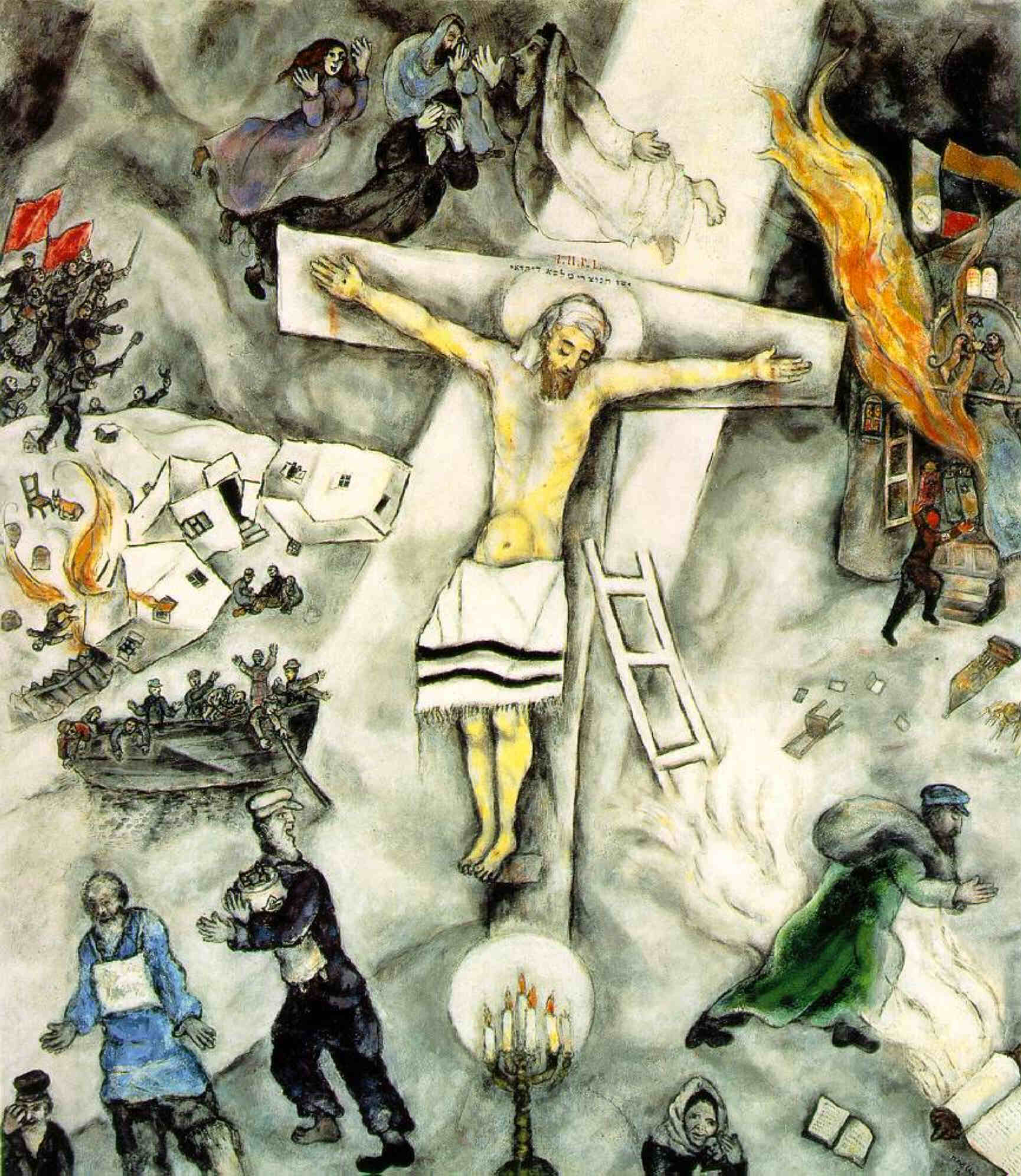
    This is one reason that the Binding of Isaac resonates so strongly with the story of Jesus’ Passion (which brings us to today):

    It is in Christ hanging on the cross that we see, for once in history, the two sides of this story fully joined in one person. In Jesus Christ we see a son of Abraham sparing nothing, totally faithful in covenant relationship with God. At the same time, we see in Jesus God’s total faithfulness, expressed now as excruciating vulnerability, even to death on a cross. These two images–Abraham binding Isaac, Christ nailed on a cross–are the supporting structures for the long convoluted story of sin and salvation. When reason fails, as it does at least one Friday each year, then we must listen to the stories with our hearts. (pp. 63-4)

  • What’s a Christian to do with capitalism?

    This post from Ned Resnikoff highlights some interesting data about Americans’ views on the compatibility of capitalism and “Christian values.” As he notes, the number of people who see them as incompatible goes up when the sample is restricted to self-identified Christians.

    I don’t think Christianity is necessarily anti-capitalist per se. Presumably a Christian should support whatever economic system best promotes human well-being. There’s a case to be made that some form of capitalism is the best candidate for this, at least given the available options.

    But there are also some deep-seated Christian principles that tell against a full-throated embrace of capitalism. I’d put them under two broad headings:

    (1) Christianity is against excessive wealth accumulation.
    (2) Christianity is against the market as the ultimate arbiter of value.

    The first point seems nearly incontrovertible to me based on a close reading of the gospels and a general familiarity with the history of Christian thought on these matters. Certainly the accumulation of wealth has rarely been upheld as a virute for Christians. I think this has partly to do with the idea that Christians should depend on God rather than wealth (you can’t serve two masters) and partly with our obligation to share from our excess with those in need. It’s certainly hard to argue that the disparities in wealth and the excess exhibited at the top of the income scale in contemporary America reflect sound Christian values.

    What I mean by the second point is that Christianity sees all human beings (and indeed all living creatures, I’d argue) as having a certain intrinsic value, which is derived from their creation by God. A consequence of this is that all people are entitled, simply by virtue of exisiting, to the prerequisites of a meaningful life, such as adequate food, shelter, health care, education, etc. A thoroughgoing “market society” in which goods were distributed strictly according to the ability to pay would be flatly inconsistent with this Christian principle.

    If this is right, the practical upshot is that Christians should support an economic system that limits great disparities in wealth and ensures that people’s basic value is respected independent of their “market value.” In my view, the evidence suggest that some kind of regulated capitalism with a generous social safety net and provision of high-quality public services is the best currently available system for doing this. There are multiple models here–North American, European, Asian–but all of them depart in significant ways from the laissez-faire ideal beloved of American right-wingers. (It’s worth noting that conservative Christian support for laissez-faire capitalism in the U.S. is both a historical and geographic anomaly.)

    It’s possible that some as-yet-untried alternative to regulated capitalism would perform better according to these principles. And the search for such an alternative may become more pressing as we continue run up against limits to nonrenewable resources and the environmental consequences of ever-increasing material consumption. These circumstances are likely going to require us to come up with new economic arrangements that might look very different from capitalism as we know it. But if we are entering into an era that requires us to radically alter our patterns of production and consumption, it’s even more important that Christians (and other people of good will) work to ensure that any new economic arrangements respect every person’s God-given value and dignity.

    UPDATE January 15, 2012: If I were writing this post now, I think I would change the first principle I cite to something like “Christianity regards all property and wealth as held in trust.” I think this gets more to the heart of the matter. Everything that is ultimately belongs to God and we only hold it in trust, as stewards. For Christianity there is no such thing as truly “private” property, and our possession of anything is inherently qualified to some extent by the claims of the well-being of others.

    Similarly, while I would still affirm the second principle, it might be better stated positively, e.g. “Christianity regards all people as having intrinsic value as creatures of God.” This clearly implies that the market is not the ultimate arbiter of value, but better expresses why that is.

  • Friday Links

    What Makes Life Good? An excerpt from Martha Nussbaum’s new book.

    –Johann Hari makes the case against the British monarchy.

    –How progressive are taxes in the U.S.?

    –Ten teachings on Judaism and the environment.

    –Marilyn of Left At the Altar reviews Laura Hobgood-Oster’s The Friends We Keep: Unleashing Christianity’s Compassion for Animals.

    –A very interesting New Yorker article on the love-hate relationship between fantasy author George R.R. Martin and some of his fans.

    –The fantasy of survivalism.

    –Intellectual disability and theological anthropology.

    –Do we need “Passion/Palm Sunday?” Seems like this comes up every year, and I’m not sure there’s a good solution.

    –Mark Bittman on the cost of “lifestyle” diseases.

    ADDED LATER: On Dutch efforts to ban traditional Jewish and Islamic practices of animal slaughter.

    ADDED EVEN LATER: The spiritual benefits of headbanging, riffing (pun intended) on this Atlantic piece: How Heavy Metal Is Keeping Us Sane. (Thanks, bls!)

    ONE MORE: It sounds like the movie version of Ayn Rand’s Atlas Shrugged is every bit as bad as you’d expect.

  • Friday Links

    I spent the day hanging out with my family, so these are coming a little late…

    –Why Rep. Paul Ryan’s budget proposal is neither brave nor serious.

    –Free-range meat isn’t necessarily “natural.”

    –A case for universalism from the Scottish evangelical preacher and biblical scholar William Barclay.

    –A review of a recent book called What’s the Least I can Believe and Still Be a Christian?

    –The WaPo reviews a local prog-metal band called Iris Divine (here’s their MySpace page).

    –Do Americans love war?

    –Speaking of war, April 12 marks the 150th anniversary of the Confederate attack on Fort Sumter and the onset of the Civil War. I’m thinking of marking the anniversary by finally tackling James McPherson’s Battle Cry of Freedom this spring.

    –As I write this, it looks like the two parties are getting close to a budget agreement that will avert a government shutdown. But I still wanted to note that a shutdown would have a major impact on the District itself, shutting down a number of basic city services. This is something that hasn’t gotten much attention.

    –The AV Club continues its feature “Loud”–a monthly review of the latest in punk, hardcore, metal, and noise.

  • The anti-Piper

    Process theologian John Cobb’s reflections on the earthquake in Japan make for an interesting contrast with John Piper’s recent statements. From the perspective of process thought, not only human choices, but even inanimate nature enjoys a certain autonomy:

    For process thought, however, the contrast of human events and natural ones is not quite this sharp. Indeed, we think that God has even less of a causal role in earthquakes than in dropping atomic bombs. That is because God’s role in the world is persuasion, and divine persuasion plays a much smaller role in inanimate objects than in human experiences. One can imagine that, against all odds, the American president might have decided not to permit the use of nuclear weapons against Japan. That could be a response to divine persuasion. One cannot, at least I cannot, imagine that the continental plates that occasionally slip in relation to one another could be persuaded not to do so. Events that involve only inorganic entities, and those in unimaginable numbers, are the least affected by God’s role in the world.

    I do not say that they are unaffected. With respect to the real individual events, the momentary bursts of energy that constitute quantum events, we believe that God plays a persuasive role. It may seem trivial, but over the eons, we believe that out of very elementary events God called into being more complex ones. However trivial the effects of God’s persuasion in individual natural events, over billions of years, God’s work in these individual events has brought into being a very varied and rich nature, including the human species. We are right to thank God for God’s achievements. We owe everything to them. The power that worked persuasively through billions of years and accomplished so much is not a trivial power! But it does not prevent volcanic eruptions on massive earthquakes. They bear witness to the many other powers that are at work in determining what happens in the world.

    Read the rest here. As I’ve said before, I don’t agree with the entire process metaphysics, but it’s good to know there are alternative Christian views out there.

  • The bishops vs. Elizabeth Johnson

    The US Catholic bishops’ committee on doctrine is accusing feminist theologian Elizabeth Johnson of “criticiz[ing] and … revis[ing] in a radical fashion the conception of God revealed in Scripture and taught by the Magisterium” in her recent book Quest for the Living God.

    What seems to be at issue is Johnson’s contention–more fully fleshed out in her earlier work She Who Is than in QFTLG–that God is ineffable and thus all human language inevitably falls short of the divine mystery. This opens a space for using metaphors and imagery for God drawn from women’s experience and from the world of nature, in addition to traditional masculine imagery. The bishops object that “Father” is not a metaphor for God, but a proper name–one that comes to us through revelation. The bishops also take issue with Johnson’s revisionist approach to some traditional divine attributes, such as impassibility; her view of other religions; and her account of God’s presence in evolution.

    The blog Women in Theology has a response from Johnson as well as an ongoing series defending her work (first installments here and here).