Category: Books

  • Favorite books read in 2013

    This is not based on any kind of rigorous methodology;  these are just the books I enjoyed and/or that “stuck with me” the most throughout the year. As should be obvious, these were not necessarily books published in 2013.

    Fiction:

    Anna Karenina, Leo Tolstoy

    I decided to start reading this late last year after seeing the film version starring Keira Knightley. I’m frankly in awe of it, and nothing I can say will do it justice. But the thing that probably struck me the most was Tolstoy’s ability to draw fully realized characters and make the reader truly view the world from their perspective (including, in one case, a dog!). I can see why some people have compared Tolstoy to God: he intimately knows and truly loves each of his characters (sometimes, one senses, in spite of himself). And I haven’t even mentioned the delicately intertwining stories, the astonishingly clear and beautiful scenes Tolstoy draws, the social commentary, and the philosophical and religious musings. Basically, this book deserves every bit of its reputation as one of the greatest novels ever written.

    True Grit, Charles Portis

    I’d seen both movie versions, but had never read the book. Portis’s unforgettable characters, deadpan dialogue, and tightly constructed plot made this a hugely enjoyable read.

    Non-fiction:

    The Radical and the Republican: Frederick Douglass, Abraham Lincoln, and the Triumph of Antislavery Politics, James Oakes

    Oakes’ recounting of how the radical abolitionist Douglass and the temperamental conservative Lincoln converged around a particular brand of antislavery politics isn’t just a fascinating story about two important figures at a pivotal point in American history (it is that, though!). It also serves as a rebuttal of sorts to radicals of every stripe who think they’re too pure for the grubby business of electoral politics.

    Systematic Theology, vols. 1 and 2, Paul Tillich

    I disagree profoundly with some of Tillich’s basic theological positions, but his thought remains, nearly 20 years after I first read him, a source of stimulation and insight.

    Lincoln at Gettysburg: The Words that Remade America, Garry Wills

    I’m not sure Wills persuaded me of his main thesis, namely, that Lincoln’s address at Gettysburg was, in effect, an ideological re-founding of the Republic. But his erudition is undeniable, and his analysis of the address in light of classical and contemporary examples of funeral oratory is extremely illuminating. He also writes like a dream.

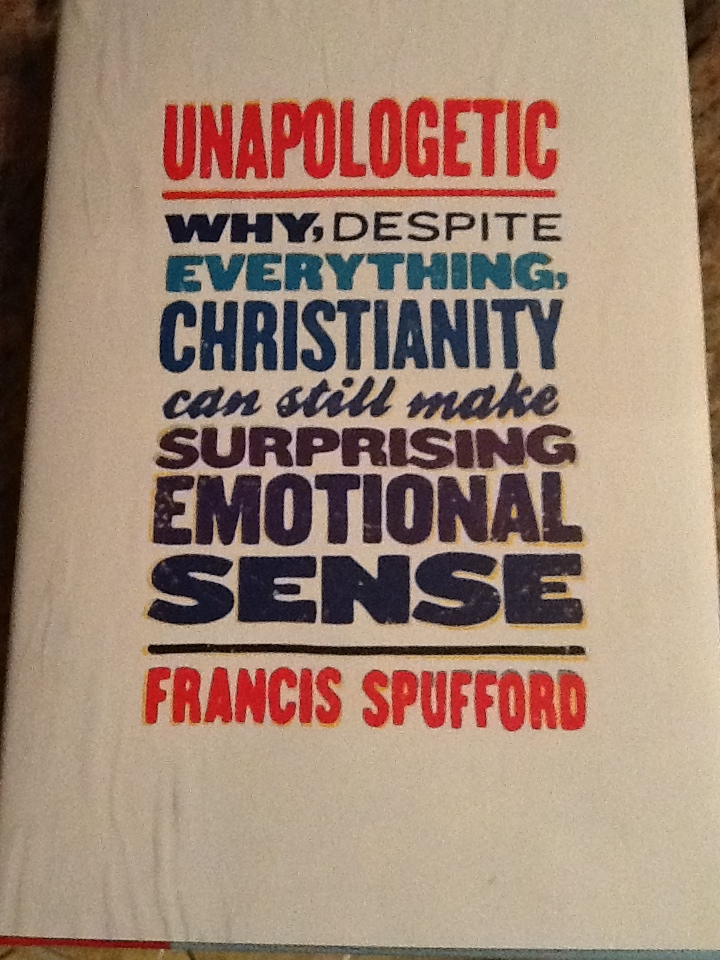
    Unapologetic: Why, Despite Everything, Christianity Can Still Make Surprising Emotional Sense, Francis Spufford

    Spufford avoids nearly every cliche of contemporary religion writing and provides the freshest take on Christian faith I’ve read in ages. Sharp, funny, and heartfelt without being sappy. As I said in my “non-review,” I think Spufford captures how many of us in the “post-Christian” West experience our faith.

    How Much Is Enough?: Money and the Good Life, Robert Skidelsky and Edward Skidelsky

    This father-and-son team (an economist and philosopher, respectively) ask why the richest societies in history have so much inequality and so little genuine leisure. They blame a combination of political and philosophical failures, and argue for recovering a broadly Aristotelian concept of the good life than can help us get off the production-and-consumption treadmill. Their skewering of trendy “happiness” research and its associated policy prescriptions alone is worth the price of admission. Also worth noting is their critique of liberal “neutrality” regarding the good life.

    I’ve got a couple of books going now, and if any finish any before December 31st that blow me away, maybe I’ll update this. Also, looking this over, I realize that I really need to read more books not written by white men.
  • Keith Ward on creation and the (social) Trinity

    Keith Ward’s Religion and Creation (RC) is part of his multi-volume “comparative theology.” Its goal is to develop a contemporary Christian theology in genuine conversation with both modern science and other religious traditions.

    The focus of RC is the doctrine of God. Ward argues that recent representative figures from four major religious traditions (Judaism, Christianity, Islam, and Hinduism) all make similar moves in revising the classical understanding of God.* They have qualified the traditional insistence on God’s complete immutability and impassibility with an emphasis on the importance of the spatio-temporal creation to God. The particular moves they make differ, but they agree that the creation makes a difference to God in a way that classical forms of theism generally denied. In some cases, this means affirming that God experiences time, change, and empathy with the sufferings of creatures.

    In the book’s final chapter, Ward discusses the Christian doctrine of the Trinity in relation to creation. He suggests that creation of some kind may be necessary for God to realize the capacity for loving what is truly other. As he says elsewhere, it is “a love for what is other than God but can be united to the life of God in fellowship.”

    Ward rejects the view, proposed by some theologians, that God can be perfectly loving in Godself because of the love that exists between the three persons of the Trinity. This strongly “social” view of the Trinity sees the godhead as comprising three divine persons or centers of consciousness whose unity consists of their loving fellowship.

    According to Ward, some forms of social Trinitarianism border on polytheism, though a “rather cosy and harmonious polytheism” (p. 322). Social Trinitarians have a difficult time accounting for the necessary unity of the three persons, and attempts to do so often look like subordinationism (i.e., by making the Son and Spirit derivative from, and less than, the Father). Or they treat love as a reified, abstract principle that somehow stands “above” the three persons and binds them together.

    It’s better, he proposes, to talk about “one ultimate subject which possesses three distinct forms of action and awareness” (p. 323). The problem with social Trinitarianism, he says, is that it tends to veer into speculation about three divine individuals with intra-divine relations apart from any relation to created reality. Trinitiarian thinking should be rooted in the biblical witness, which does not speak of “three divine individuals in continuing conversation” (p. 327). Rather, “belief in the one God of monotheism, who is somehow mediated to [the apostles] through Jesus and intimately present in the power of the Spirit. The idea of the Trinity does not supersede monotheism; it interprets it, in light of a specific set of revelatory events and experiences” (p. 327).

    Threefold-ness is a real aspect of God, but it is manifested in relation to creation (p. 329). Theology shouldn’t posit some purely immanent, intra-trinitarian relation of the persons: “intra-Trinitarian being is given to us only in revelation” (p. 329). The basis of trinitarian doctrine is the apostolic experience of Jesus making God present in a new way:

    [T]he simple historical source of this doctrine is the apostolic experience of God as loving Father, Jesus as the obedient Son, the Father’s image on earth, and the Spirit as the one who makes Jesus present to every time and place, and unites ll in him. (pp. 330-1)

    While the Trinity corresponds to something real in God’s being, we only have access to the “economic” Trinity–that is, the threefold activity of God as we see it in the history of salvation. The economic Trinity is God-in-relation–responding to and affected by the actions of creatures. “This is the responsive aspect of the Divine, which interacts with created beings to check tendencies to disintegration and guide them actively toward perfection” (p. 340).

    I’ve always been a bit skeptical of social Trinitarianism, particularly when it’s combined with political theologies which suppose that human communities can and should reflect the intra-Trinitarian life (Kathryn Tanner and Karen Kilby have both powerfully criticized this view). They often seem to rest on just the sort of speculative divine metaphysics Ward is criticizing, and draw what are, to my mind, improper analogies between human communities and the divine “community.” (Obviously there’s a lot more that can be, and has been, said on this topic, both pro and con.)

    Even if we reject social Trinitarianism, though, couldn’t we say that God perfectly loves the divine self and would do so even if God had not created a world? Ward would say, however, that God would still have failed to realize the capacity for loving what is genuinely other than God, and that this form of love is a great good. In Ward’s view, it is better to have a universe with creatures who can enter into freely chosen fellowship with God, even if this also creates the possibility of their estrangement. Therefore, he thinks, creation does make a difference to God, enriching the divine life beyond what it would’ve been had God not created.

    ——————————————————–

    *The four 20th-century figures Ward focuses on are Abraham Joshua Heschel (Judaism), Karl Barth (Christianity), Mohammad Iqbal (Islam), and Aurobindo Ghose (Hinduism).

  • A non-review of Francis Spufford’s “Unapologetic”

    You should read this book.
    You should read this book.

    I’ve been having trouble thinking of something to say about Francis Spufford’s Unapologetic other than “I really, really liked it.” It’s not like any other “religious” book I can remember reading. The closest analogue I can think of are the books of Anne Lamott, who similarly writes about the life of faith with brutal honesty and without pious cant.

    The title has a double meaning: Spufford is unapologetic in the sense of not being ashamed of his belief, but he’s also not offering an “apology” in the sense of a reasoned defense of Christianity–the sort of thing you get from some of C. S. Lewis’s writings (not to mention those of many lesser lights). Spufford’s goal is to describe from the inside what being a Christian is like–specifically for an educated Englishman living in a “post-Christian” culture–and to show that it can be an emotionally authentic response to the human condition. He doesn’t shy away from the blots on Christianity’s historical record or from tough theological questions (he’s particularly unsparing of pat theological answers in his discussion of theodicy). But he is equally insistent that, at its best, it provides a compelling response to what he cheekily calls the “human propensity to fuck things up” (or “HPtFtU” as he abbreviates it).

    Spufford is a more-or-less orthodox Christian, but he considers theological propositions as secondary to a the immediate emotional experience of faith (not unlike an earlier defender of religion against its cultured despisers). This is the experience of a graceful presence underlying the messy and ambiguous world of daily life–a presence we encounter most piercingly when we have screwed things up. Christians see this presence most fully manifested in Jesus, and Spufford’s retelling of the gospel story provides the theological heart of the book. He recognizes that his faith is a wager–he doesn’t know whether or not there is a God, but “neither does Richard bloody Dawkins.”

    What I do know is that, when I am lucky, when I have paid attention, when for once I have hushed my noise for a little while, it can feel as if there is one. And so it makes emotional sense to proceed as if He’s there; to dare the conditional. And not timid death-fearing emotional sense, or cowering craven master-seeking sense, or censorious holier-than-thou sense, either. Hopeful sense. Realistic sense. Battered-about-but-still-trying sense. The sense recommended by our awkward sky fairy, who says: don’t be careful. Don’t be surprised by any human cruelty. But don’t be afraid. Far more can be mended than you know. (p. 220)

    Despite the intellectual bravado of some professional Christians, I think that this is far closer to how many of us–particularly those of us in the West–experience our faith. But nothing I can write will do justice to Spufford’s book; I encourage you to read it for yourself.

  • Francis Spufford on the “gnostic Jesus”

    The Jesus of the orthodox story treats people with deep attention even when angry. [The gnostic] Jesus zaps people with his divine superpowers if they irritate him. Orthodox Jesus says that everyone needs the love of God, and God loves everyone. Their Jesus has an inner circle you can be admitted to if you collect enough crisp packets. Orthodox Jesus likes wine, parties, and grilled fish for breakfast. Their Jesus thinks that human flesh and its appetites are icky. Orthodox Jesus is disconcertingly unbothered about sexuality, and conducts his own sexual life, if he has one, off the page. Their Jesus can generate women to have sex with out of his own ribs, in a way that suggests the author had trouble talking to girls. Orthodox Jesus says, “Don’t be afraid. I am always with you.” The Jesus of these documents says, “Advance, Blue Adept, to the 17th Jade Portal of Amazingness, and give the secret signal with your thumbs.” Read much of the rival “gospels,” and you start to think that the Church Fathers who decided what went into the New Testament had one of the easiest editorial jobs on record. It wasn’t a question of suppression or exclusion, so much as of seeing what did and didn’t belong inside the bounds of a basically coherent story.

    –Francis Spufford, Unapologetic, pp. 153-4

  • Tillich: beyond naturalism and supranaturalism

    At the beginning of the second volume of his Systematic Theology, Paul Tillich provides a recap of the major themes of the first volume, in part to address criticisms he had received since its publication. In particular, Tillich discusses his doctrine of God. He characterizes the “basic intention” of his position as an attempt to go “beyond naturalism and supranaturalism.”

    Tillich identifies three ways of interpreting the meaning of “God.” The first treats God as “the highest being” who “brought the universe into being at a certain moment (five thousand or five billion years ago), governs it according to a plan, directs it toward an end, interferes with its ordinary processes in order to overcome resistance and fulfil his purpose, and will bring it to consummation in a final catastrophe” (p. 6). The problem with this view, according to Tillich, is that it “transforms the infinity of God into a finiteness which is merely an extension of the categories of finitude” (p. 6). In other words, it treats God as a being alongside other beings, one cause among many, etc. He says this view fails to adequately respect “the infinity of the infinite, and the inviolability of created structures of the finite” (p. 6). There is a qualitative difference between God and the created order.

    The second position is “naturalism,” which “identifies God with the universe, with its essence or with special powers within it” (p. 6). This is not the same as simply identifying God with the “totality of things,” which would be absurd. But its God is the “dynamic and creative center of reality”–the deus sive natura of pantheistic thinkers like Baruch Spinoza. For Tillich, however, naturalism also “denies the infinite distance between the whole of finite things and their infinite ground, with the consequence that the term ‘God’ becomes interchangeable with the term ‘universe’ and therefore is semantically superfluous” (p. 7). An essential element in human religious experience, Tillich maintains, is that the holy can be encountered as a numinous presence set over against us.

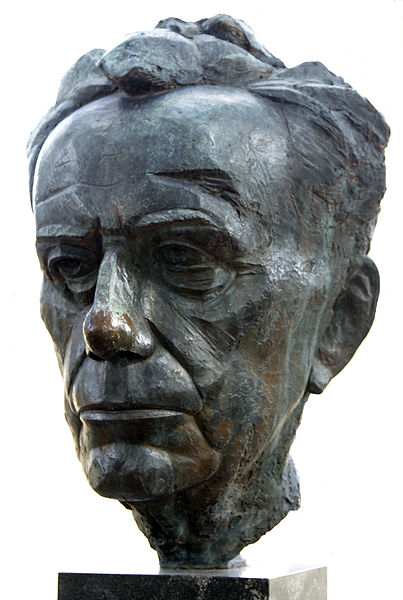
    403px-Bust_of_Paul_Johannes_Tillich_(daylight)

    Tillich proposes a “third way”–which he insists is not new, but a position found, albeit not always clearly, in the great theologians of the tradition. It emphasizes both God’s immanence and God’s transcendence. Against supranaturalism, God is not one being among others, even if the highest, but “the creative ground of everything that has being” or “the infinite and unconditional power of being.” God is “neither alongside things nor even ‘above’ them; he is nearer to them than they are to themselves” (p. 7). At the same time, parting ways with naturalism, Tillich insists that God “infinitely transcends that of which he is the ground” (p. 7). There is a certain mutual freedom between God and creation such that creatures can encounter God as something “outside” of themselves.

    Moreover, this freedom creates the possibility of creaturely alienation from God. If “God” simply named the power at the heart of the natural processes of the world, then it wouldn’t make sense to talk about human estrangement from God. Spatial imagery of God being “in” us, or “above” us can be misleading; but the concept of “finite freedom” allows us to say more precisely that created being is both “substantially independent of the divine ground” and yet “remains in substantial unity with it” (p. 8).

    Tillich’s theology has sometimes been characterized (caricatured?) as atheism dressed up in religious symbolism. But I think it’s clear here (as elsewhere) that his intention, at least, was to affirm the reality of a transcendent God, even if he was dissatisfied with certain popular formulations of theism.

  • Modern science, classical theism (3)

    One of the impulses motivating “revisionist” views of the divine nature (process theology, et al.) is not only that they can seem more consonant with modern science, but that they provide a more intimate and relational view of God. Many theologians have argued, in fact, that seeing God in responsive, relational terms such as those offered by process theology is truer to the biblical portrait of God. This view has widespread currency in recent theology. Even theologians with important differences from process theology have accepted that God is in some respects changeable and affected by what happens in the world. These included feminist, liberation, and other “contextual” theologians as well as “neo-trinitarian” thinkers like Jurgen Moltmann and Robert Jenson. Such thinkers tend to emphasize the differences between the biblical God and the Greek-inspired God of classical theism.

    In light of this, Cynthia Crysdale and Neil Ormerod (see previous posts here and here) ask “Can a transcendent God be a personal God?” That is, can a God who exists “outside” of time and space and who brings the entire history of creation into being through one timeless divine act also be related to individual human beings in a personal and responsive way?

    C&O think the answer is yes:

    [C]lassical theism presents us with a God who is infinitely responsive, who has responded so fully and so completely in the one divine act of creation that no further response is possible or needed[.] In the one infinite act of creation, past, present, and future for us , God responds to all our prayers and petitions, answers all our needs, all guided by an infinite divine loving wisdom and wise loving. . . . And while God’s response to us is itself eternal and unchanging, it unfolds for us in the fullness of time. Thus God responds to this prayer in our here and now. And if we do not pray, God does not so respond. Prayer is meaningful, it does change the situation, and God does act in response to our prayers. But this does not amount to some intervention along the lines of stirring an inactive God into action, but is part of the one creative act of God who brings into existence everything that is. (p. 128)

    God has, in effect, “already” taken into account every action, intention, prayer, and desire in the history of the universe and responded accordingly in the single, eternal creative act.

    But even on this view, there seems to be an aspect of God that is contingent, namely God’s perfect response to the world. For if God had chosen to actualize a different world from among the (presumably) many possible ones, then to the extent that the choices, prayers,etc. of the people in that world were different from ours, God’s response would have to have been different. This seems to imply that God is not wholly unchangeable, at least on the assumption that God’s actualization of other worlds than this one was a genuine possibility.

    Maybe C&O would respond that God is nevertheless not dependent on creation because it is God who chooses which possible world to make actual. This certainly distinguishes their position from those forms of process theology that deny creation ex nihilo and appear to give creation an independent ontological status. I agree with C&O in rejecting such a view. But I’m less certain how much daylight there is between their position and the more moderate “dipolar” theism espoused by someone like Christopher Southgate or Keith Ward. Both Southgate and Ward affirm creation ex nihilo and thus God’s ontological ultimacy; but both also argue that there is an aspect of God that is involved in and affected by what happens in the world.

    It’s not clear to me that C&O couldn’t accept the modified dipolar theism of Southgate and Ward while still upholding their other positions. In fact, both Southgate and Ward make arguments similar to theirs in relating theism to modern science. Alternatively, C&O could bite the bullet and say that the actual world is the only possible world. God’s creative act would give rise to this world out of necessity, rather than from God’s free choice. This seems to be essentially the view of Schleiermacher, whose views C&O’s arguments echo at several points. While this would salvage divine impassibility, it would seem to mean giving up on genuine contingency in the world. If this is right, it raises the question of whether “classical theism” is as stable a construct as it seems.

    These questions aside, I don’t want to suggest that Creator God, Evolving World is a bad book by any means. I found it incredibly stimulating (as these posts might suggest!) and also found a lot to agree with. Plus, at a time when “classical theism” has become something of a bogeyman, it’s refreshing to see it defended and brought into conversation with contemporary issues.

  • Modern science, classical theism (2)

    According to Cynthia Crysdale and Neil Ormerod’s (C&O) view, God creates in a single divine act “outside” of time and space (see the previous post). In Thomas Aquinas’ terms, God is the primary cause of the existence of everything that is, while creatures are secondary causes within the time-space framework. The implication is that God can’t be invoked to explain particular events within the world. This implies that there is no competition between scientific and theological explanations.

    But what does this imply for the problem of evil? “If God chooses this universe, in all its details from beginning to end in a single act, why does God allow there to be suffering and evil?” And how is God’s providence over history exercised?

    C&O deploy a variation of what Christopher Southgate calls the “only-way” argument. That is, this world, with its attendant suffering, is a “package deal” of sorts. You only get free personal agents like human beings through a process like the evolutionary one, “red in tooth and claw” though it may be. This is because the processes that make life possible are also the reason that suffering exists. The growth of life depends on predation, plate tectonics lead to earthquakes and volcanic eruptions, and genetic variation occasionally produces genetic disorders.

    There is no you or I apart from the total world order that confronts us in creation. It is not as if God made all the component parts of creation and stuck them together to make the universe. Rather, the universe is an intelligible whole and our existence is inseparable from the existence of that whole. (p. 86)

    We may think we can imagine a creation without suffering, but it’s not clear this is really the case:

    In the end we have no idea what it means to create a universe, or what might be possible or impossible in such a creation. While it is easy for us to imagine a world without suffering, such imaginings might not translate into a coherent and intelligible world order. If the whole is not intelligible, then such an imagined creation is a mere pipe dream, a fantasy, not realizable in fact. (p. 89)

    This line of response, assuming it works, may take some of the sting out of so-called natural evil. But what about moral evil–evil deeds intentionally chosen by free agents like us? Here C&O turn to a version of the free-will defense. They lean heavily on Augustine’s account of evil as a privation to argue that the choice of evil is a lack of purpose or meaning. “The evil act has no cause sufficient for the act, and so has no cause. It is our failure in the realm of achieving the good” (p. 97) and so “God is not the cause of this deficiency simply because it has no cause” (p. 98). God is not the cause of evil, but human freedom–which in itself is a great good–makes evil possible.

    God’s providence, in this view, consists in the superintendence of the entire created order. God does not “intervene” as a secondary cause among secondary causes, but God wills a universe into existence that includes evil as an inextricable element. This is either because, in the case of natural evil, it is an unavoidable side-effect of certain kinds of finite existence, or, as with moral evil, because it is made possible by the exercise of creaturely freedom.

    Beyond this, though, C&O suggest that there is a divinely originated response to evil on the level of practice. “[I]f evil is a lack, something that is missing that should be there, then the solution to the problem of evil is to make up for what is lacking, to repair the damage done, and turn the evil act into an opportunity for a greater good, the good of conversion, forgiveness, and mercy” (p. 99). They propose that God responds to evil by giving human beings the resources to live toward the good by taking suffering and violence as an opportunity for mercy and forgiveness. For Christians, of course, the life and death of Jesus is the ultimate expression of this response, which “has the power to change history, to shift us from decline and restore the path of genuine progress” (p. 101).

    (I have some questions about C&O’s account, but I’m going to save them for my final post in this series.)

  • Modern science, classical theism (1)

    Cynthia Crysdale and Neil Ormerod’s book Creator God, Evolving World is fighting a two-front war. On one side, they argue, against scientific atheism, that an evolutionary worldview is compatible with theism. On the other front, they uphold a form of classical theism against various revisionist views like process theology that ascribe change, passibility, becoming, and temporality to God.

    C&O offer a characterization of natural processes as an interweaving of universal laws and more probabilistic events. Nature is neither purely deterministic–with phenomena deducible from universal, invariable laws–but neither is it wholly “random” or chance-like. As revealed to us by the sciences, nature is better understood as a series of relatively stable systems of nested complexity.

    There is order and regularity–some things occur in the same way always and everywhere, all things being equal. Other things occur without a systematic pattern or a direct causality but according to probabilities. And just as the two types of inquiry intersect and are mutually creative, so those events that occur according to probabilities (by chance) and those that occur systematically (according to natural laws) interweave to make a stable world process that is nevertheless subject to conditions that change. (pp. 31-2)

    It is sometimes thought that theism is incompatible with a world of chance, but C&O argue that a certain directionality can be perceived in the world process–toward greater integration and higher levels of complexity. Subatomic elements stabilize in atoms, atoms stabilize in molecules, molecules form living organism, organisms increase in complexity and integration, and consciousness, and eventually self-consciousness, emerge from life. This process is not pre-determined; there is a genuine element of chance, as each of these levels of complexity is built on contingent events. But we can nevertheless trace a general arc toward greater complexity.

    But what role does God play in this? C&O criticize the view, popular in science and religion circles and best exemplified by process theology, that God is also to some degree subject to chance and contingency. It is sometimes maintained that the God of classical theism–characterized as impassible, eternal, omnipotent, and omniscient–is inconsistent with a dynamic, evolving world-process that includes unpredictability and chance as essential elements. To be related to a changing world, God would also have to change.

    But C&O argue that classical theism is actually more congruent with the world-picture offered by science than process theism and related views. Drawing on Thomas Aquinas’ distinction between primary and secondary causes, they contend that God is better thought of as the primary cause of all that exists–the ground of the entire world-order. The entire cosmos is contingent in the sense that it could have not existed, and God is the necessary being who actualizes this particular universe from a sea of possible universes.

    Contrary to process theology, C&O say that it is difficult to make sense of the notion that God is subject to time and change. Drawing on relativity theory, they point out that there is no non-relative “now” that God could be present in. In fact, physics indicates that time is actually an aspect of the material world, so God as creator is also the creator of time. As Augustine saw, there is no sense in asking what God was doing “before” creation, since time is an aspect of the created order itself.

    Yet, this doesn’t mean that there is no chance in the universe or that everything is determined. God actualizes this particular universe with its necessary laws and contingent events. God does not need to be invoked as an explanation for particular events (the “God of the gaps”). Rather, God is the ground of the entire series of events:

    With perfect intelligence, God grasps all possible worlds, with all possible branchings, in all possible “universes,” precisely as possibilities, in a single act. With perfect wisdom and love, God chooses one possibility in its totality from its beginning to its final consummation, from all the myriad options presented by divine intelligence, in that same creative act. In Martin Ree’s expression, God “breathes fire” into one of the many mathematically possible worlds on offer. And so with complete power God realizes that one possibility, making it the one universe that exists, the one we inhabit, in all its necessity and contingency, determinisms and chance events, again in a single divine act. God’s election of this creation eliminates none of its contingency because God knows, loves, and creates this universe with precisely this set of contingencies “built in.” We do not need to place God in time in order to preserve the contingency of the universe, nor do we need to eliminate a divine and efficacious providence. For God is the answer, not to the contingency of chance events per se but to the much more profound contingency of being. It is the contingency of the very being of the universe that requires a necessary being as its source. Once we grasp this fact of divine transcendence, transcending matter, space, and time, the divine knowledge, love, and creation of the lesser contingency of chance events is implied as an automatic consequence. (p. 55)

    C&O go on to discuss the implications of their view for providence and the problem of evil, human agency, ethics, and whether a transcendent God along the lines of classical theism can still be a “personal” God. I plan to dedicated at least one more post to their book.

  • Sallie McFague on the truth of theology

    Sallie McFague, Models of God:

    I begin with the assumption that what we can say with any assurance about the character of Christian faith is very little and that even that will be highly contested. Christian faith is, it seems to me, most basically a claim that the universe is neither indifferent nor malevolent but that there is a power (and a personal power at that) which is on the side of life and fulfillment. Moreover, the Christian believes that we have some clues for fleshing out this claim in the life, death, and appearances of Jesus of Nazareth. (p. x)

    Later she writes:

    It is evident that fundamentalism does not accept the metaphorical character of religious and theological language, for its basic tenet is the identification of the Word of God with human words, notably the human words in the canonical Scriptures of the church. The essence of metaphorical theology, however, is precisely the refusal to identify human constructions with divine reality. (p. 22)

    And in a footnote to that last sentence:

    Metaphors and models relate to reality not in imitating it but in being productive of it. There are only versions, hypotheses, or models of reality (or God): the most that one can say of any construct, then, is that it is illuminating, fruitful, can deal with anomalies, has relatively comprehensive explanatory ability, is relatively consistent, has humane consequences, etc. This is largely a functional, pragmatic view of truth, with heavy stress on what the implications of certain ways of seeing things (certain models) are for the quality of both human and nonhuman life (since the initial assumption or belief is that God is on the side of life and its fulfillment). This is obviously something of a circular argument, but I do not see any way out of it: I do not know who God is, but I find some models better than others for constructing an image of God commensurate with my trust in a God as on the side of life. God is and remains a mystery. We really do not know: the hints and clues we have of the way things are–whether we call them experiences, revelation, or whatever–are too fragile, too little (and more often than not, too negative) for much more than a hypothesis, a guess, a projection of possibility that, although it can be comprehensive and illuminating, may not be true. We can believe it is and act as if it were, but it is, to use Ricoeur’s term, a “wager.” At the most, I find I can make what Philip Wheelwright calls a “shy ontological claim” with the metaphors and models we use to speak of divine reality . . . . (pp. 192-3)

    According to McFague, religious language and concepts–as irreducibly metaphorical–do not represent divine reality in any straightforward way, but they can still refer to that reality. And their adequacy can be tested by certain criteria such as the ones she mentions. This “critical realism,” as she calls it, is meant to offer a middle way between a naïve realism about religious language and the kind of full-blown anti-realism associated with certain forms of deconstruction.

    I’m not very far into McFague’s book, so I don’t want to make any premature judgments. But in general, I find this approach pretty consistent with how I think about these things. I think where I might find myself more challenged is by McFague’s argument that traditional models and metaphors–such as those inherited from the Bible–need to be significantly revised (or maybe even replaced).

  • Some Melvillian tidbits

    Yesterday was the 194th anniversary of Herman Melville’s birth, and to mark the occasion the Atlantic offered some excerpts from its archives–including two from W. Somerset Maugham–on what makes Moby-Dick great.

    The New York Daily News has some suggestions on how to celebrate Melville’s birthday, including an ode to Moby-Dick from experimental musician Laurie Anderson.

    Here’s a collection of links to free e-versions of some of Melville’s works.

    And what homage to Melville would be complete without a cut from Mastodon’s Moby-Dick-inspired album Leviathan?