Category: Bible

  • Cursing our enemies before God

    Given the debate over the last few days about whether it’s appropriate to be happy about, and even celebrate, the death of Osama bin Laden, I thought it would be worth revisiting Ellen Davis’s discussion of the cursing (imprecatory) psalms in her book Getting Involved with God. These psalms, which call God’s wrath down upon the psalmist’s enemies in what often seems like a very unchristian spirit, are frequently glossed over or heavily edited, if not extirpated entirely from contemporary Christian worship.

    However, Davis argues that “the cursing psalms are in fact a crucial resource for our spiritual growth, indispensable if we are to come before God with rigorous honesty” (pp. 24-5).

    The cursing psalms help us to hold our anger in good faith. Sadly, most of us feel about our enemies more like the psalmist does than Jesus did. We must pray to be healed from our hardness of heart, but healing will not come through a cover-up. Healing for ourselves and even for our enemies requires that we acknowledge our bitter feelings and yet not yield to their tyranny. Rather we must offer them, along with our more attractive gifts, for God’s work of transformation. In several ways, the cursing psalms give us strong practical guidance in making that offering of anger. (pp. 25-6)

    What is this practical guidance? Davis says that it comes in three forms. First, the cursing psalms give us words to express our anger. And not only do they provide a means for venting our anger when we are betrayed or victimized, they can help us move past anger. By giving us words with which to externalize our anger, they allow us to look at it more objectively and, perhaps, to recognize the element of self-righteousness it contains. “For the cursing psalms confront us with one of our most persistent idolatries, to which neither Israel nor the church has ever been immune: the belief that God has as little use for our enemies as we do, the desire to reduce God to an extension of our own embattled and wounded egos” (p. 26).

    Second, the cursing psalms can be modes of access to God. They teach us that God is known in judgment on evil as well as in mercy. “The God who created us for life together (Genesis 2:18) is, like us, outraged by those who violate trust and rupture community” (pp. 26-7). It is part of our baptismal vows to name evil when we see it and to reject it wholeheartedly.

    Finally, and most importantly, these psalms direct us to give the desire for vengeance or payback over to God. “[T]he cry for vengeance,” Davis says, “invariably takes the form of an appeal for God to act” (p. 27). The cursing psalms don’t authorize us to take matters into our own hands. “On the contrary, the validity of any punishing action that may occur depends entirely on its being God’s action, not ours” (p. 27). Moreover, leaving vengeance in the hands of the Lord means relinquishing control of the outcome:

    Through these psalms we demand that our enemies be driven into God’s hands. But who can say what will happen to them there? For God is manifest in judgment of our enemies but also, alas, in mercy toward them. Thus these vengeful psalms have a relationship with other forms of prayer for our enemies. (p. 27)

    So, if there’s a lesson here for us, maybe it’s that we ought to bring our feelings about enemies like bin Laden–whatever they are–before God. If I’m happy about bin Laden’s death, then I should say that to God in prayer. But doing so in the spirit of the psalms means that I may come to recognize an element of self-righteousness in my righteous anger and satisfaction. It means naming the evil that he was responsible for and our anger about it. But it also means giving up the position of ultimate judge of his, or anyone else’s, fate. (It’s noteworthy, though not particularly surprising, how many people are confident in consigning bin Laden to hell.) Human justice may have required bin Laden to be killed, or at least to be sufficiently disabled to prevent him from wreaking more terror. But ultimate judgment remains beyond us. Navy SEALs might have been the instrument that drove bin Laden into the hands of the living God, but what happens once he gets there remains a mystery.
  • The binding of Isaac and the binding of God

    I’m reading a wonderful book by Duke Divinity School professor Ellen F. Davis called Getting Involved with God: Rediscovering the Old Testament. It’s a series of loosely connected essays and meditations on various OT books and stories, what she calls an “unsystematic introduction.” Davis’s purpose, she says, is to provide an alternative to the way Christians usually approach the OT. Conservative Christians may read it primarily as a moral rulebook or a set of prophecies of the birth, death, and resurrection of Jesus, while liberal Christians, if they read it at all, tend to view the OT as morally and spiritually primitive, fully superseded by the New Testament. In contrast to either of these approaches, Davis commends a “spiritually engaged” reading of the OT, focusing on “what the Old Testament tells us about intimate life with God” (p. 2).

    As her title suggests, a common theme running throughout the book is that the God of the Bible is unique among ancient deities in that he is deeply concerned and involved with the plight of humanity. “God’s life is bound up inextricably with ours” (p. 1). As she says a little later, “the fundamental article of biblical religion [is] that God’s life, God’s glory, even God’s well-being, are indissolubly linked with our lives. For Christians, the sublime expression of that indissoluble linkage between God’s glory and frail human life is the incarnation of God in Jesus Christ” (p. 19). God actually takes a risk in entering into a covenant with creation–the success of this covenant depends in part upon the free response of human beings.

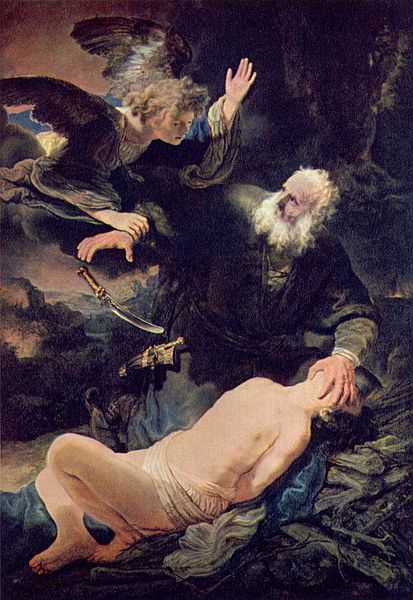
    Which brings us to the story of the Binding of Isaac, which Davis rightly calls one of the most terrifying stories in the Bible. She notes that modern “enlightened” Christians are deeply uncomfortable with this story, and she identifies two strategies they use to get around it. One is to simply reject it as an expression of an archaic, sub-Christian conception of God. (Davis says she heard one preacher emphatically declare that “I do not worship the God of Abraham”!) The second strategy is to see the story of the aborted sacrifice of Isaac as a symbolic representation of ancient Israel’s leap beyond the widespread practice of infant sacrifice and its transition to “ethical religion.”

    But, Davis says, neither of these approaches take the Bible and this story with full seriousness. She proposes a closer reading to see what’s really going on here. What this story is about, she argues, is God and God’s plan for blessing to creation. “Genesis is primarily a book about God, and secondarily about human beings encountering God” (p. 58). Davis notes that previously in Genesis we’ve seen God’s plans for humanity go awry time and again: first in the garden of Eden, then in humanity’s descent into violence culminating in the flood, and finally in the Tower of Babel incident. God’s new strategy in the remainder of Genesis (and the whole Bible for that matter) is to bless all of humanity by creating a covenant with a particular people. “At this point, God gives up on trying to work a blessing directly upon all humankind. From now on, God will work through one man, one family, one people, in order to reach all people” (60).

    For this to work, however, God has to find out what kind of man he’s dealing with in Abraham. That’s the purpose of God’s test in asking Abraham to sacrifice his son. After seeing that Abraham is willing to go through with it, “God knows something now that God did not know before. Genesis offers little support for a doctrine of divine omniscience, if by that we mean that God knows everything we are going to do before we do it” (p. 58).

    God’s new strategy is hardly surefire. We should not be surprised if adopting it makes God anxious, for now everything depends on the faithfulness of this one man Abraham. God, having been badly and repeatedly burned by human sin throughout the first chapters of Genesis yet still passionately desirous of working blessing in the world, now chooses to become totally vulnerable on the point of this one man’s faithfulness. It is, to say the least, a counter-intuitive solution to a problem. (p. 60)

    One reason this story appears so early in the Bible, Davis thinks, is that it teaches us something fundamental about Israel’s “complex witness” to God.

    The Binding of Isaac shows us a God who is vulnerable, terribly and terrifyingly so, in the context of covenant relationship. We are more comfortable using the “omni” words–omnipotent, omniscient–to describe God. Yet if we properly understand the dynamics of covenant relationship, then we are confronted with a God who is vulnerable. For, as both Testaments maintain, the covenant with God is fundamentally an unbreakable bond of love (hesed). And ordinary experience teaches that love and vulnerability are inextricably linked; we are most vulnerable to emotional pain when the well-being and the faithfulness of those we love are at stake. And as we have seen, the Bible shows that the faithfulness of even the best of God’s covenant partners is always up for grabs. So it follows that God’s vulnerability in love is an essential element of covenant relationship. (p. 62)

    This is one reason that the Binding of Isaac resonates so strongly with the story of Jesus’ Passion (which brings us to today):

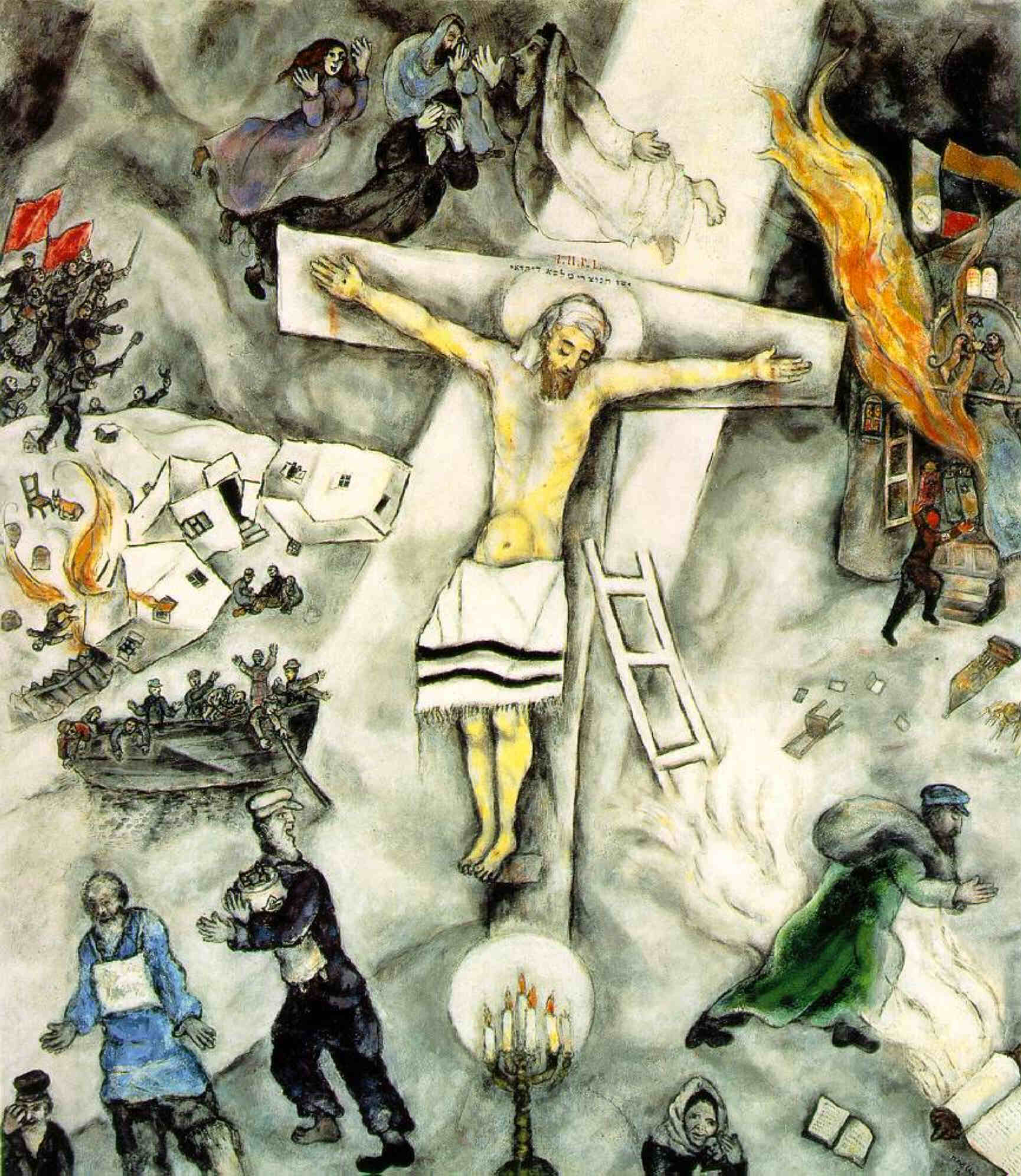
    It is in Christ hanging on the cross that we see, for once in history, the two sides of this story fully joined in one person. In Jesus Christ we see a son of Abraham sparing nothing, totally faithful in covenant relationship with God. At the same time, we see in Jesus God’s total faithfulness, expressed now as excruciating vulnerability, even to death on a cross. These two images–Abraham binding Isaac, Christ nailed on a cross–are the supporting structures for the long convoluted story of sin and salvation. When reason fails, as it does at least one Friday each year, then we must listen to the stories with our hearts. (pp. 63-4)

  • Friday Links

    I spent the day hanging out with my family, so these are coming a little late…

    –Why Rep. Paul Ryan’s budget proposal is neither brave nor serious.

    –Free-range meat isn’t necessarily “natural.”

    –A case for universalism from the Scottish evangelical preacher and biblical scholar William Barclay.

    –A review of a recent book called What’s the Least I can Believe and Still Be a Christian?

    –The WaPo reviews a local prog-metal band called Iris Divine (here’s their MySpace page).

    –Do Americans love war?

    –Speaking of war, April 12 marks the 150th anniversary of the Confederate attack on Fort Sumter and the onset of the Civil War. I’m thinking of marking the anniversary by finally tackling James McPherson’s Battle Cry of Freedom this spring.

    –As I write this, it looks like the two parties are getting close to a budget agreement that will avert a government shutdown. But I still wanted to note that a shutdown would have a major impact on the District itself, shutting down a number of basic city services. This is something that hasn’t gotten much attention.

    –The AV Club continues its feature “Loud”–a monthly review of the latest in punk, hardcore, metal, and noise.

  • Doing without Adam and Eve

    One argument you sometimes hear for the necessity of a “historical” fall and a “historical” Adam and Eve goes like this: if there was no historical first couple and fall into sin, then we are in no need of a savior and therefore the entire gospel loses its raison d’etre.

    This seems odd to me. That human beings need liberation from sin, guilt, anxiety, the threat of meaninglessness, the fear of death, and other forces that oppress and harass us–in short, our need for salvation in its most comprehensive sense–isn’t something we infer from the story of the Fall. It’s an evident fact about the world, one that we need only to look around us to discover.

    I see the story of Adam and Eve and the Fall as a vivid portrait of the human condition: our alienation from God, from each other, and from the world in which we live. This is why “Adam” is such a potent symbol in Paul’s theology: it encapsulates everything that’s wrong with us–everything that God in Christ comes to save us from. (Whether or not Paul himself thought of Adam as a historical person, it seems undeniable to me that “Adam” still functions in a more-than-historical way in Paul’s theology.) How we got the way we are is a distinct issue from that we are the way we are.

    I’m not saying anything here that others–like Reinhold Niebuhr–haven’t said better. And skepticism about the strictly factual-historical nature of the Genesis creation stories isn’t the only reason for rejecting this account of the Fall. Before Darwinism was even on the scene, a number of people had come to question the traditional interpretation. The idea that Adam’s sin and guilt was a quasi-physical substance that could be transmitted to all his descendents, or alternatively, that his guilt was somehow imputed to the rest of humanity down through the ages, had come to seem metaphysically fishy or morally objectionable. And it had consequences that even those committed to the traditional view found troubling, such as that unbaptized infants would be damned. This didn’t stop people from believing in the need for salvation though.

    By insisting on a historical Adam and Eve (even a semi-“demythologized” version), Christians risk backing themselves into the corner of denying well-established findings of biological science and preaching a gospel that many people will find unintelligible.

  • “A shoot shall come out from the stump of Jesse”

    We’re doing a “lessons and carols” service at church tomorrow and I’m one of the readers. The passage I was assigned is Isaiah 11:1-9. It’s not terribly original to say so, but it’s one of my favorites:

    A shoot shall come out from the stump of Jesse, and a branch shall grow out of his roots. The spirit of the Lord shall rest on him, the spirit of wisdom and understanding, the spirit of counsel and might, the spirit of knowledge and the fear of the Lord. His delight shall be in the fear of the Lord. He shall not judge by what his eyes see, or decide by what his ears hear; but with righteousness he shall judge the poor, and decide with equity for the meek of the earth; he shall strike the earth with the rod of his mouth, and with the breath of his lips he shall kill the wicked. Righteousness shall be the belt around his waist, and faithfulness the belt around his loins. The wolf shall live with the lamb, the leopard shall lie down with the kid, the calf and the lion and the fatling together, and a little child shall lead them. The cow and the bear shall graze, their young shall lie down together; and the lion shall eat straw like the ox. The nursing child shall play over the hole of the asp, and the weaned child shall put its hand on the adder’s den. They will not hurt or destroy on all my holy mountain; for the earth will be full of the knowledge of the Lord as the waters cover the sea.

  • Jesus and the end: what if he was “wrong”?

    In my post on Marcus Borg’s view of Jesus and eschatology, I asserted that if Jesus did expect an imminent supernatural in-breaking of some sort, then he was wrong, a conclusion that would disconcert many Christians.

    This might have been too categorical of a statement. In his book The Historical Christ and the Theological Jesus, historian Dale Allison offers one way of addressing the issue.

    Allison’s book is an attempt to draw out some of the theological implications of his study of the historical Jesus. Unlike Borg, et al., Allison thinks that Jesus was a “milleniarian prophet” who expected some kind of eschatological event in the near future. (See pp. 92-95 of The Historical Christ for a summary of the evidence that leads Allison to affirm this conclusion.) Allison pointedly summarizes the issue:

    It is not just that, as Matt. 24:36 = Mark 13:32 says, the Son had no knowledge of precisely when the end would come. It is rather that the Son expected and encouraged others to expect that all would wrap up soon, and yet run-of-the-mill history remains with us: Satan still goes to and fro upon the earth. (p. 96)

    So it would seem that, if Allison is right, Jesus was wrong about the coming of the Kingdom. What does this mean for us?

    Allison suggests that our

    widespread dismay arises in part…from a failure to comprehend fully that eschatological language does not give us a preview of coming events but is rather, as the study of comparative religion teaches us, religious hope in mythological dress. Narratives about the unborn future are fictions, in the same way that narratives about the creation of the world are fictions. (p. 97)

    Just as we don’t have to suppose that the creation narratives of Genesis happened “once upon a time” for them to have existential and theological meaning, we don’t have to see the eschatological language of the Bible as referring to historical events that will happen in the future (whether near or distant).

    Rather, the language and symbols of eschatology point to God’s trans-historical consummation of all things beyond the reach of suffering, death, and decay and can act as a critique of the unjust and inequitable status quo as it falls short of God’s will.

    Allison is quick to point out that this doesn’t mean that Jesus or his followers saw eschatological language in this way. It may well be they meant it “literally.” However, he also notes that there is a process of “de-mythologization” (even if not necessarily fully explicit) within the New Testament itself. For example, the eschatology of John’s gospel has often been described as a “realized” eschatology that downplays the apocalypticism of the synoptics.

    The point here is that, even if Jesus was wrong about not only the date of the eschaton but also the nature of the language he used to refer to it, we needn’t see that language as lacking a referent. It refers to the intersection–equally possible at every historical moment, but more palpably felt in some–of the transcendent and the mundane and the promise that God will redeem the evils and sufferings of this world.

  • Whose Jesus? Which eschatology?

    (With apologies to Alasdair MacIntyre.)

    I’m still reading Marcus Borg’s Jesus. In the scholarly arena, Borg is probably best known as a proponent of the “non-eschatological” or “non-apocalyptic” Jesus, and he addresses this controversy in chapter 9 of this book.

    In Jesus, Borg offers a refinement of terminology. Instead of “non-eschatological” or “non-apocalyptic,” he now prefers to talk about “imminent eschatology” versus “participatory eschatology.”

    Imminent eschatology refers to the perspective–pioneered by Johannes Weiss and Albert Schweitzer in the 20th century and long considered orthodoxy in Jesus studies–that Jesus’ central message was one of apocalyptic expectation. That is, he believed that God was about to act decisively to usher in the Kingdom in its fullness by means of a supernatural intervention (with Jesus himself as, in some sense, God’s instrument). The unavoidable implication of this view is that Jesus was wrong, since the Kingdom manifestly didn’t appear in 33 A.D.

    Borg, in contrast, argues for participatory eschatology. That is, the Kingdom is what the world would look like if God’s will really had its way–the poor would be fed, the naked would be clothed, nation would no longer war against nation, and people’s hearts would be centered on God.

    [The Kingdom] is God’s dream, God’s passion, God’s will, God’s promise, God’s intention for the earth. God’s utopia–the blessed place, the ideal state of affairs. (p. 252)

    In Borg’s view, for Jesus the Kingdom was something that people were to participate in here and now by turning to God and being converted to the ways of compassion and resistance to injustice–ways that are at odds with much of the conventional wisdom of the world. “Participatory eschatology…means that Jesus called people to respond and participate in the coming of the kingdom” (p. 259). Applying the categories of Calvinist-Arminian debate, we might say that Borg’s view is a synergistic one, as opposed to the monergistic one of the apocalyptic school. Borg sees the Kingdom as a reality that is, in some sense, already present and which we are invited to participate in.

    Borg’s main argument for this position has both a negative and a positive aspect:

    – First, he doubts that the more apocalyptic statements attributed to Jesus actually go back to him; instead he thinks it more likely that they refer to the early church’s expectation of Jesus’ second coming–expectations that were stoked by the Resurrection.

    – Second, he argues that a participatory eschatology makes better sense of a larger swath of the gospel material; specifically, much of what Borg characterizes as Jesus’ “wisdom teaching” seems irrelevant if he thought the end was imminent.

    Obviously I’m in no position to judge the details of the historical argument–which Borg only summarizes in any event. However, I do wonder if there is a religious reason for preferring one view over the other.

    On the one hand, many Christians would be uncomfortable with the idea that Jesus was mistaken about the coming of the Kingdom–particularly if it was as central to his vision and mission as the proponents of imminent eschatology would have it. Orthodoxy can live with a fallible Jesus (he is fully human, after all), but can it live with a Jesus who fundamentally missed the boat with regard to the central theme of his ministry?

    On the other hand, a view like Borg’s implies–at least to the extent that the early church entertained apocalyptic expectations–that the early Christian community was mistaken about what Jesus meant. This implication can maybe be softened a bit by arguing (as Borg does) that it was the Resurrection experiences that created, or at least intensified, this expectation (not unreasonably if the general resurrection was associated with “end-times” thinking in Judaism). Nevertheless, there is a potentially embarassing Jesus-versus-the-church conclusion looming at the end of this train of thought.

    I guess to the extent that we think the “historical Jesus” is important for the life of faith–and not all Christians are agreed about this–Borg’s Jesus and his participatory eschatology seems to have the greater relevance. However, I’m also left less than fully satisfied by his sketch of eschatology. While he insists that it is God’s dream for the earth that human beings participate in or collaborate with, he doesn’t seem to leave much room for God’s action outside of human effort. In particular, the Kingdom of God has usually been taken to entail not just a perfectly just society, but a transformed created order where not only injustice, but suffering, sickness, and death are no more. Can Borg’s participatory model make sense of this?

    UPDATE: This post seems relevant.

  • The thorn in the flesh and the “weakness gospel”

    I’m reading Marcus Borg and John Dominic Crossan’s book The First Paul, and it’s really good so far. I may have more to blog about the overall themes later, but for now I just wanted to note one interesting tidbit.

    There has been a lot of speculation about the “thorn in the flesh” that Paul said afflicted him and from which he prayed to God to be delivered (unsuccessfully). (See 2 Corinthians, 12:7-10.) I’ve seen theories as to what exactly this was ranging from epilepsy to homosexuality.

    Borg and Crossan speculate–and they’re clear that this is conjecture–that Paul may have been afflicted by bouts of malaria. First, they point out that Tarsus, Paul’s hometown, had an environment conducive to malaria:

    Think for a moment…about that Cilician plain locked between the mountains and the sea. Think of its rich fertility and agricultural prosperity fed by three rivers that annually drained the melting snows of the Taurus range. Despite the best Roman drainage engineering, that environment also meant marshes, mosquitoes, and malaria. (The First Paul, p. 62)

    Second, they suggest that Paul’s “thorn in the flesh” refers to the same “physical infirmity” Paul mentions in his letter to the Galatians when he writes that “You know that it was because of a physical infirmity that I first announced the gospel to you; though my condition put you to the test, you did not scorn or despise me, but welcomed me as an angel of God, as Christ Jesus.” (Gal. 4:13-15)

    They propose that a chronic malaria fever, which would be associated with, in the words of Pauline scholar William Mitchell Ramsay, “very distressing and prostrating paroxysms” wherein “the suffering can only lie and feel himself a shaking and helpless weakling” (quoted on p. 64). If this is what Paul was experiencing when he was among the Galatians, we can see how it might’ve “put [them] to the test.”

    Krister Stendahl, in Paul among Jews and Gentiles, has some interesting things to say about Paul’s “infirmity” and his theology of weakness. This humbling weakness, Stendahl argues, would have, in the ancient world, looked like evidence against the truth of Paul’s gospel, since salvation was closely associated with supernatural healing and immortality. However, for Paul, this “weakness” reflected the truth that God’s power is revealed in weakness:

    [Paul] finds his weakness one of those things which makes him one with the Lord, and which makes his ministry a true ministry of Jesus Christ who was crucified in weakness…. In this weakness, the power of Christ’s resurrection spreads through the missionary message to the church and manifests itself. Paul’s sickness is a little–and perhaps not so little–Golgotha, a Calvary of his own. (Paul among Jews and Gentiles, p. 44)

    Stendahl goes on to argue that, for Paul, this gospel of weakness resonates with what Luther called the theology of the cross–an anti-triumphalist message. “The theology of the cross,” Stendahl writes, “the theology of weakness, is really part and parcel of Paul’s deepest religious experience in a ministry related to his own weakness” (p. 47).

  • Judgment and weakness

    Judgment is the time when God finally brings in the verdict. The question, then, is not how one balances off mercy and judgment, but for whom is judgment mercy and for whom is it threatening doom. For God’s people God’s judgment is salvation. But who are God’s people? Is it not consistently true in the Bible that the only time that language about “God’s people” really functions, the only time it is allowed to stand up without the lambasting critique of the prophets, is when it stands for the little ones, the oppressed, the suppressed, the repressed? Is it not true that all language about a chosen people becomes wrong when applied outside the situation of weakness?

    In other contexts, this was also Paul’s great lesson to the triumphalist and self-assured Christians of his time, to the super-apostles who in his judgment, were overconfident. To them Paul said that for him the Lord’s grace was sufficient: “…for when I am weak, then I am strong” (2 Cor. 12:9-10). Such an exploding of the concept and image of strength is perhaps the simplest and most overarching message of the life and death of Jesus.

    –Krister Stendahl, “Judgment and Mercy,” Paul among Jews and Gentiles, p. 102.

  • A story of blessing

    Clark Williamson’s systematic theology Way of Blessing, Way of Life is less focused on Jewish-Christian relations than his earlier work A Guest in the House of Israel (which I blogged about previously), but the project of re-connecting Christianity to its Jewish roots is still a major concern. One point Williamson makes is that the way Christians frequently tell their story tends to leave out the history of Israel. The arc of “creation-fall-redemption” that forms the backbone of much Christian theology, preaching, liturgy, and spirituality all too readily allows us to jump from the first three chapters of Genesis to the New Testament.

    By contrast, Williamson argues, we need to attend more to the “Old” Testament (he recommends we just refer to “the Scriptures”) to discern the identity of God and God’s purpose for humanity and the rest of creation:

    No story is more pivotal to Judaism than that of Exodus and Sinai. Nor should any book be more crucial to how Christians understand themselves. Exodus, says David Tracy, “provides a proper context for understanding the great Christian paradigm of the life-ministry-death-and-resurrection of Jesus Christ.” Christianity misunderstands itself whenever it wallows in a privatized, depoliticized, and de-historicized faith. Exodus requires “a resolutely this-worldly spirituality as it demands a historical and political, not a private or individualist, understanding of Christian salvation-as-total-liberation.” (p. 74)

    Williamson thinks that the Exodus story can help correct the Christian tendency to think of salvation in a narrowly individualistic way that emphasizes an otherworldly heaven. Following Methodist theologian R. Kendall Soulen, Williamson suggests that, more basic and inclusive than the creation-fall-redemption story is one of “an economy of consummation based on the Lord’s blessing”:

    God promises well-being that includes all of life (peace, economic sufficiency, health, safety, fertility, God’s loving presence) and makes for the fullness of human life. The fullness of human life is a gift from the fullness of God’s life. (p. 84)

    Becuase God’s blessings are freely shared with us, we should freely share those blessings with the other, those who are different. This “blessing-in-difference” characterizes God’s blessing of creation, human beings’ mutual self-giving, and Israel’s mission to be a blessing to “the nations.” Clearly, God’s purpose of blessing all creation has not yet been realized in its fullness, but awaits God’s eschatological consummation. And part of that ultimate consummation is our learning to share more widely the blessings we have received with each other and the rest of God’s creation.