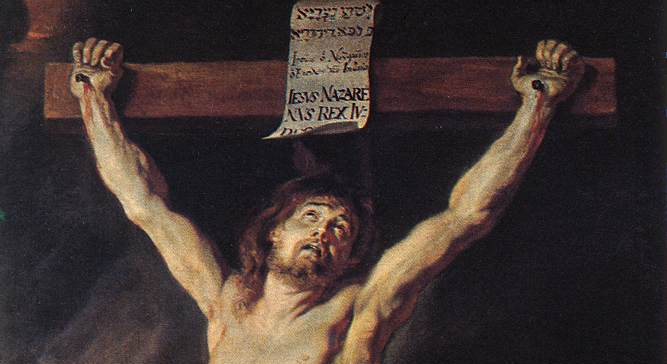
Continuing the experiment of dusting off this creaky old blog, here are the best theology books I read this year (not necessarily published this year!):
Teresa Morgan, Trust in Atonement:Teresa Morgan is a scholar of classical antiquity as well as New Testament and early Christianity, and she brings this perspective to bear in developing a new model of the atonement in this stimulating book. Taking the Greek pistis, with its connotations of “trust” and “trustworthiness,” Prof. Morgan argues that Christ is the one who God entrusts to create trust in human beings. In order to reconcile God and human beings, Jesus creates a “space” where trust can be (re-)established. God entrusts Jesus to us, even at our worst, in order to demonstrate that we can put our trust in God. This is an intriguing work that offers a genuinely fresh alternative to the typically rehearsed atonement models.
St. Athanasius, On the Incarnation: I decided to revisit Athanasius’ classic treatise this year, which remains one of the touchstones of classic Christian theology. One thing that struck me this time around was that, although Athanasius is sometimes presented as an alternative to “forensic,” “juridical” satisfaction theories of the atonement, there are elements of such accounts in his argument. For example, Athanasius says that in dying for us, Christ discharges a “debt” to God, which sounds positively Anselmian. Though it should be said that the emphasis remains on the ontological change effected through the incarnation. There are certainly arguments one could pick with Athanasius’ treatise (e.g. it says very little about Jesus’ earthly ministry and it’s not clear he has completely absorbed the point that Jesus is fully human), but it remains a lucid presentation of one of the essential truths of Christianity.
Nijay Gupta, The Affections of Christ Jesus:When there is so much niche scholarship being published on Paul, it’s nice to see someone offer an original interpretation of his thought as a whole. Gupta, professor of New Testament at Northern Seminary, argues that, as the book’s subtitle has it, love is at the heart of Paul’s theology. He applies this insight to Paul’s gospel, his understanding of Christian community, and his ethics, among other topics. “Christianity is about love” may sound trite, but Gupta’s work throws fresh light on Paul’s theology and its relevance for us.
Mildred Bangs Wynkoop, A Theology of Love: I read and discussed this book a chapter at a time with one of my good friends, who is also a deacon in the United Methodist Church. Wynkoop was a Church of the Nazarene theologian in the Wesleyan-Holiness tradition who tried to interpret the language of her tradition (“sanctification,” “perfection,” etc.) in ways that would make sense for contemporary people. One of her key insights is that doctrine has to connect with life in a meaningful way – too often theological terms become shibboleths that don’t find purchase in our actual experience. For Wynkoop, “holiness” is fundamentally about the flowering of love in our relationship with God and others. It is never a sub-personal, mechanical, or quasi-magical process; rather, it is an intensely personal relationship with the God of love.
Samuel Wells, Constructing an Incarnational Theology:This is an ambitious work that tries to reframe Christian theology around a “supra-lapsarian” understanding of the incarnation. Wells, a pastor of St. Martin-in-the-Fields in London, former Dean of the Chapel at Duke University, and author of numerous other works, applies his concept of “being-with” to some of the classic loci in Christian theology. Wells argues that, most fundamentally, God desires to be with God’s creatures and all of creation exists for this purpose. Rather than the incarnation being a “plan B” in response to sin, it is the manifestation of God’s desire to be with God’s creation. This is a provocative and original work, though I’m not 100% sold on Wells’ organizing idea of “being-with” as a kind of master key for scripture.
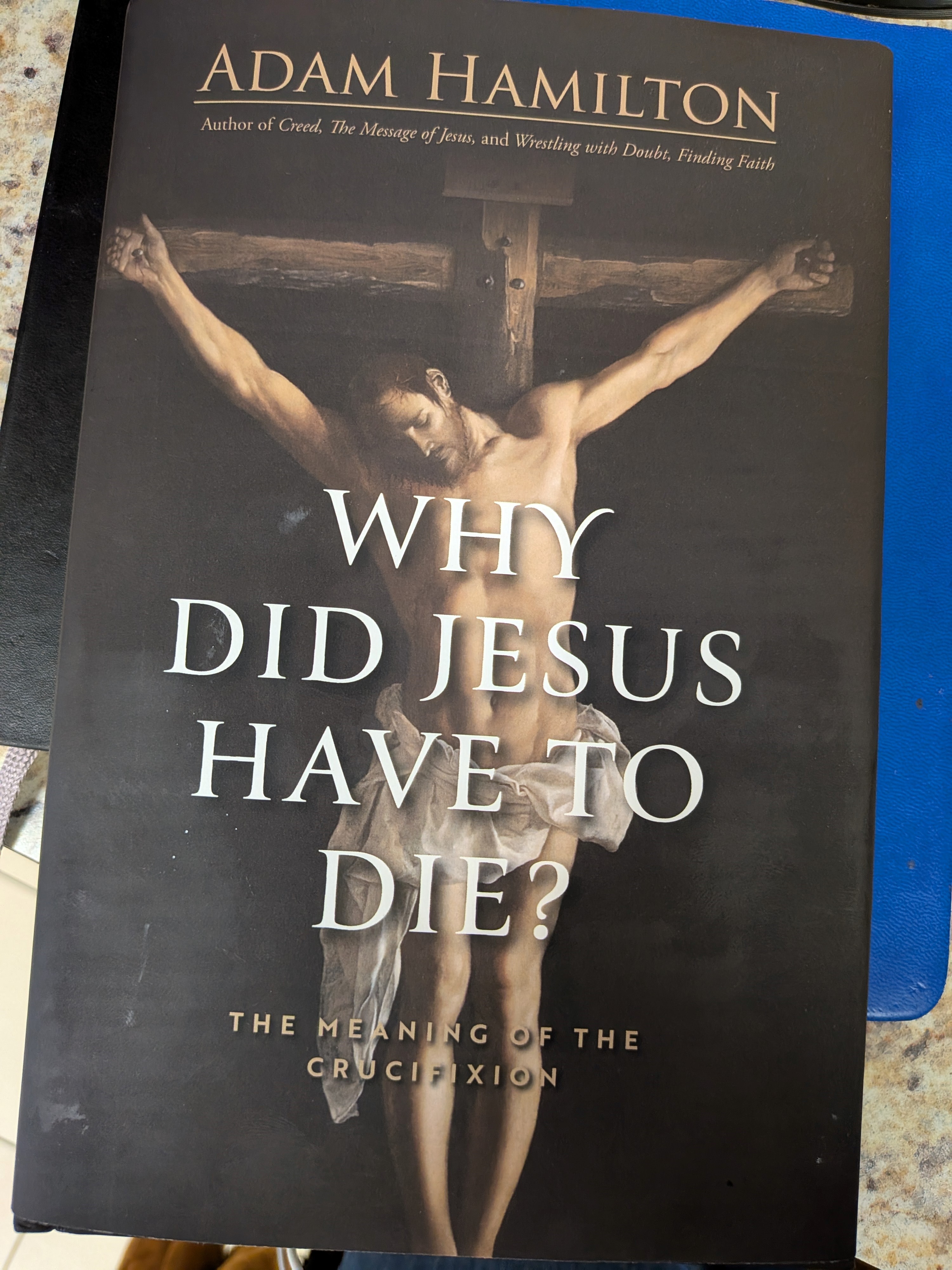
Adam Hamilton, Why Did Jesus Have to Die? See my review here!
Adam Hamilton, Why Did Jesus Have to Die? The Meaning of the Crucifixion (Abingdon Press, 2025)
Adam Hamilton is the pastor of the Church of the Resurrection in Leawood, KS, one of the largest Methodist churches in the country. He’s also the author of numerous books and bible studies where he’s tried to carve out what I would characterize as an irenic Christian orthodoxy for mainline Protestants. He’s “progressive” in the sense of supporting women in ministry and the full equality of LGBTQ+ folks in the church; but his theology is more in the spirit of a Lewisian “mere Christianity.”
I co-lead a small group at my church, and we’ve used a number of Hamilton’s books over the years. His latest book, Why Did Jesus Have to Die? is one of the more explicitly theological of his works. In it, he wrestles with several of the traditional “theories” of the Atonement – or how Christ’s death and resurrection reconcile us to God. Since this is a topic I’ve long struggled with, I was interested to see how Hamilton would approach it.
Maybe the most important move Hamilton makes is how he frames the Atonement. It’s a mistake, he argues, to treat theories of Atonement as though they describe the “mechanism” by which God effects our reconciliation. Instead, he says, we should see the cross as “God’s Word to humanity”:
Jesus incarnates God’s word, revealing God’s heart and character, God’s action on our behalf to reconcile and heal us, God’s word about the human condition, and God’s word concerning God’s will for our lives. Our task is to hear this word, to receive it, and to allow it to have its intended effect on our lives, and through us, on the world. (p. xviii)
Hamilton acknowledges that some might see this as a merely “subjective” interpretation of the cross. However, he notes “that claim fails to understand the power of God’s Word and how God works in our world”:
Throughout scripture God acts by speaking. “God said ‘Let there be light.’ And so light appeared. God saw how good the light was” (Gen. 1:3-4). God speaks and a stuttering sheepherd named Moses becomes the great deliverer. God speaks and the childless Abraham and Sarah conceive a child. God speaks through prophets and kingdoms rise and fall. Paul, as well as the writer of Hebrews, describes God’s word as a sword. But most importantly for our purposes, in his epic prologue, John describes Jesus himself as God’s Word. (p. xix)
In this perspective, the various New Testament motifs or metaphors for the salvation Jesus brings are better viewed as multifaceted images of the word God speaks in the death and resurrection of Jesus.
In the succeeding chapters, Hamilton provides an overview of various NT metaphors and the theories of the Atonement that have been built upon them. These include:
Recapitulation – Jesus is the new human archetype
Penal substitution – Jesus bears the punishment we deserve
Sacrifice – Jesus offers himself for our forgiveness
Passover Lamb – Christ delivers us from slavery and death
New Covenant – Jesus institutes a new covenant in his blood
Ransom – Christ frees us from the devil/powers of evil
Redemption – Jesus purchases our freedom
In all these cases, Hamilton thinks we can recover the power of these metaphors/images interpreted as aspects or facets of the word God speaks to us.
An instructive case study is that of penal substitution, which is both the most popular theory of atonement in some Christian circles and the most controversial in others. Hamilton offers strong criticisms of this theory as it’s often presented. These will be familiar to those who’ve followed the debate:
The idea that Jesus’ death was to appease God’s anger seems contrary to the gospel message.
It paints an unflattering image of a God who needs an innocent person to be tortured and killed in order to forgive.
It suggests God cannot forgive sin without punishment. But God is portrayed throughout Scripture as forgiving without punishment.
There are, of course, more sophisticated and nuanced presentations of penal substitution (e.g. John Stott’s The Cross of Christ). But even the most sophisticated interpretations of penal substitution tend to suggest that Christ’s suffering and death was something God needed in order to be gracious to us.
Hamilton does think, however, that the motif of Christ suffering for us can be helpful:
I believe it is we who needed Jesus’ death, not God. It was to change our hearts, not to change God’s heart. God can forgive anyone God chooses and does not require God’s Son’s torturous death in order to appease his anger.
As God’s Word, we can say that we see God demonstrating the pain he himself experiences as a result of human sin but also the lengths to which he is willing to go to save us from it. (p. 28)
I might put it this way: The cross reveals that God is always bearing the pain of our sin – and yet always offering mercy and forgiveness. The more “transactional” view suggests that there was a time when this wasn’t the case — that God had to be persuaded or paid off in order to be merciful. Attempts to salvage this by appealing to the Trintiy only get you so far, because you still end up having to say that God is paying Godself off or self-propitiating, which is an obscure idea to say the least.
Interestingly, given the reputation “moral exemplar” theories have had (almost as bad as penal substitution!), Hamilton spends to chapters expounding and defending multiple versions of this motif.
Essentially, Hamilton boils this down to two elements:
Christ provides an example of sacrificial love that we are to imitate.
Christ’s death reveals God’s loving heart to us.
It’s the second of these ideas that Hamilton says he finds the most compelling of the traditional atonement motifs. But what, one might ask, distinguishes the death of Jesus from the deaths of other heroic saints and martyrs throughout history?
What differentiates Jesus’ death … is his identity as God’s Word enfleshed. In John 14:11, Jesus said “I am in the Father and the Father is in me.” Christians believe that Jesus is the incarnation, the very embodied presence of God the Son. He is God’s anointed King. He is the Word of God enfleshed. He is God, the Son, who willingly dies not just for one person, but for all of humanity. (p. 80)
As Hamilton puts it:
[The Cross] reveals the very heart of God for humankind, and the motivation behind Christ’s death. It sees the story of Jesus as a love story portraying God’s steadfast love for humanity climaxing with the highest expression love might take — that of dying for another. When this love is experienced and accepted, it draws us to God, leads us to repentance, transforms our hearts, and, with the help of the Holy Spirit, compels us to live a life of selfless love. (pp. 80-81)
One could say that the death of Christ reveals God’s love because it was the (inevitable?) outcome of the kind of life he lived — the life of God’s love reaching out to us. God in Christ willed to be with humanity and creation, but human beings, in their sin, rejected God. However, this didn’t (indeed, can’t) deter God’s love, and God “loved his own to the end” (Jn. 13:1). (For a theology that puts God’s desire to be with us at the center, see Samuel Wells’ Constructing an Incarnational Theology.)
Fittingly, Hamilton concludes the book with an exposition of the “Christ the Victor” motif. All too often, Christian thought has separated the cross from the resurrection. This can suggest that it’s Christ’s death alone which saves us and this was the entire reason for his coming.
Through his death and resurrection Jesus overcomes the forces of evil. This doesn’t mean these forces have been destroyed — history and current experience give ample evidence that they still plague us. But the cross and resurrection demonstrate that God’s love is sovereign over these powers and they will ultimately be defeated once and for all. Importantly, this means that we can be freed from the fear of death and for works of love for our neighbors.
Summarizing, Hamilton offers some key takeaways:
Jesus didn’t have to die, but he believed God could use his death for a redemptive purpose.
Christ’s death is about forgiveness — but also more than forgiveness. It’s about transformation, new life, and victor over death, among other things.
Metaphors for atonement shouldn’t be confused with “mechanisms” that explain “how it works.”
I think some more transactional understandings of the Atonement appeal to our desire for things to be fixed through a quasi-magical act that doesn’t require anything from us. But Hamilton’s insistence that, in the cross, God is reaching out to us emphasizes the personal nature of this relationship. Ultimately, the cross and resurrection are God offering Godself to us through God’s Word, for our reconciliation, forgiveness, liberation and new life.
I just finished reading Deceiving the Devil: Atonement, Abuse, and Ransom by feminist theologian Darby Kathleen Ray, partly at the suggestion of someone on Twitter. It’s essentially a critique of traditional models of the atonement from a feminist and liberationist perspective, but it creatively mines the tradition for a constructive counter-proposal.
One strength of this book is the detailed discussion of feminist concerns about certain traditional atonement motifs (e.g. Anselm and Abelard)–namely that they encourage suffering, victimization and passivity in the face of evil. Sometimes these critiques are tossed off without really being substantiated (e.g., vague references to “divine child abuse”). But Ray spends a lot of time explaining exactly what feminist critics find troublesome about these models and how they contribute to suffering. Even if one doesn’t find these criticisms wholly persuasive, there’s a substantial argument here that needs to be engaged with.
Another contribution of this book is that Ray connects the concerns of (largely) North American feminists to the similar, but also importantly different, issues raised by Latin American liberation theologians and shows how each can enrich the other.
For example, despite their criticisms of certain traditional interpretations of the atonement, some liberation theologians have developed a more positive account of the significance of Jesus’ death. The suffering Jesus becomes a figure with whom the oppressed poor can identify, and this can give them strength in their struggle. Moreover, liberation theologians have shown how Jesus’ death is consonant with his life and ministry, which on this reading was about bringing mercy to the downtrodden and confronting forces of evil and oppression. On this view, Jesus’ death was a consummation of the way he lived and powerfully shows what nonviolent resistance to the powers that be looks like. Ray thinks this is a useful corrective to some feminist theologians’ refusal to attribute any salvific significance to the crucifixion.
Ray’s constructive proposal seeks to incorporate these insights but also to go beyond them by reclaiming imagery from the early church. The motif or model she develops is essentially a demythologized version of the patristic “ransom” theory where Jesus’ death tricks Satan into surrendering his rights over humanity. In the colorful images offered by some church fathers, Jesus is the bait on the fishhook or the cheese in the mousetrap that ensnares Satan. Humanity, by sinning, had put itself under Satan’s dominion, but by killing Jesus the innocent one, Satan forfeited any rights over us. (This is dramatically, and famously, portrayed in C.S. Lewis’s The Lion, the Witch and the Wardrobe.)
In Ray’s demythologized version, Jesus subverts or “outsmarts” evil by responding with nonviolent love instead of with coercive force. By killing Jesus, the forces of evil, which Ray identifies with oppressive social, political and economic structures rooted in a desire to dominate and control others, are exposed as bankrupt and lacking legitimacy.
The way of Jesus, culminating in his death, reveals the illegitimacy of coercive domination. Humanity’s enslavement to evil is loosened because Jesus, in his life and death, has established a new way of being in resistance of evil. This becomes a permanent possibility, accessible to all human beings, because it was “incarnated” in Jesus. This interpretation of the ransom motif could also be seen as a variety of Christus Victor — Jesus wins a paradoxical victory over the powers of evil be persisting in his mode of non-violent love, even to the point of death.
This, however, brings me to some of the qualms I have about Ray’s model. In the traditional Christus Victor model, the resurrection of Jesus plays an essential role. By raising him from death, God puts the stamp of approval on Jesus’ ministry, and shows that noncoercive love has the last word in the cosmos, appearances to the contrary notwithstanding. The resurrection is the locus of victory over the evil powers, although its meaning can never be separated from the cross.
However, the resurrection plays virtually no role in Ray’s discussion. The closest she comes is in saying that the community, when it follows Jesus’ lifestyle of nonviolent love, “resurrects” him. This could be because Ray simply doesn’t believe in a traditional version of Jesus’ resurrection. But it may also be because she wants to avoid seemingly tidy resolutions to the problem of evil.
Ray emphasizes the “tragic” nature of existence and the fact that all our efforts to resist evil are piecemeal. This seems to lead her to deny that there will be some kind of ultimate resolution–or at least downplay the possibility. She seems to worry that belief in any such divine intervention could lead to complacency about evil, something that she has argued is encouraged by certain traditional interpretations of the atonement.
I think one has to respect this refusal to prematurely declare victory over evil. Heaven knows that Christianity has been guilty of more than its fair share of triumphalism over the centuries. As Clark Williamson, Rosemary Radford Ruether, and other theologians focusing on Christian anti-Judaism have pointed out, Christianity has often lost the “proleptic” nature of the of redemption–the idea that Jesus’ resurrection is a sort of promissory note for an ultimate redemption that is still to come (whatever that may look like). On this view, evil has not been eradicated but continues to stalk the world in this time between the times. Too often, Christians have conflated the church and the kingdom, losing the eschatological hope for a redeemed creation.
Such an understanding of redemption might address some of Ray’s concerns about complacency in the face of evil, without surrendering Christianity’s traditional hope in God’s ultimate victory over evil. By downplaying the resurrection Ray’s re-tooled ransom theory ends up looking a lot like another version of exemplarism. Jesus embodies a way of living that Christians (and potentially others) can emulate, and his death reveals the bankruptcy of coercive domination (or what Walter Wink called “the domination system”). While this account of sin and its grip on human beings is powerful and illuminating, I wonder if the atonement as she interprets it is capable of liberating human beings from its power. In other words, it’s not clear on this account how Jesus’ life and death (and resurrection) save, as opposed to being inspiring examples of nonviolent resistance.
What this understanding of sin calls for, it seems to me, is a power that can truly liberate humans and which promises fulfillment and salvation for all. Of course, there’s always the possibility that such a hope is a form of wishful thinking and we should be content with what Scottish theologian John Macquarrie called the “austere ending” as one possible interpretation of the story of Jesus.* But I at least continue to hope that the alternative, “happy ending” is the true one. I’m also hopeful that this story can be a source of love and freedom for all creation rather than something that fosters abuse and suffering.
—————————————————
*In his Jesus Christ in Modern Thought, Macquarrie contends that there are two possible endings to the Jesus story, based on the historical evidence and a responsible theological interpretation. The “happy ending” of the Jesus story is the series of “mysteries” that follow the crucifixion–the descent into hell, the resurrection, the ascension and the second coming. This is obviously the convetional ending, the version of the story taught by most churches and believed by most Christians. It assures us that we will live beyond the grave and that at least some of us will be crowned with everlasting happiness. But there is also an “austere ending” that also provides a plausible interpretation of Jesus’ career and in which we can still find meaning. As Macquarrie writes, “Suppose we omitted the ‘joyful mysteries’ that traditionally came after the cross? Would that destroy the whole fabric of faith in Christ? I do not think so, for the two great distinctive Christian affirmations would remain untouched — God is love, and God is revealed in Jesus Christ. . . . If the highest virtue is the kind of love which the New Testament attributes to Jesus, then it seems to me that his victory over evil was already won in the agonizing hours before his death, and that it would remain decisive even if there were no subsequent events of resurrection and ascension.” (p. 412) Somewhat similar to Ray, in his treatment of the work of Christ, Macquarrie develops a demythologized version of Christus Victor, in which Jesus’ atonement consists in his loving to the point of death and establishing a new template or possibility for human living.
Is the Christian gospel about the life and teachings of Jesus, or is it about his death and resurrection? These two poles of the Christian message have often been pitted against one another, sometimes in the form of St. Paul’s “theology of the cross” vs. “the Jesus of the gospels” (particularly the synoptic gospels).
In her brief but rich book Not Ashamed of the Gospel: New Testament Interpretations of the Death of Christ, esteemed New Testament scholar Morna Hooker argues (persuasively, to my mind) that the NT authors were largely on the same page regarding the significance of Jesus’ crucifixion and its implications for Christian living, even though they might differ somewhat in emphasis.
Hooker dedicates successive chapters to the though of Paul, each of the four gospel writers, the letter to the Hebrews, and 1 Peter/1 John/Revelation. These authors use a variety of metaphors, images and concepts to express the meaning of Jesus’ death (and resurrection), and one would look in vain for a fully developed “theory of atonement.” Nevertheless, Hooker shows that there’s a remarkably consistent set of assertions that are virtually unanimous among these witnesses:
“Jesus was put to death through the weakness and sin of wicked men and the rebellion of satanic powers, [but] it was part of God’s plan, and took place in accordance with scripture.” (p. 139)
“Through Christ’s death and resurrection God has reconciled us to himself.” (p. 139)
“That Jesus suffered ‘for us’ does not mean that Christians can expect to escape suffering themselves — the very opposite! Christ triumphs over death, but those who want to share his triumph must share his shame and suffering and death.” (p. 140)
“It is not simply the absurdity of the gospel itself — a crucified Messiah!– which might cause Christians to blush, but its implications for the life-style of those who commit themselves to following a crucified Lord.” (p. 140)
That Jesus’ death is part of the divine plan and the site of divine forgiveness goes against certain liberal theologies that are uneasy with the idea of God using such gruesome methods to redeem humanity. At the same time, Hooker insists that the cross is no mere “substitution” whereby Jesus suffers instead of us. She prefers the language of “participation”–we are saved through union with Christ in his dying and rising. This has implications for how we live–Christians must expect to suffer as part of following a crucified messiah. This rules out certain individualistic interpretations of Christianity that peddle Bonhoeffer’s “cheap grace” and downplay the cost of discipleship. And how far from the spirit of the NT are the various “prosperity gospels” that promise an untroubled life of material success and contentment!
In other words, talking about the gospel as either a religion of redemption and forgiveness or a way of life modeled after the example of Jesus is a false dichotomy. Hooker seems to find the image of participation the most compelling way of expressing this: God in Jesus became like us so that we can become like him. This isn’t a simple “exemplarist” understanding of salvation; it’s more like a mystical union with Christ whereby we share in his righteousness and are (re-)formed in his image.
Ultimately, Hooker says, the revelation of God’s glory in the cross is the deepest meaning of the NT witness:
The idea — common to Paul and John — that God’s glory is revealed in the death of Christ is perhaps the New Testament’s most profound insight into its meaning. … The belief that God is revealed in the shame and weakness of the cross is a profound insight into the nature of God. … By embracing the scandal of the cross, and joyfully accepting its shame, these early Christians discovered the true character of God, and found that the true source of joy consisted in becoming like him. (p. 141)
I’ve leaned toward Elizabeth Warren for most of the current primary campaign. Almost exactly a year ago, I placed her at the top of my preliminary candidate rankings. I cheered her on (and gave her a modest amount of money) as she ascended to near-front-runner status, driven not just by her famous “plans” but by her laser-like focus on political corruption and inequality. She had an infectious, “happy warrior” vibe, totally unafraid to skewer the powerful and well-connected. She seemed, to my mind, ideally poised to bring together mainstream liberals who supported Hillary Clinton in 2016 and left-wing fans of Bernie Sanders’ populist message.
But of course that didn’t happen.
There have been many autopsies of her candidacy’s slow descent, culminating in a series of third-, fourth-, or fifth-place finishes in the early primary contests, and I’m sure there’ll be many more. Some have argued that the “lane” for a candidate between Sanders on the left and more moderate candidates like Joe Biden, Pete Buttigieg and Amy Klobuchar on the right simply didn’t exist. She also seems to have appealed disproportionately to professional-class whites and didn’t do nearly well enough with working-class voters and African Americans, among other key groups. At times she struggled to find her footing on issues like Medicare for all. And, maybe most crucially given the mood of Democratic voters this year, she was perceived, fairly or not, as less likely to beat Donald Trump than some of her competitors.
And of course there’s the role of sexism and the question of whether Democrats were too gun-shy to nominate a woman after Clinton’s humiliating loss to Trump. Whatever mistakes Warren and her campaign made, it’s impossible not to notice that some of the men in the race have recovered from worse. Then again, nobody ever said politics is fair, and your qualifications and the merits of your policies don’t count for much if you can’t persuade people to vote for you.
Whatever the limitations of Warren as a candidate, though, she genuinely came across as a highly intelligent, committed and compassionate woman who was sincerely fighting to advance the interests of ordinary Americans ill-served by our existing political and economic systems. (Allowing for the fact that every politician is almost certainly ego-driven to some extent.) She was the most interestingthinker in the race, but her nerd-chic wonkiness and policy expertise were wedded to an appealing vision of what America could become if we took its promises of liberty and justice for all seriously. Her vision is about dismantling the structural barriers and inequities that keep people from realizing their God-given capabilities and participating as free and equal citizens in a democratic republic. The religious inspiration of this vision is indicated by herfrequentinvocationof Matthew 25 and its promise that our fealty to the Lord will be tested by how we treat “the least of these.”
Whether Warren ends up serving in a Sanders or Biden administration, or continuing her work in the Senate, I hope she’ll be around for years to come, fighting to make her vision a reality.
It’s not news that a lot of us have a complicated relationship with technology. Many of us feel like we spend more time on our phones–particularly social media–than we think, in our more reflective moments, is probably good for us. Phone addiction is now discussed as a serious issue, and the ubiquity of mobile phones has even been linked to a significant increase in mental health issues among the young. The ubiquity of mobile phones and the rise of social media seem to contribute to anxiety, isolation and depression, even while making utopian promises to “build community and bring the world closer together,” as Facebook’s mission statement has it.
I personally have wondered (but been afraid to find out) how much time I’ve spent on these services and what I could’ve done with that time instead. As often as not, social media is, for me anyway, a source of anxiety and irritation. I’ve sometimes thought of Twitter as “letting the world’s angriest people set your mental agenda for the day.”
And yet, it’s hard to stay away. In addition to social media providing a distraction from whatever else might be going on, there’s a vague, but ever-present sense that you might be missing something (however ill-defined that something is) if you aren’t logged on. And yet, at the same time, the world of social media has a tendency to encroach on other activities that we (theoretically at least) value more. Have I checked Twitter or Facebook while ostensibly playing with my kids or enjoying a long walk on the leafy streets of my neighborhood? Why, yes I have.
None of these observations are new or original, but they set the stage for a recent book that helped me crystallize some of the real problems with living this way and why and how to make a change.
In his newest book Digital Minimalism, Cal Newport, a professor of computer science at Georgetown and author of several popular books, makes a compelling case for intentionally limiting your use of digital tools, particularly social media, whose entire business model rests on sucking up as much of your time as possible. He recommends a 30-day digital “declutter” where you eliminate, or significantly cut back your use of voluntary digital tools; then after the 30-day period you reintroduce only those that add significant value to your life.
Newport calls his philosophy “digital minimalism” because he thinks the value added to our lives from the time we invest in these services is likely, for most of us, to be a bad deal. Instead of mindlessly meandering about in these environments whenever we’re bored, we should decide what, if anything, we really want to use them for, and limit our time engaging with them to these purposes. He cites Henry David Thoreau’s advice to “simplify, simplify, simplify,” not for its own sake, but to make room for richer values and experiences.
The second half of Newport’s book makes the case for activities that we can make more room for if we spend less time mindlessly scrolling through Facebook, Instagram or Twitter. These core activities–solitude, conversation, and high-quality leisure–are, Newport contends, essential to a flourishing human life.
Solitude means spending time alone with your own thoughts without the input of another mind. (So this excludes reading, listening to podcasts, etc.) Solitude in this sense is essential, Newport thinks, for processing our own thoughts, self-reflection, and turning over a particular problem. Taking long walks is an excellent opportunity for such solitude.
Conversation is defined in contrast to the fleeting “connections” we tend to make online–likes, retweets, comments. Newport says that humans are designed for a much higher “bandwidth” form of connection, as evidenced by the ways we, largely unconsciously, process the many non-verbal cues during face-to-face conversation. Online connections should largely be relegated to logistical purposes–to facilitate genuine conversation, whether in person or over the phone (or even an app like Facetime).
High-quality leisure includes the kinds of activities that we undertake for their own sake. Paradigm examples for Newport are fixing or building physical things, playing a musical instrument, engaging in “supercharged” forms of sociality like intense group workouts, and other “analog” activities that don’t involve simply flopping down in front of a screen.
Newport’s final chapter focuses on the “attention resistance”–a loose but growing movement of people who realize that, for social media companies and other producers of digital tools, we aren’t the customer, but the product (as the saying goes). The “attention economy” thrives when we spend as much time as possible on these platforms, and technology companies have incredibly smart engineers working to make their tools and apps as addictive as possible. The attention resistance is made of of people who take a more adversarial approach to these companies and seek to deprive them of their attention, except to the extent that they derive benefits from these tools.
While I found most of Newport’s argument persuasive, I did have a few disagreements. Despite quoting Aristotle on the value of leisure, Newport all but ignores Aristotle’s emphasis on contemplation as the highest goal of human life. Virtually all of the people Newport describes as exemplars of high-quality leisure are super high-activity types who are out clearing trees in the forest or learning how to weld as their preferred forms of “leisure.” I do agree that engaging with the physical world is an essential part of human life, virtually all of Newport’s examples still focus on a high-productivity “doing” rather than “being.” (I had a similar concern about his previous book Deep Work, which seemed at times to be mainly a manifesto for being more productive, rather than questioning the obsession with productivity.) One could argue, for instance, that the contemplation of nature has as much, or in some case more, value than putting the human stamp on it.
All that said, I found the core of Newport’s argument convincing: It is very hard to maintain that the amount of time many of us spend on social media is time well spent and that it wouldn’t be better put to use otherwise. If anything, he somewhat undersells the drawbacks of social media: particularly the dread, anxiety and malaise it can induce in many of us. I honestly can’t think of too many times I’ve come away from Twitter or Facebook feeling happier and more energized. And he seems right on about the shallow forms of affirmation we’ve come to rely on in our quest for more likes and clicks.
Moreover, though Newport is writing from a secular perspective, many of his insights would dovetail with religious wisdom, particularly on the importance of simplicity, solitude and engaging with other people and the created world without the mediation of a glowing screen. At the same time, religious wisdom could also correct Newport’s tendency to value production over contemplation. In any event, Newport convinced me to attempt my own digital declutter: a Twitter hiatus and a significant cutback on my use of Facebook. Whether I’ll be able to put these services in their proper place in my life (if they have one!) after 30 days remains to be seen.
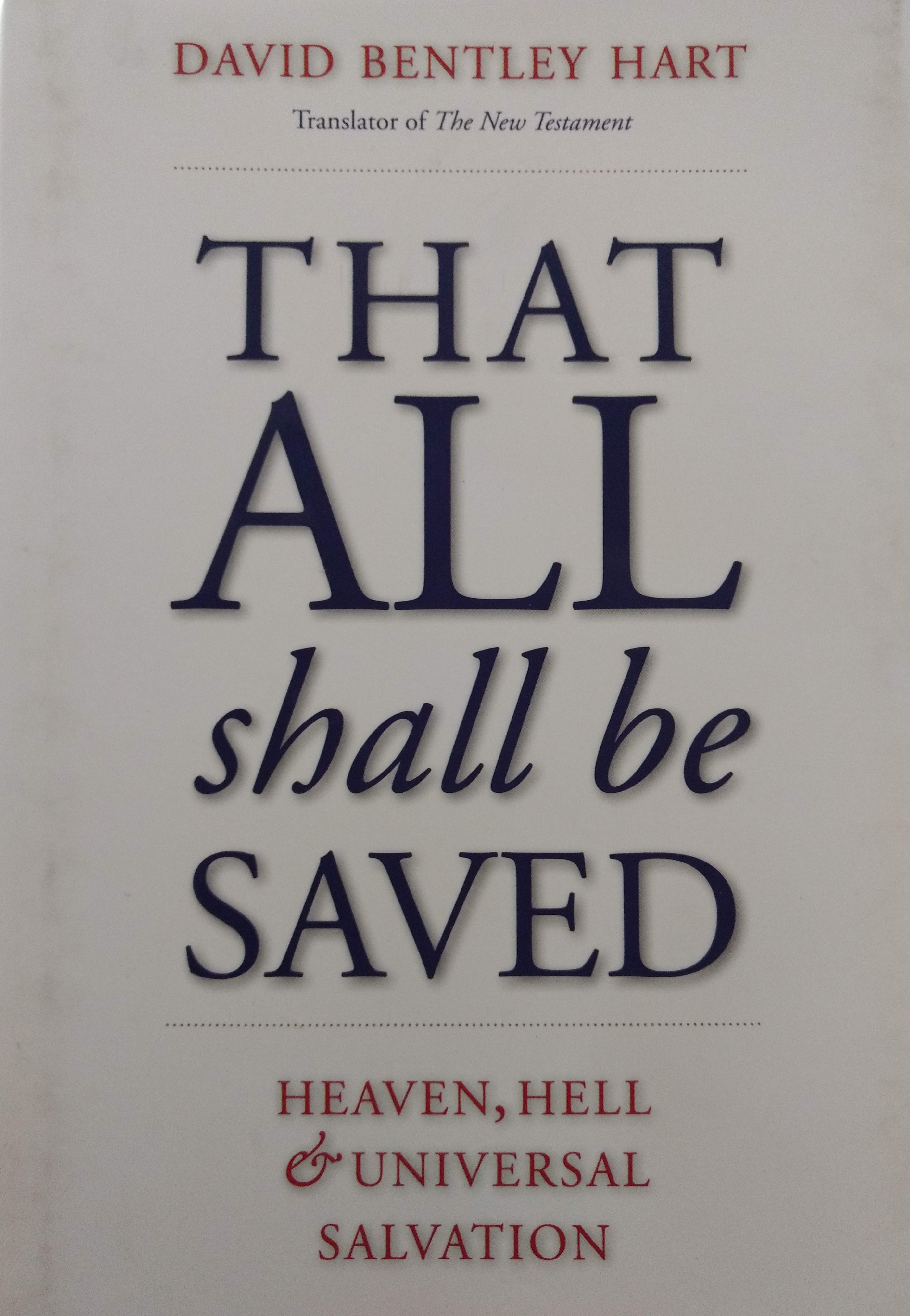
If all are not saved, if God creates souls he knows to be destined for eternal misery, is God evil? Well, perhaps one might conclude instead that he is both good and evil, or that he is beyond good and evil altogether, which is to say beyond the supremacy of the Good; but, then again, to stand outside the sovereignty of the Good is in fact to be evil after all, so it all amounts to the same thing. But maybe every analogy ultimately fails. What is not debatable is that, if God does so create, in himself he cannot be the Good as such, and creation cannot be a morally meaningful act: It is, seen from one vantage, an act of predilective love; but, seen from another–logically necessary–vantage, it is an act of prudential malevolence. And so it cannot be true. We are presented by what has become the majority tradition with three fundamental claims, any two of which might be true simultaneously, but never all three: that God freely created all things out of nothingness; that God is the Good itself; and that it is certain or at least possible that some rational creatures will endure eternal loss of God. And this, I have to say, is the final moral meaning I find in the doctrine of creatio ex nihilo, at least if one truly believes that traditional Christian language about God’s goodness and the theological grammar to which it belongs are not empty: that the God of eternal retribution and pure sovereignty proclaimed by so much of the Christian tradition is not, and cannot possibly be, the God of self-outpouring love revealed in Christ. If God is the good creator of all, he must also be the savior of all, without fail, who brings to himself all he has made, including all rational wills, and only thus returns to himself in all that goes forth from him. — David Bentley Hart, That All Shall Be Saved, pp. 90-91
I had already come around to a position pretty close to the one David Bentley Hart argues for in his most recent book, though I’m a bit more diffident about my views. (Then again, who isn’t more diffident than Hart?) Nevertheless, I still enjoyed the book, not least because of the moral passion Hart brings to it. And I do think the moral argument is at the heart (ahem) of this book. Sure, he delves into classical theistic metaphysics and the nature of freedom (both divine and creaturely), but at the end of the day this book is really about whether God can be trusted to be good and bring creation to the best imaginable fulfillment. A creation in which even one creature suffered unending torment as the consequence of a finite offense is (necessarily) worse than one in which all creatures are restored. And if God is both good and sovereign, why wouldn’t God be able to bring about the best state of affairs?
One quibble I had is that Hart largely ignores the discussion of universalism in more recent theology. He generally takes the later Augustine, Thomism and Calvinism as his interlocutors, which makes the tradition seem more monolithic on this point than it is. At least since the early modern period, theologians have been questioning the received view of hell. Schleiermacher, the great 19th-century liberal theologian, argued for what we might call “single predestination” and, as Richard Bauckham points out, he had a “deeply felt conviction that the blessedness of the redeemed would be severely marred by their sympathy for the damned.” And several major 20th century theologians–Barth, Rahner, Von Balthasar, Tillich, Kung, and Moltmann, to name a few–either downplayed traditional notions of hell or were outright universalist. The same is true of more recent theology, largely though not exclusively within mainline Protestantism and Catholicism. In addition, feminist, liberation and other theology written from the perspective of marginalized groups has emphasized that humans are quite capable of creating hell on earth and God is the one who delivers from violence and oppression, not the overseer of an eternal torture chamber. This is all somewhat at odds with the way Hart plays Western Christianity off against the Eastern church and the early fathers.
This isn’t to detract from Hart’s arguments, which stand or fall on their own merits. But it suggests that the Western Christian tradition is more hospitable to universalism than he suggests. A recent example is offered by Keith Ward, a theologian-philosopher whose work has influenced me quite a bit:
God does not compel humans to repent, and repentance is required if people are to turn to the path of life. But if God wishes that all should reach repentance, God must make repentance and salvation possible for all, without exception. A God of love would always hold the door of repentance open. In that sense, Hell cannot be God’s final word to any created being. It must be possible even in Hell to repent, and God, the God revealed in Christ, must be present and active to make that a real possibility. (Re-thinking Christianity, p. 43)
This is very similar to Hart’s argument: If God is good, then God will never give up on any created soul. Hell may exist as a kind of purifying state, but it cannot be an unending, sheerly retributive form of punishment. God wills that all shall be saved, and the divine love is inexhaustible in seeking the lost.
After getting a little feedback on Twitter, I realized my previous post could be read as dismissing the importance of shared beliefs–about the Resurrection or anything else. This wasn’t my intention. While I do worry about how “orthodoxy” can be (and has been) weaponized (see the recent UMC general conference, e.g.), that doesn’t mean that the church should dispense with common standards of belief.
So what does that look like? Well, the creeds are a pretty good example. The Apostles’ Creed in particular offers a pithy summary of the essentials of Christian belief. As pastor and spiritual writer Addison Hodges Hart put it in a good recent book:
It is truly worth emphasizing how spare the Apostles’ Creed is, how economical, and how much space is left for thought about each one of its assertions. It isn’t complicated, nor is it unintelligent. It strikes just the right note, neither too high nor too low. . . . Each line is short enough to provide definition and set bounds, but large enough to allow for spiritual exploration and even creativity. It is a “system,” but not a stifling one. (Hart, Strangers and Pilgrims Once More: Being Disciples of Jesus in a Post-Christendom World, pp. 32-33)
Hart reminds us that when the church began to elaborate (over-elaborate?) its creeds it ran into the temptation of enforcing increasingly esoteric formulations of belief. And when the church entered into an alliance with the imperial state, that enforcement took a very real, very physical form. Discussing the so-called Athanasian Creed (not written by St. Athanasius), he notes that
its multitude of abstract assertions regarding the Trinity and the two natures of Christ are a masterpiece of obsessive fine-tuning mixed with threat. It is difficult for anyone acquainted with the church’s history not to recall, when reading this belligerent exercise in dogmatism, that many human beings–those “for whom Christ died” (Rom. 14:15)–were in fact tortured and killed for failing to acknowledge just such doctrinal obscurities. Perhaps more strikingly, it might be noted that there is a total absence in this text of anything deriving from Jesus himself, either in word or in spirit. (p. 41)
Most mainline churches (excepting the explicitly non-creedal ones) affirm the Apostles Creed (and the Nicene) as standards of faith. But those both leave a lot of room for different understandings of their central propositions. For instance, they don’t prescribe a particular view of the nature of God (classical theist or open theist?), predestination (Calvinist or Arminian?), the atonement (satisfaction, penal substitution, Christus Victor, or moral exemplar?), the church, the sacraments, etc., etc.
Hart calls the dogmas of the creed
signposts on the way each of us must walk. They aren’t restraining fences, but point us outward toward our journey, in the direction of wide-open possibilities. As Rabbi [Abraham Joshua] Heschel said, they are “indications” of what “cannot be adequately expressed.” We need the simple directions Jesus laid out for us, leading us on toward the Father, Son, and Spirit, toward community with one another and life with God, toward a way of living that is real and winsome. (pp. 54-55)
So to return to the topic at hand, what about the Resurrection? Well, the Apostles’ Creed addresses it in two places: “On the third day [Jesus] rose again” and “I believe in . . . the resurrection of the body and the life everlasting.” The latter presumably refers also to our resurrection, not just Jesus’.
Again, it’s noteworthy what’s left unsaid. There is no detailed discussion of the Resurrection (or even a mention of the empty tomb for that matter), the precise form of the resurrection body, etc. What is emphasized is that Jesus was raised to new life, reigns with the Father, and will come again as judge. The last line simply says that we (or at least some of us!) will be raised bodily and live everlastingly. (Interestingly, the Nicene Creed refers to the resurrection of “the dead” instead of “the body.”)
Now, we don’t live by creeds alone. We have, first and foremost, the Scriptures, along with 2,000 years of interpretation and reflection on the central mysteries of the faith. Not to mention, prayers, liturgies, hymns and other elements of the church’s living tradition. But the tradition hasn’t yielded a unanimously agreed-upon understanding of the nature of the Resurrection. Origen, Tertullian, and Augustine didn’t agree on all the particulars; neither did Aquinas, Luther, Schleiermacher, and Barth–to pick some names somewhat at random.
Clearly there are limit cases. Someone who flat-out denies the existence of any kind of God or that Jesus of Nazareth ever lived is outside any recognizable boundary of creedal Christianity. And there are also fuzzy, borderline cases. For instance, the late Marcus Borg, who was at one time the veritable poster-boy for popular progressive Christianity in the U.S., strongly objected to accusations that he denied the Resurrection. But was his understanding of it consistent with what the creeds say? I don’t know, and happily I don’t have to make that call. (And I trust that Professor Borg is resting in the Lord.)
Now, in the case of someone like Serene Jones, it’s not clear to me exactly what she would affirm or deny, at least based on her interview with Nick Kristof. Certainly she didn’t go out of her way to affirm the Resurrection as a reality independent of human feelings or response. Such a position, in my view, would put her outside the bounds of creedal Christianity. (Which is not the same as grounds for excluding someone from participation in the life of the church–much less salvation. That’s a whole other, though not unrelated, issue.)
In practice, it’s important for churches to have shared statements of belief (call it “orthodoxy” if you like). But those statements should be broad enough to encompass a diversity of viewpoints about what they mean. (Happily, the traditional creeds fit that bill pretty nicely.) And as I suggested in the previous post, they should always point us in the direction of living the kind of life Jesus calls us to. To return to Addison Hart again:
If faith–dogma–is dead without works, then the practical fruit of dogma must be seen as proof of its truth. If we believe in the creeds we profess, then our lives must be in alignment with what we affirm. We will find more than enough to live up to in just the three chapters of Matthew’s Gospel given to the Sermon on the Mount (Matt. 5-7), not to mention everything else we read in the Gospels and the remainder of the New Testament. If something bears no fruit at all in our Christian lives, it is too barren to be a useful dogma. Belief in God the Father leads to love for all creation, belief in the Son leads to taking Jesus as our exemplar and redeemer, and belief in the Spirit leads to unbreakable communion with our fellow disciples. Dogma leads to changed perspectives, reformed minds, and daring new lives. (p. 56)
Union Theological Seminary president Serene Jones instigated a minor online theo-kerfuffle last week when she seemed to dismiss the importance of the bodily resurrection of Jesus, along with other major Christian doctrines, in an interview with New York Times columnist Nick Kristof.
One interesting thing about this latest round of the theological culture wars is that it wasn’t just the usual conservative suspects who were up in arms about Dr. Jones’s comments. There were also a number of younger progressive-leaning Christians who took issue with her views on the Resurrection.
Wesley Hill, a professor of New Testament, noted this phenomenon in a short piece for Commonweal. He suggests it may represent a kind of “turn to orthodoxy” among younger mainline Christians. Hill contends that this younger cohort of mainline Protestants (many of them clergy or clergy in training) don’t have the same epistemological hangups as their elders (as supposedly exemplified by Serene Jones’s theological liberalism), and affirm a more robust version of Christian faith. Moreover, not only do these folks not see a contradiction between theological orthodoxy and progressive or leftist politics, they see them as naturally fitting together. As Dr. Hill puts it, “In short, if my online friends represent any bellwether, the future of mainline Protestantism will see a tight connection between radical politics and the hope of the bodily resurrection.”
On this view, the liberal theology represented by Serene Jones represents the old guard, while the future lies with a recovery of “orthodoxy” aligned with leftist politics. Leaving aside whether Professor Hill’s “online friends” do represent the future of mainline Protestantism, I’d caution against drawing the boundaries of “orthodoxy” too narrowly. “Bodily resurrection” can become something of a shibboleth and an excuse to “un-church” people who don’t share a very specific understanding of what it entails.
The New Testament is a bit more cryptic about the nature of the resurrection than people sometimes think. Even if we take the resurrection stories at face value, we’re presented with a Jesus who is “physical” in the sense of being a tangible presence who eats with his disciples and shows them the still-present wounds in his body, but who also can appear and disappear at will and whom the disciples don’t immediately recognize as being the same person. And then there’s the rather anomalous case of St. Paul, who clearly considered himself a witness of the risen Christ, but does not describe the kind of tangible encounter portrayed in the gospels. The only thing that comes through clearly is that, for the NT writers, Jesus’ post-resurrection state involved both continuity (he was the same person, the crucified one) and discontinuity (he had been radically transformed and raised to a different state of existence).
A related issue is how to conceive of our own resurrection. Theologians of the early church spent a lot of time worrying about how our bodies would be re-assembled at the Last Judgment once they had been subject to decay and dissolution (even cannibalism!). The idea that we will rise in the very same bodies (as Jesus supposedly did) is hard to square with the observed facts about what happens to corpses. Since the particles of our bodies are recycled into other parts of the natural environment, there’s no non-arbitrary way to identify which bits of matter belong to who. Even during the course of our present life we’re not made of the same particles over time. So, whatever the continuity of our bodies consists in, it can’t require that we be composed of the same matter. Thus it’s not even clear what it means to say that the bodies we have now will be raised.
Some modern theologians, recognizing this problem, have proposed that God will provide us with new bodies after death (which they identify with the “spiritual body” mentioned by St. Paul in 1st Corinthians). These bodies, it’s supposed, will be suited to whatever postmortem environment we’ll exist in. But if this is the case, then our resurrection differs from Jesus’s (at least according to the view that his selfsame body was raised and transformed). Also, once you start talking about a “spiritual body” it becomes less clear what the difference is between the resurrection of the body and the immortality of the soul, though much has been made of this distinction.
As you can see, trying to think this through gets complicated pretty quickly, and in my view a certain degree of agnosticism about the details is more than warranted. Personally, I think Jesus’ tomb was empty, partly because producing his body would’ve been a good way for the Romans or the Jewish religious authorities to refute the claims being made by the disciples after the first Easter. But it also seems clear that it was the appearances of the risen Lord (and the outpouring of the Holy Spirit) that energized the despondent disciples to preach the good news. The core of Christian faith is that Jesus is alive now, not just a figure of the historical past, and that we can participate in the divine life through union with him. This is the basis of a transformed life now and the hope for life beyond death.
Christianity isn’t (or at least shouldn’t be) about demanding that people subscribe to a laundry list of very specific doctrines. (The Apostle’s Creed is quite pithy and leaves a lot of details unspecified.) It’s an invitation to participate in the divine life through union with the risen Lord and his church. While the church should joyfully proclaim the Resurrection, it’s also wise–and charitable–to leave room for mystery.
I assume anyone who cares already knows what went down at last month’s special general conference of the United Methodist Church. (Here’s a pretty lucid rundown of the events and some possible implications.)
LGBTQ-affirming Methodists have been made painfully aware that they just don’t have the numbers to change church policy, and likely won’t in the foreseeable future. This is partly because the UMC comprises churches from around the world, and many of the growing churches are in countries where more conservative views of homosexuality at the norm. It was a coalition of traditionalist Americans and delegates from conservative jurisdictions outside the U.S. that secured the victory of the so-called traditional plan.
One outcome of all this is the very real possibility of a denominational split. Affirming Methodists aren’t about to quietly accept the punitive traditional plan (although how much of it will survive an upcoming review by the church’s judicial council is unclear). But a return to the trench warfare of the last several years can hardly seem appealing to many people, especially when the prospects of change seem so remote. This is why the idea of a split has been floated publicly by progressives, and even some more centrist-leaning Methodists. In my own Methodist congregation, this has been a lively topic of discussion during the past few weeks.
One question I have about this, though, is: Does the world really need another Methodist denomination? Or, to put it somewhat differently, what would the raison d’être of such a church be? I don’t mean this to be a rhetorical question–I think it’s a question we sincerely need to ask ourselves before going forward with any new denominational structure.
The UMC is the result of a merger in 1968 between the Methodist Church and the Evangelical United Brethren Church. The Methodist Church had evolved (with additional mergers along the way) from the Methodist Episcopal Church, which itself emerged from the First Great Awakening during the latter half of the 18th century. And of course all Methodists trace their lineage back to John Wesley and the revival movement he led in the England. (Although his actions created considerable tension with the established church, Wesley himself, along with his brother Charles, remained a life-long Anglican.)
Theologically, the UMC is kind of a grab-bag: It has evangelicals, liberals, and plain vanilla mainline Protestants. There are certain Methodist “distinctives”: e.g., an emphasis on God’s prevenient grace, “social holiness,” and “connectionalism.” But there’s not a “Methodist theology” that members or clergy are expected to subscribe to. Methodist churches also reflect a wide range of worship styles: from informal and low-church to the relatively formal and liturgical. Politically, members of the denomination are about as split between Republicans and Democrats as the country as a whole. Given this somewhat fuzzy identity, it’s not obvious what would set a hypothetical new progressive Methodist church apart from other liberal mainline denominations like the UCC or the Episcopal Church.
It’s important not to dismiss the fact that there are many lifelong Methodists in our churches who have no desire to be anything other than Methodist. As someone with pretty shallow Methodist roots, I try to be sensitive to this. But Methodism as originally conceived by John Wesley was a response to specific circumstances: the pro-forma piety of the established church and the fact that the gospel message wasn’t reaching some of those who needed it most, particularly the poor. Are there circumstances in our world today that call for a uniquely Methodist response? What would a new Methodist church offer that people couldn’t find elsewhere? Does Methodism per se still have an important role to play in the world and if so does it need to be embodied in a separate denomination? There may be good affirmative responses to these questions, but they seem like the kinds of question we should be asking before adding one more denomination to the alphabet soup of American Protestantism.