Note: this is a re-worked version of a series of posts I did back in 2004 on the Atonement and the Problem of Evil. There were a lot of broken links among them, and, since I think the material holds up pretty well, I thought it might be worth slightly re-working the series and combining the posts into a single essay.
If I was re-writing it from scratch I think I would have to deal explicitly with the problem of “natural” evil and how it relates to God’s work of Incarnation and Atonement. And I think I would want to address in more detail how different accounts of the Atonement can be complementary rather than mutually exclusive. Comments and feedback, as always, are welcome!
Theodicy–justifying the ways of God to man in Milton’s phrase–is an inherently presumptuous endeavor. But it also seems like a necessary one. However much we think we ought not set ourselves up as judges of God, we can’t help but wonder why God permits so much apparently pointless suffering in the world, especially that inflicted by human beings.
Various philosophical theories have been proposed to deal with this problem, such as those that appeal to the importance of free will, but Christian theology has other resources that than can, and should, be brought to bear on it. I suggest that any answer to the problem of evil, from a Christian perspective at least, will give pride of place to the story about what God has done to defeat evil in the life, death, and resurrection of Jesus. Christians believe that, somehow, God set the world to rights through this redemptive act.
This is what is asserted by the doctrine of the Atonement. The problem is, although there’s broad agreement among Christians on what the Atonement accomplishes (i.e. the defeat of sin, death, and evil), there’s much less agreement on how it accomplishes it. As C.S. Lewis said, what’s indispensable from Christianity is the fact of the Atonement, not any particular theory about it.
One way of looking at theories of the Atonement is as complementing each other rather than as mutually exclusive and as corresponding to different human needs (e.g., for forgiveness or liberation). Any language about divine action is necessarily going to be metaphorical and speculative, even if grounded in concrete experience. Each theory could then be seen as describing, or trying to picture, one aspect of what is ultimately a mystery beyond human comprehension. With that in mind, let me suggest that there are (at least) three dimensions to the Atonement that are relevant here, each corresponding roughly to one of the major traditional theories. The Atonement is
revelatory – it shows us what God is like (this aspect corresponds roughly to Peter Abelard’s “moral exemplar” account of the Atonement);
reconciling – it effects the forgiveness of sins and the possibility of a new relationship with God (e.g. an Anselmian “satisfaction” theory); and
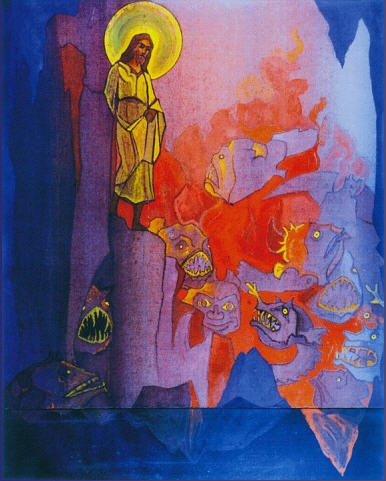
redemptive – it rescues us from the power of sin and death (“classic,” Christus Victor, or “ransom” theory)
I’m contending that these aspects of the Atonement are all interrelated – or at least not mutually exclusive — and I separate them here solely for analytical reasons. In addition, the incarnation is an act by which God enters into solidarity with us, showing that human life–despite the world’s evil–is worth living.
Revelation
“Jesus answered: ‘Don’t you know me, Philip, even after I have been among you such a long time? Anyone who has seen me has seen the Father. How can you say, “Show us the Father”? Don’t you believe that I am in the Father, and that the Father is in me? The words I say to you are not just my own. Rather, it is the Father, living in me, who is doing his work.’” (John 14:9-10)
Christians believe that in the life, death, and resurrection of Jesus, God revealed himself to humanity. What does this mean? One way to think of it is to say that Jesus’ life was the very life of God lived out under the conditions of human life. This is affirmed by the doctrine of the Incarnation: Jesus is true man and true God. In everything he said and did, Jesus displayed the character of God.
What is that character? As biblical scholar Luke Timothy Johnson puts it, Jesus exemplified in his life and teachings a “pattern of obedience and self-giving love.” The God revealed in Jesus is one who gives from the depths of his own being to his creation, and who loves his creatures even when they’ve gone astray. Like the Good Shepherd, God seeks out the lost, the outcast, and the sinner in order to bring them back into the fold. It is a central Christian belief that the nature of God’s love is disclosed most fully in the life of Jesus, and pre-eminently in his submission to death—“even death on a cross.”
But what does all this have to do with the problem of evil? It shows that the way we would choose to deal with evil is not necessarily the way God chooses to deal with evil. We prefer to eradicate or at least avoid sinners; God prefers to love and embrace them.
This seems unjust, scandalous even. Why should God let evildoers off the hook? Until we recall that we’re evildoers too. That “all have sinned and fall short of the glory of God.” The God of Christianity, as revealed in Jesus, takes evil upon himself, accepts its brutal effects, and suffers under its weight, instead of retaliating, of returning evil for evil. This is what is revealed on the cross, the “crucified God” as Jurgen Moltmann put it.
The good news, then, is that God loves sinners (that is, us) and takes the effects of sin upon himself. We, who have done evil, are loved by the creator and sustainer of the entire cosmos. This is the truth about God that Christians believe has been revealed in Jesus.
But this doesn’t seem quite right. God may love sinners, but has he left them to their own devices, allowed sin’s effects to run rampant in the world? Has the Atonement made any difference in terms of actually putting an end to sin and evil? Yes, because God’s work in Jesus goes beyond a revelation of the divine character to include humanity’s reconciliation with God and redemption from the powers that enslave us.
Reconciliation
To deal with evil requires understanding and dealing with the sources of evil. Christians believe that human evil is rooted in a primal turning away from God. In rejecting God, we set the stage for all kinds of evil (cf. Romans 1). For instance, if I no longer find security in my relationship with the divine, I may try to create a sense of security by hoarding possessions. Or, if my sense of self-worth no longer comes from my status as a child of God, I might try to find it in a series of sexual conquests. The idea is that alienation from God is the root sin from which all other sins flow. The entire sordid human history of hatred, envy, domination, resentment, and conflict is simply the outworking of humanity’s rejection of our proper end, which is union with God.
If this is the case, then the solution to human evil will have to be radical in the etymological sense – it will need to get to the root of the problem. This is precisely what Christians believe God has done in the Incarnation and Atonement (which are really two aspects of a single divine action). In Christ, God has come into the world to heal the broken relationship between God and humanity.
This is the dimension of the Atonement captured in the famous (and controversial) “satisfaction” theory propounded by Anselm of Canterbury in the 11th century. In a nutshell, according to Anselm, human sin has disrupted the moral order of the universe created by God; by failing to offer God the obedience that is his due, we have alienated ourselves from him. Human beings are unable to make reparation (or satisfaction) for this disruption because we already owe everything we have to God and are therefore unable to offer any kind of supererogatory obedience. Thus, Christ the God-man comes to fill this gap by living a life of perfect obedience to the Father and going to his death on the cross. This heals the breach between God and humanity and makes a new relationship possible.
Let’s clear away a couple of common misconceptions about this account. First, it is often claimed that it paints an unflattering portrait of God the Father as a petty despot who insists that his honor be satisfied before he will save sinful humanity. Why can’t God simply overlook sin and let us off the hook? Wouldn’t this be the mark of a truly gracious God of the kind we meet in the teachings of Jesus?
It’s important to remember that for Anselm, “honor” doesn’t mean anything like personal vanity. Living in a feudal society, Anselm would have seen honor as key pillar of a stable social order. Giving one’s lord his due was a key requirement for ensuring that the lord would fulfill his duty to maintain law and order. So, in these terms, God’s honor might better be seen as the justice that God upholds in the cosmos. For God to simply ignore sin would be to fail to treat it with the seriousness it requires. More, it would be to treat us with less than full seriousness. As Dietrich Bonhoeffer put it, “God does not ‘overlook’ sin; that would mean not taking human beings seriously as personal beings in their very culpability.” God does better than overlook sin; he does something about it.
Another way of thinking about it is to replace the concept of honor with the biblical idea of “holiness.” Since God is completely holy no sin can exist in his presence. This is not simply a matter of God being personally offended, but is due to the very nature of things. In order for us to approach God, we have to be cleansed of our sin. By living a holy life for our sake, Christ makes it possible for us to approach God in a renewed relationship.
The second mistake to avoid is seeing the crucifixion as something that God the Father inflicts on God the Son. This has given rise to accusations that Atonement theology provides a kind of divine sanction for child abuse. But this concern can be defused by recognizing that there is no division in wills between the Father and the Son. It is God himself, the Second Person of the Blessed Trinity, who becomes incarnate in Jesus and willingly lives out a life of perfect obedience “even unto death on a cross.” The cross is not a punishment inflicted by the Father on the Son, but the inexorable outcome of a perfect human life being lived out under the conditions of sin.
What God accomplishes in the life and death of Jesus, according to Christianity, is nothing less than a reconstruction of human nature. Human beings have strayed off course; Christ comes and lives human life as it was meant to be lived. And in his Resurrection he offers the definitive blow to the powers of sin and death. In doing so, he opens to us the path of genuine humanity lived in fellowship with God and each other. By uniting ourselves with Christ in faith, we can begin to be healed of our sin and set back on our proper course toward union with God. In the Atonement, God begins the process of pulling out evil by the roots.
Redemption
In addition to being a revelation of God’s love and a sacrifice that effects reconciliation between humanity and God, Christians have always seen the Atonement as the act whereby God redeems us from the powers of sin and evil. In ancient times, redemption meant literally to purchase someone’s freedom. According to Christianity, we are enslaved to the powers of sin and death, and on the cross God “purchases” our liberation.
This is perhaps the point at which Christianity departs most sharply from the view of the Enlightenment. Enlightenment thought sees human beings as fundamentally rational and capable of being good on their own. At most the life of Jesus may provide a kind of supreme moral example, but this is only an accidental, not essential, condition for spurring us on to virtue.
Christianity, by contrast, sees humanity as deeply enmeshed in sins, both personal and corporate, sins from which we cannot free ourselves. Whatever else we might mean by the “principalities and powers,” the phrase at least refers to social, political, and economic systems of violence and exploitation in which we are all deeply implicated. We often benefit from unjust systems, and the structures of those systems often make it nearly impossible for us to avoid evil. For instance, a CEO may find it nearly irresistible to exploit third-world workers, not from personal greed, but because if he doesn’t take advantage of such an opportunity, his competitors will.
And within each of us, we find a nearly irresistible pull toward sin – toward taking the easy path, the path of self rather than self-giving. St. Paul himself was no stranger to this struggle:
I do not understand what I do. For what I want to do I do not do, but what I hate I do. And if I do what I do not want to do, I agree that the law is good. As it is, it is no longer I myself who do it, but it is sin living in me. I know that nothing good lives in me, that is, in my sinful nature. For I have the desire to do what is good, but I cannot carry it out. For what I do is not the good I want to do; no, the evil I do not want to do–this I keep on doing. Now if I do what I do not want to do, it is no longer I who do it, but it is sin living in me that does it. (Romans 7:15-20)
Sin here is not just making the wrong decision, but something like a sickness, an alien power that infects us and creates a fundamental orientation whereby the self is “curved in on itself” in Luther’s fine phrase. In order to be good, we need a fundamental re-orientation of the self, something that’s outside of our power to secure.
Added to this is the fact that humanity and creation as a whole suffer from decay and ultimately death. Christian tradition has always seen a connection between sin and death, even though our modern ways of thinking treat death as completely “natural.” Death may be “natural,” but it is not part of God’s original intention for his creation.
The Incarnation, Cross, and Resurrection are the means by which God enters human history and disables the powers of sin and death, liberating us for lives of genuine freedom, which is orientation of the self toward God.
How is this accomplished? First of all, Jesus lives a perfect life of self-giving under the conditions of sin. The “powers” are unable to defeat his intention to live in perfect obedience to the Father’s will, even unto death. Rather than lashing back and feeding the cycle of violence, Jesus takes the world’s violence onto himself, ultimately defeating the powers on the cross. The cross is a victory precisely because the powers were not able to coerce Jesus into sinning.
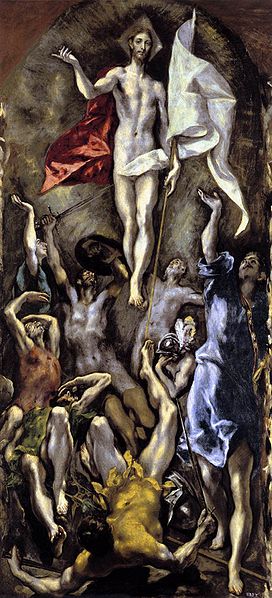
The Resurrection is the vindication of Jesus’ life and the sign that the period of the powers’ dominion over human life is at an end. It is also, most dramatically, the defeat of death and the demonstration that God’s love is more powerful than the forces of decay and dissolution.
Jesus’ Resurrection inaugurates a new age; his perfect self-offering elicits the outpouring of the Holy Spirit, which becomes the agent that empowers the new community formed around him to live a life of resistance to the powers of sin and death. The Church becomes the first fruits and sign of the redeemed creation where sin and death no longer hold sway. The consummation of this redemption takes place only at the second coming, but in the “age between the ages” we can be taken up, if only partially, into the life of the Trinity, which is one of eternal blessedness and mutual self-giving love.
Solidarity
Judging whether life is or is not worth living amounts toanswering the fundamental question of philosophy. – Albert Camus
Camus may not have had theodicy in mind when he wrote those words, but it’s not hard to see their application to the problem of evil. At root, the question we face is whether an all-good God is justified in creating a world such as ours with its manifest suffering and evil. Is life as we know it, with its sorrows, disappointments, betrayals, and pain worth living?
My reason for writing this series of posts has been my hunch that the best answer available to this question lies not in philosophical theories about God’s nature in the abstract (however necessary those might be), but in the concrete, historical narrative of God’s activity in history. Christians believe that God has acted in history to deal with the problem of evil. That human life if worth living is confirmed by the fact that God has gone to such great lengths to redeem it.
According to Christian belief, God has, in the life, death and resurrection of Jesus Christ, revealed his love for us, provided a means of reconciliation, and won the decisive victory over the powers of sin, evil and death in this world, beginning the process of the redemption of all creation.
But in addition to this, God, in becoming incarnate in a human being, has entered into our human predicament. He is “Immanuel,” “God with us.” As the creeds teach, he became “fully human.” That means that God shared in human life with all its joys and its trials. Indeed, the life God chose to live was one of suffering at the hands of his enemies, betrayal and desertion by his closest friends, and finally dying the excruciating death of a criminal and blasphemer.
This means that in all our sufferings, God is with us. He has entered into and identified with us. As philosopher Richard Swinburne argues in his book The Resurrection of God Incarnate, this would be a good thing for God to do even if the world’s evils are ultimately balanced out by its goods. This is because we often can’t see how certain evils will be taken up into or balanced by some greater good, and so we are tempted to despair. But by living a fully human life in solidarity with us, God reassures us that it is somehow worth it. He is like the general who vows never to ask his troops to do anything he wouldn’t be willing to do himself.
So, whatever else we say about God’s atoning work, we can affirm that he found human life worth living. Obviously, he also found it in need of serious repair; that’s what the work of Incarnation and Atonement is all about. But he continues to affirm the pronouncement made in Genesis that creation is “very good” and that the lost sheep is worth saving. If God himself makes this judgment, can we do any less?
 A Thinking Reed